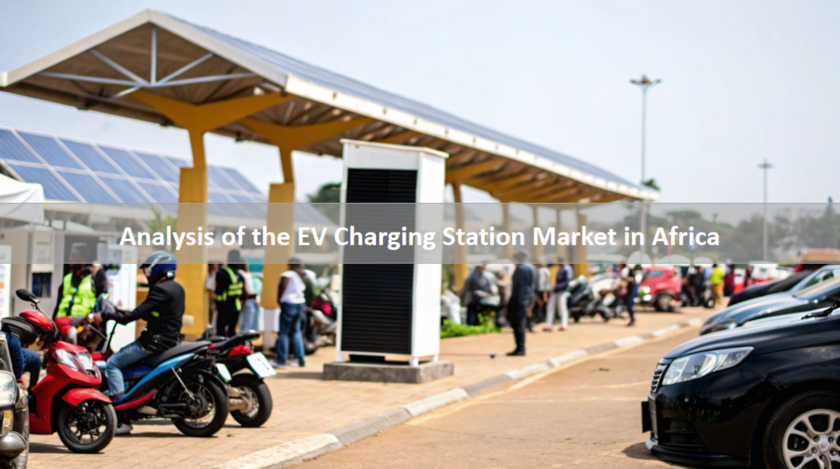
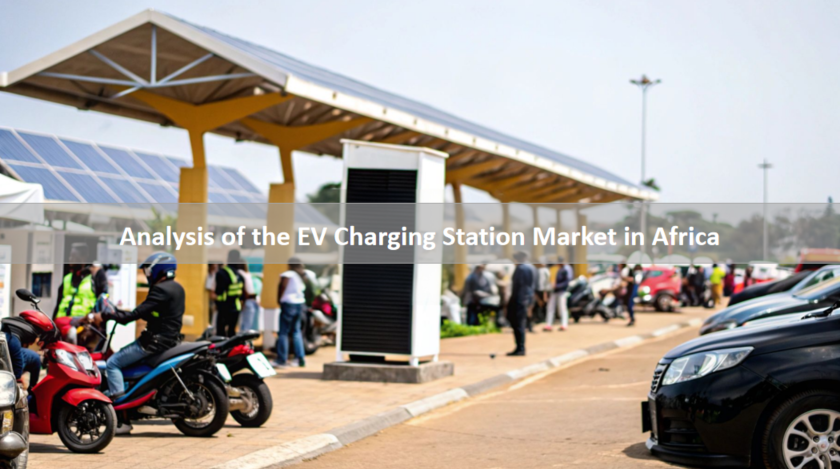
In the global electrification of transportation, third-world nations exemplified by the African continent are leveraging their substantial population advantages to emerge as pivotal hotspots for new energy development worldwide. This trend is drawing strategic focus from leading international automakers.
African governments are proactively implementing supportive policies, encompassing exemptions on import tariffs for new energy vehicles (NEVs), purchase incentives, and expedited deployment of EV charging infrastructure. These initiatives are systematically advancing EV adoption. According to institutional forecasts, the African electric vehicle (EV) market is poised to expand from USD 11.94 billion in 2021 to USD 21.39 billion by 2027.
As articulated by the Managing Director of Accenture South Africa: "The telecommunications industry's iPhone moment is now unfolding in Africa's automotive sector; globally, we stand at an inexorable inflection point, and South Africa will not be exempt—it is merely a question of timing."
1. Morocco
Reports indicate that as early as 2021, Morocco unveiled an ambitious national electrification agenda, targeting 60% of total automotive exports to comprise EVs by 2030, with a complete phase-out of internal combustion engine (ICE) vehicle sales by 2035.
This strategy is now accelerating, catalyzed by the 2030 FIFA World Cup. Per the latest blueprint from the Société Nationale des Autoroutes du Maroc (ADM), to accommodate the anticipated surge in tourist mobility during the tournament, Morocco plans large-scale rollout of EV charging stations across its national highway network.
By 2026, an additional 2,500 charging stations will be installed in key urban centers including Tangier, Rabat, and Casablanca, with charging stations positioned at an average interval of 26 kilometers along highways.
Furthermore, at both consumer and industrial levels, the government is pursuing a dual-track approach, enacting a suite of incentive policies to holistically nurture the domestic NEV ecosystem.
Consumer Side
- Tax Exemptions: NEV import tariffs can be reduced by 80%, with concurrent exemptions on value-added tax (VAT) and road tax.
- Purchase Incentives: For electric two-wheelers, a per-unit subsidy of 2,000 dirhams is available; dedicated tender subsidies are established for electric buses.
Industrial Side
- Tax Incentives: From 2024 to 2026, NEV enterprises benefit from a "five-year full exemption followed by five-year half-rate" corporate income tax policy (full exemption for the first five years, followed by a 15% rate for the subsequent five years).
- Tariff Exemptions: Equipment import tariffs are fully waived, with VAT reduced to 10%; enterprises with exports exceeding 50% qualify for an additional 3% export subsidy.
- Production Subsidies: A dedicated 5 billion dirham fund is allocated for the EV sector, providing manufacturers with up to 35% production subsidies; strategic projects with investments of at least 2 billion dirhams can receive up to 30% of the investment amount in subsidies.
- Charging Infrastructure Subsidies: For charging station production, a per-unit subsidy of USD 200 is offered.
- Green Energy Subsidies: Enterprises utilizing over 30% local raw materials in charging projects are eligible for a 0.02 USD/kWh green electricity subsidy (40% below market rates).
2. Nigeria
As Africa's premier two-wheeler market, Nigeria boasts a national fleet of 10 to 15 million motorcycles, with over 8 million serving as "Okada" vehicles for commercial passenger and logistics operations.
In August 2022, the Nigerian government formally initiated its National Energy Transition Plan, designating two-wheeler electrification as a cornerstone of transportation decarbonization efforts, aligned with a net-zero carbon ambition by 2060.
The following year, in May 2023, the administration discontinued longstanding fuel subsidies, precipitating a 4- to 6-fold escalation in gasoline prices. This directly inflated operating expenses for commercial motorcycles (local riders reportedly average 150 to 200 kilometers daily, with fuel costs surging from 3-4 Naira to 15-20 Naira per unit).
The expansive incumbent market, coupled with acute cost-reduction imperatives among operators, has propelled electric motorcycles as a more viable and economical mobility alternative.
Consumer Side
- Tax Exemptions: EVs qualify for exemptions on road tax, toll fees, and passage fees.
- Purchase Incentives: Dedicated subsidy policies are provided for EV users by the government.
Industrial Side
- Tax Incentives: Starting in 2024, electric vehicles, components, and semi-knocked-down (SKD) kits are exempt from VAT; local EV manufacturers enjoy a 10-year tax reduction.
- Tariff Exemptions: Comprehensive exemptions on import and export tariffs for EVs and related equipment are being advanced.
- Infrastructure Mandates: All fuel stations are required to install EV charging or battery swapping infrastructure.
- Charging Infrastructure Subsidies: Government grants and tax reductions are available for investors in charging infrastructure.
3. Ghana
Renowned as the "Gold Coast," the Republic of Ghana ranks as West Africa's second-largest economy. Its automotive landscape is characterized by a predominance of second-hand vehicles alongside nascent NEV penetration.
Government projections aim for approximately 70% EV adoption by 2045, with 1,000 charging stations targeted for completion by 2028. However, as of August 2025, only 7 public charging stations have been deployed nationwide, underscoring a significant infrastructure deficit requiring urgent remediation.
Industrial Side
- Tax Incentives: VAT exemptions are provided for EVs; for foreign automakers establishing factories, the government offers up to 10 years of tax incentives (full 10-year incentives apply only to enterprises producing complete vehicles in Ghana; partial production qualifies for 5 years).
- Tariff Exemptions: Effective January 1, 2024, Ghana implements an 8-year tariff exemption on imported EVs; electric vehicles designed for public transport, as well as semi-knocked-down and completely-knocked-down (CKD) vehicles imported by registered EV assembly companies, also qualify for 8-year import tariff exemptions.
In response, the Chief Executive Officer of the Ghana Investment Promotion Centre is vigorously advocating for collaborative investments from Chinese enterprises.



















.png)