Charging Station Deployment Guide: Matching Real-World Scenarios is the Optimal Solution
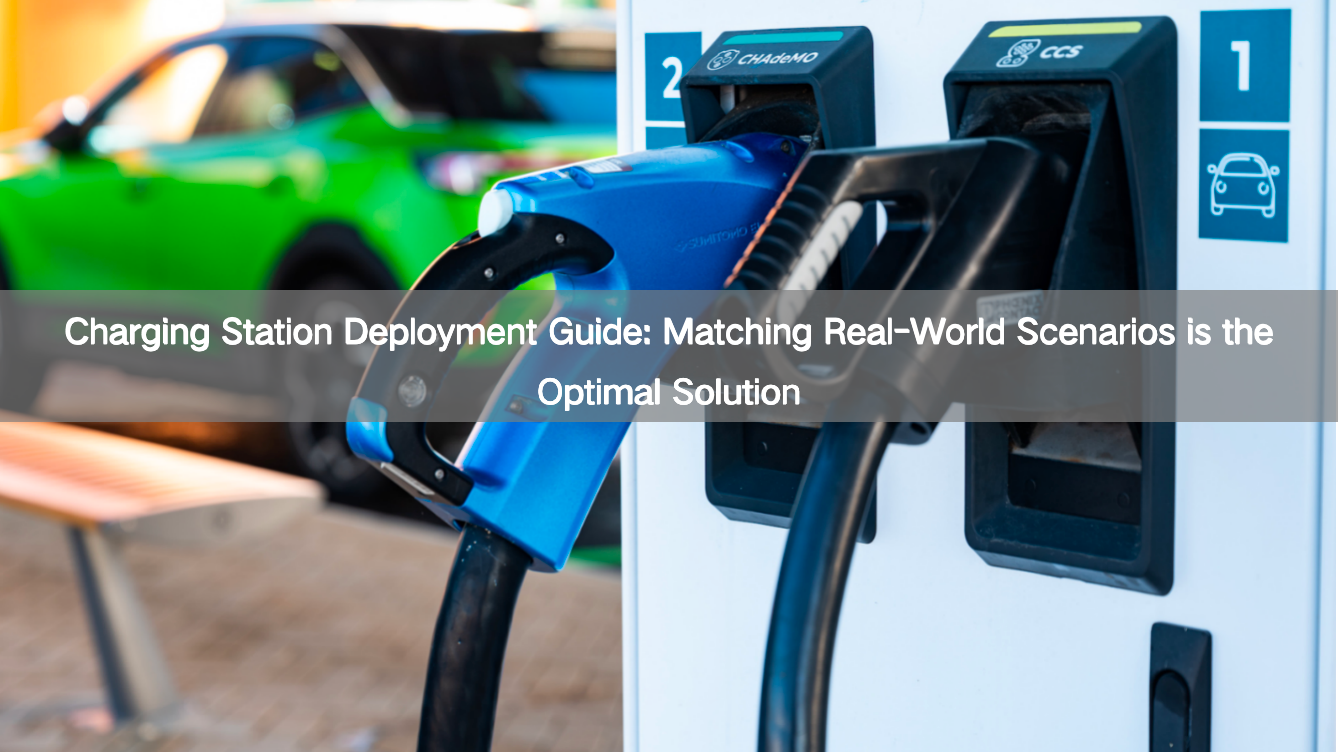
Today, as electric vehicles penetrate every corner of the world like capillaries, the construction of charging infrastructure has completely transcended the stage of "availability" and entered the stage of "usability". Many novice charging station operators often fall into a misunderstanding during the initial layout: blindly pursuing the maximization of single-gun power, wrongly believing that "fast" means "good".
However, the real business logic is not so. Based on Anari Energy's years of experience in charging station sales consulting, DC fast charging has never been a single-dimensional solution. The power selection, form design, and even the architecture model of charging stations must all be subject to the physical space, power capacity, service targets, and future growth expectations of the station.
This article will guide you to reexamine the deployment strategy of charging stations from the perspective of "scenario matching".
1. Retail Sites: Efficiency First, Experience King
If you are planning a charging station located in a shopping mall, convenience store, or the city's core area, then there is no doubt that your customer profile is typically the "charge-and-go" supplementary user. During the few hours they stay in the area, they hope to get as much power as possible for their electric vehicles.
Core pain points: time sensitivity, low tolerance for failures, and construction period affecting business operations.
Deployment Strategy:
Power Matching: It is recommended to use high-power DC fast charging (e.g., 120kW - 180kW). This can provide sufficient range replenishment for vehicle owners within the limited stop time, thereby meeting the charging needs of vehicle owners at different times.
Reliability First: Retail scenarios directly face C-end consumers, and the bad station rate will directly affect word-of-mouth and loyalty. Operators must choose integrated DC stations that have been market-verified, with excellent heat dissipation and protection performance, and are user-friendly for C-end users.
Easy Installation: Considering the complex on-site conditions of commercial complexes and the high cost of storefront rent, charging stations with a small footprint and low requirements for power distribution renovation (even if line modification is needed, it is relatively flexible) should be prioritized to shorten the construction period, quickly deploy charging stations, and rapidly enter operation.
2. Parking Lot Scenario: Seek Efficiency from Space and Increment from Stock
Whether it's an open-air parking lot or the underground garage of a large commercial complex, space is often the biggest constraint. Vehicles here have a longer parking time (2-4 hours), are less sensitive to charging power, and the biggest demand is "having a place to charge".
Core pain points: dense parking spaces, limited power distribution capacity, and equipment encroaching on passageways.
Deployment Strategy:
Compact form factor: Prioritize the use of wall-mounted dual-gun or small-sized floor-standing DC charging stations. In multi-level parking garages or parking spaces against walls, a compact design can maximize the utilization of corner space, preventing the charging station from occupying the effective space on one side of the parking space, which could otherwise prevent vehicles from parking and affect charging.
Power Gradation: There is no need to blindly pursue charging stations with a power of 180kW or even higher. Considering the longer dwell time, DC charging stations with a power of 60kW - 120kW or AC charging stations with a relatively dense layout are often more cost-effective. Through reasonable power distribution, more parking spaces can be served within the limited power capacity.
Intelligent Scheduling: Introduce the linkage between intelligent ground locks and license plate recognition to prevent gasoline vehicles from occupying spaces and improve the utilization rate of charging stations.
3. High-traffic Areas and Bus/Logistics Hubs: Embracing Modularization and Scalability
At high-speed service areas, ride-hailing parking lots, bus companies, or logistics park stations, the operational logic has undergone fundamental changes. There is no concept of "dwell time" here, only "departure frequency" and "order acceptance efficiency".
Core pain points: Charging stations require continuous high-load operation, vehicles arrive in a concentrated manner, and there is uncertainty in future business growth.
Deployment Strategy:
Adopt a split/modular architecture: This is currently the optimal solution for high-traffic scenarios, and split charging stacks are recommended. Place the power cabinets centrally on one side of the station (for easy heat dissipation and maintenance), and connect them to the charging terminals via liquid cooling or long charging cables.
Flexible power distribution: The core advantage of this architecture lies in "peak shaving and valley filling". When a heavy-duty truck needs to recharge, the system can call on multiple modules to provide ultra-high power to meet its short-term recharging needs; when multiple small EVs are charging simultaneously, it can also take into account the vehicle BMS and flexibly call on charging modules. By providing recharging requirements based on the actual situation of recharging vehicles at the station, it greatly improves the flexibility of power utilization.
Scalability: Fleet size is dynamically changing. The modular system allows operators to deploy only some power modules initially, and in the future, as the number of vehicles increases, they can simply insert new power modules into the cabinet to achieve capacity expansion without replacing the entire charging station, thus avoiding repeated investment.
4. Summary: Follow these four steps to find your optimal solution
Getting back to the essence of the problem, deploying charging stations is not about solving math problems, but rather about solving combinatorial problems, while also investing in the future.
Target audience: Determine whether your primary customers are ride-hailing drivers, private car owners, or logistics trucks. Different target audiences determine how much charging time you can provide and how many charging vehicles you can accommodate.
Space: Measure your site. Is it a high-value basement or an open ground parking lot? This determines whether the equipment form is compact or split.
Calculate electricity: Find out the power equipment and capacity near the station. Is it a new transformer or limited capacity expansion? This determines your total power ceiling and whether intelligent scheduling is required.
Think about the future: Evaluate your future business growth. If traffic doubles in three years, will the current equipment have to be scrapped or can modules be plugged in and out?
In the initial stage of charging infrastructure construction, there is no such thing as the best charging station; there are only the most suitable charging architectures and deployments. Meanwhile, you need to make predictions about the geographical location of the charging station area, the annual growth rate of EV vehicle compliance, the annual growth of power consumption, etc., and at the same time consider precise matching with power capacity and physical space. This is the real way to reduce costs and increase efficiency, ensuring positive growth in the charging station's revenue.
0
Comments


Leave a Comment
Your email address will not be published. Required fields are marked *
Your Name*
Your Email*
Submit Comment

You Might Also Like...
-
Charging Station Deployment Guide: Matching Real-World Scenarios is the Optimal Solution
2026 Mar,16 -
Anari Energy Expands Global Footprint in Early 2026: New Deployments in Georgia, Cambodia, and El Salvador Now Operational
2026 Mar,12 -
Global EV Charging Infrastructure Market Landscape: 2025-2030
The global EV charging market is transitioning from being "policy-driven" to "dual policy-and-market-driven," with intensifying regional divergence: Southeast Asia is benefiting from manufacturing relocation, resource-rich Latin American countries are accelerating electrification, energy giants in the Middle East and Africa are diversifying into new energy, and the European market is entering the advanced stage of standardization and smart charging.2026 Mar,06