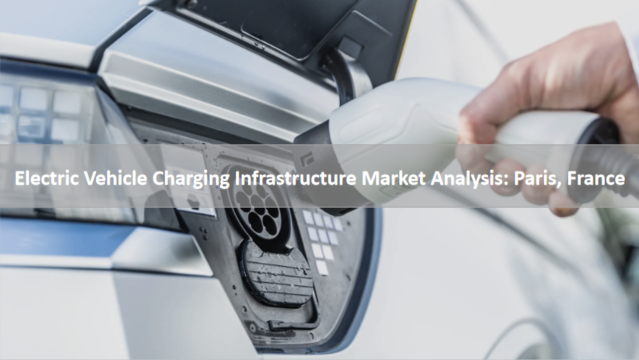
Executive Summary
Paris stands at the forefront of Europe's urban electric vehicle transition, propelled by a robust national policy framework and ambitious municipal climate goals. The market is characterized by rapid public charging point deployment, a dynamic and consolidating competitive landscape, and significant untapped potential in private, fleet, and high-power charging segments. For a global manufacturer and solutions provider like Anari Energy, Paris presents a high-growth opportunity driven by regulatory mandates, technological evolution towards ultra-fast charging, and the critical need for reliable, high-quality hardware and integrated energy management solutions. Success requires navigating a complex ecosystem of installers, operators, and distributors while aligning product offerings—particularly in DC fast charging—with local grid integration and user behavior patterns.
1. National and Parisian Policy Framework
The development of EV charging infrastructure in Paris is underpinned by a multi-layered and synergistic policy architecture at both the national and city level, creating a predictable and accelerating market environment.
National Ambition and Regulation: France has established one of Europe's most definitive regulatory pathways for phasing out internal combustion engine vehicles, with a ban on sales of new petrol and diesel cars set for 2035. This clear signal drives long-term investment across the automotive and energy sectors. Key supporting initiatives include:
ADVENIR Programme: A critical subsidy scheme that has historically co-financed the installation of private (residential, corporate) and public charging points. While its public charging arm is being phased out, its model has catalyzed initial market growth.
Mobility Orientation Law (LOM): Mandates that all non-residential parking lots with more than 20 spaces must equip at least 5% of them with charging points by 2025, creating a massive compulsory demand for charging solutions in commercial real estate, retail, and workplaces.
Parisian Municipal Acceleration: The City of Paris has set even more aggressive targets through its Climate Plan and "Paris 2030" strategy. Core objectives include becoming a 100% cycling city and significantly reducing vehicular emissions. Specific charging infrastructure actions involve:
Target of 100% Public EV-Ready Streets: Aiming to ensure every street in Paris has at least one public charging point by 2025.
Transformation of On-Street Parking: A systematic conversion of conventional on-street parking spaces into equipped charging stations, managed through delegated public service contracts.
Support for Condominiums (Co-ownerships): Providing technical and financial assistance to overcome the significant hurdle of installing charging points in existing multi-unit dwellings, which is a major bottleneck for EV adoption among residents without private garages.
Strategic Implication: The policy environment is not merely supportive but prescriptive, creating a compliance-driven market. For Anari Energy, this translates into a predictable pipeline of demand, particularly for AC wallboxes (for LOM-compliance and residential use) and public DC fast chargers (for municipal on-street networks).
2. Current Development Status of Charging Stations in Paris
Paris exhibits a dualistic market structure: a relatively dense and growing public network contrasted with a lagging but high-potential private installation market.
Public Network Growth: Paris boasts one of the densest public charging networks in Europe, with over 10,000 public charging points operational within the city limits as of late 2025. Growth is primarily driven by the concession contracts awarded by the city. However, the network faces challenges of uneven geographical distribution (higher density in central arrondissements), varied reliability across operators, and user complaints regarding payment complexity and maintenance.
Private and Semi-Private Infrastructure Lag: Despite national laws, deployment in condominiums, corporate fleets, and private parking remains the market's critical path. The main barriers are the high upfront cost and administrative complexity for collective decisions in residential buildings, and the need for electrical panel upgrades in older structures. This segment represents the largest untapped volume opportunity.
Technology Mix: The current public network is predominantly composed of AC charging points (22 kW), suitable for longer dwell times (parking, shopping). There is a strategic push to increase the proportion of DC fast (50-150 kW) and ultra-fast (150+ kW) chargers, particularly along major arteries and at key hubs, to support taxi fleets, commercial vehicles, and longer-distance travelers.
Strategic Implication: The market is shifting from quantity to quality and specialization. Future success depends on providing not just hardware, but reliable, connected, and user-friendly solutions that address the pain points of the existing network (downtime, ease of use) and unlock the private sector (easy-to-deploy, scalable systems for condominiums).
3. Layout and Usage Patterns of Charging Infrastructure
Understanding the spatial and behavioral dynamics of charging in Paris is crucial for product and market positioning.
Spatial Layout: The layout follows a hub-and-spoke model:
Core (Central Paris): Dense coverage of on-street AC chargers for resident and visitor top-up charging. High competition for curb space.
Corridors & Hubs: Strategic placement of DC fast charging stations along the Périphérique ring road, at major transit stations (Gare du Nord, Montparnasse), and in public parking garages. These serve taxis, ride-hailing vehicles, and inter-city traffic.
Destination Charging: Growing installation at supermarkets, shopping malls, hotels, and cultural venues (LOM-driven), focused on AC charging for captive audiences during activities.
Usage Patterns: Data indicates a pronounced diel and weekly cycle. Usage peaks during evening hours (post-work home charging) and is lower overnight, despite high potential. Public chargers in residential areas show high occupancy rates, indicating supply still lags behind demand in many neighborhoods. There is also emerging demand for dedicated fleet depots (e.g., for last-mile logistics companies transitioning to electric vans), which require customized, high-power charging solutions.
Strategic Implication: Anari Energy's product portfolio aligns well with these patterns. The Gaia/Tiber AC Series is ideal for residential, workplace, and destination LOM-compliance. The Aquila/Vulco DC Series meets the need for reliable fast charging at hubs. The critical differentiator will be software for load management to prevent grid overload in dense deployments and fleet management capabilities for commercial operators.
4. Development Opportunities for Urban Charging Stations (Next 10 Years)
The Parisian charging infrastructure market will evolve dramatically, moving beyond basic point deployment to integrated energy systems.
Fleet Electrification as a Primary Driver: The mandatory electrification of taxis (100% by 2025), ride-hailing, last-mile delivery vans, and municipal fleets will create concentrated, high-utilization charging hubs. This demands high-power charging (150-350 kW), robust reliability, and depot management software—a perfect match for Anari's DC Super Fast Charging Station expertise.
Smart Charging and V2G Integration: With rising EV penetration, smart charging (grid-responsive) and Vehicle-to-Grid (V2G) technology will become critical for grid stability. Paris will incentivize solutions that can balance load, integrate renewables, and provide grid services. Products with built-in smart energy management capabilities will gain a premium.
Ubiquitous Private/Residential Charging: Solving the condominium challenge is the next frontier. This creates an opportunity for standardized, scalable "package solutions" that include hardware, installation coordination, and load-sharing software for apartment blocks—a significant volume market for AC wallboxes like the Gaia/Tiber series.
High-Power Charging (HPC) Corridors: The expansion of ultra-fast charging corridors connecting Paris to other major European cities will require HPC stations. These sites are capital-intensive and require future-proof technology, presenting opportunities for manufacturers with proven, reliable high-power products.
Tourism and Premium Experience: As a global tourism hub, Paris will need to cater to visiting EV drivers. Charging points at hotels, attractions, and premium parking locations will need to be exceptionally reliable, easy to use (plug-and-charge, contactless payment), and complemented by premium services.
Strategic Implication for Anari Energy: The company's stated strengths in "Design Capability," "Safety Assurance," and providing a "One-stop Solution" are directly relevant to these future opportunities. The focus must be on:
Product Strategy: Prioritize high-power DC charging and smart, connected AC charging solutions.
Partnership Strategy: Develop deep alliances with fleet operators, property developers, and energy aggregators.
Localization: Establish a strong technical and service presence in the region to ensure rapid response and customization, leveraging its existing UK and Turkey operations as a blueprint.
Conclusion and Strategic Recommendations
The Parisian EV charging market is transitioning from a policy-supported infrastructure rollout to a competitive, service-oriented, and technologically advanced phase. The regulatory trajectory guarantees sustained demand, while user expectations are rising rapidly regarding reliability, power, and convenience.





















.png)

