The global electric vehicle revolution is accelerating, but the supporting charging infrastructure faces a critical inflection point. For operators and site hosts, the challenge is no longer just about installing chargers; it’s about deploying future-proof, reliable, and economically sustainable solutions that can scale with demand. Today, we introduce a paradigm shift in rapid charging technology: the Fora Series Split-Type DC Charging Station. This isn't merely an incremental upgrade—it's a re-architected approach designed to address the core operational and financial pain points of modern EV charging networks.
1. Beyond the Monolith: A Brief on Split-Type Architecture
Traditional DC fast chargers (DCFC) are often monolithic units where power modules, charging cables, payment systems, and user interface are housed in a single, bulky cabinet. While functional, this design presents inherent limitations in deployment flexibility, maintenance, and scalability.
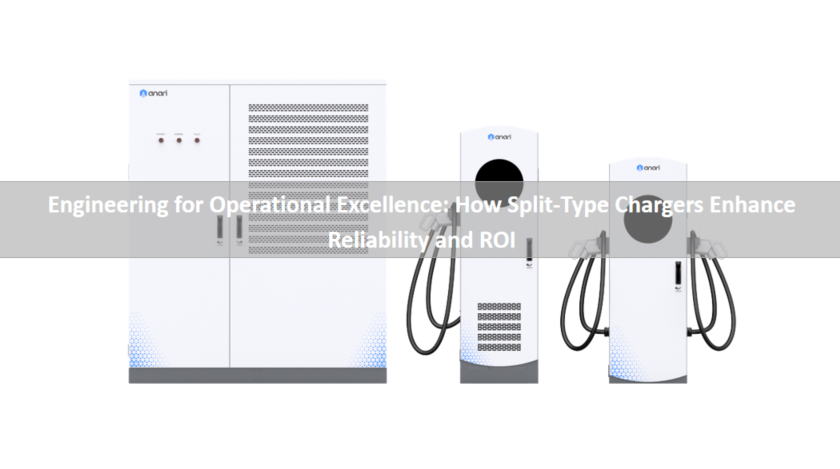
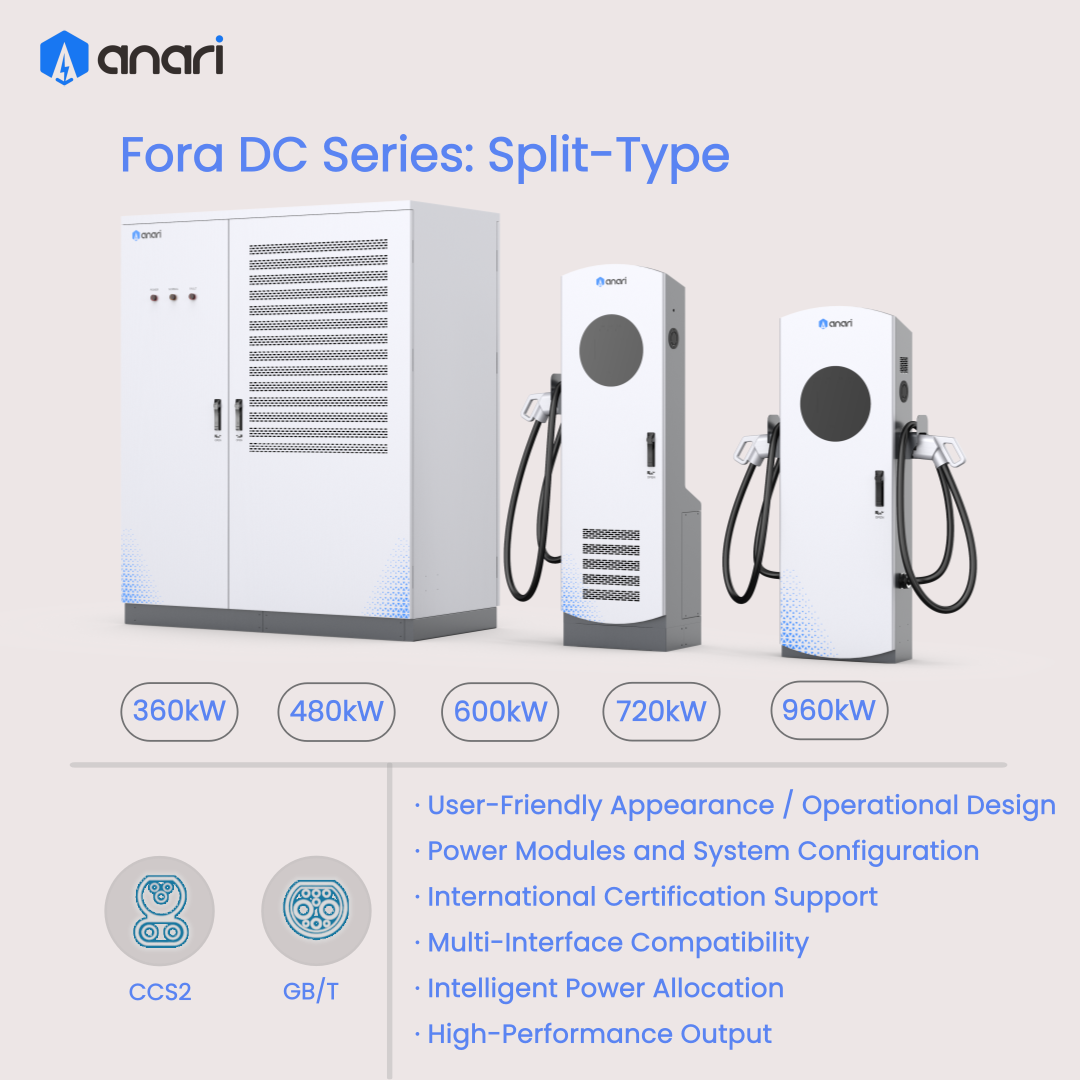
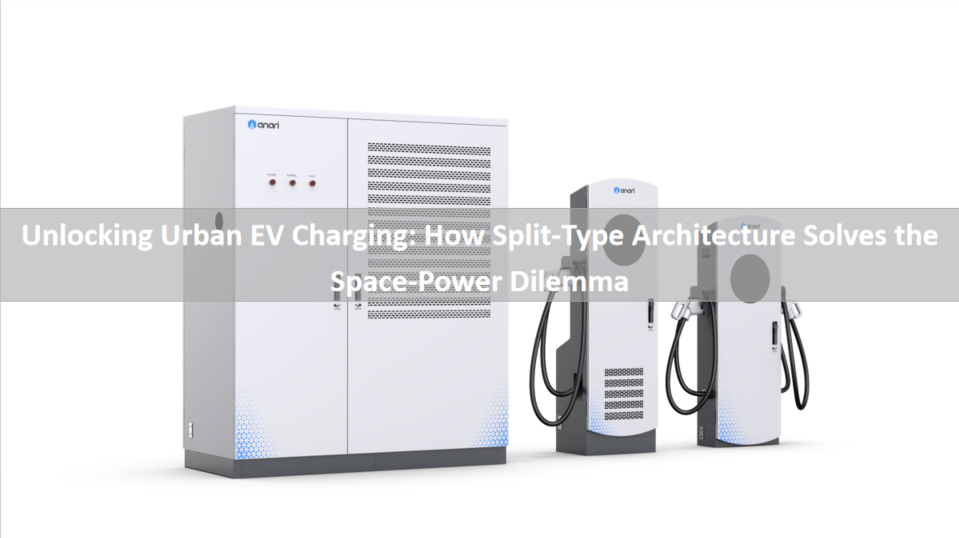
The Fora Series redefines this model through an intelligent split-type design. It physically separates the high-power Power Cabinet from one or multiple Charging Terminal(s). These components are connected via dedicated communication and power cables, allowing them to be positioned optimally within a site. This fundamental architectural shift unlocks a new level of versatility, efficiency, and reliability for charging operators.
2. Engineering for Excellence: Innovation at the Core
The Fora Series is built upon a foundation of cutting-edge engineering, focusing on performance, resilience, and intelligent operation.
- High-Power Density & Dynamic Power Allocation: At its heart, the Power Cabinet utilizes the latest generation of Silicon Carbide (SiC) power electronics. This enables exceptionally high power density and efficiency, reducing energy loss and operational costs. Its intelligent power management system can dynamically allocate available power across multiple charging terminals. For instance, if one vehicle is nearing full charge and requires less power, the system seamlessly redirects surplus capacity to other vehicles that are in the high-power phase of their charging curve, maximizing overall station throughput.
- Robust Design for Demanding Environments: Engineered for 24/7 operation, both the Power Cabinet and Charging Terminals boast an IP54 (or higher) ingress protection rating, ensuring reliable performance in diverse weather conditions—from driving rain to dusty lots. Critical components undergo rigorous thermal management testing, guaranteeing stable operation in extreme ambient temperatures.
- Seamless Integration & Smart Management: The station is fully OCPP 1.6/2.0.1 compliant, ensuring seamless integration with any major Charging Network Management System (CSMS) or back-office platform. It supports remote monitoring, diagnostics, firmware updates, and sophisticated revenue management. Built-in 4G/5G and Ethernet connectivity provide robust data pipelines for real-time operational insight.
- User-Centric Terminal Design: The Charging Terminal features an intuitive, multi-language HD touchscreen interface, RFID reader, and status LED indicators for clear user guidance. The ergonomically designed cable management system and connector holster enhance durability and customer experience.
3. Strategic Deployment: Versatility Across Key Scenarios
The true power of the split-type design is realized in its application flexibility, solving real-world site constraints.
- Urban & Retail Hubs: In crowded city centers or shopping mall parking lots, space is at a premium and aesthetics matter. The compact Charging Terminal, with its sleek profile, can be placed conveniently near parking spots or building entrances. The larger Power Cabinet can be discreetly installed up to 80 meters away—in a basement, utility room, or service area—freeing up valuable retail space, reducing visual clutter, and minimizing noise near customer areas.
- Fleet & Logistics Depots: For bus terminals, delivery hubs, or corporate fleets requiring simultaneous overnight charging, the Fora Series excels. A single high-capacity Power Cabinet (e.g., 360kW) can supply four or more charging terminals. This centralized power source is more cost-effective to install and maintain than multiple standalone chargers. Operators can strategically place terminals across the depot to match parking layouts, optimizing fleet operations and streamlining management.
- Highway Corridors & Fuel Stations: These sites demand maximum uptime and rapid charging capability. The split design enhances reliability; if a terminal requires service, it can be addressed without taking the entire high-power system offline. The separation also allows for easier future expansion—adding new terminals to meet growing demand often requires only the deployment of additional terminals, not entirely new power cabinets, protecting the initial infrastructure investment.
- Public Parking & Municipal Facilities: For municipalities planning phased rollouts, the Fora Series offers unmatched scalability. A site can start with a power cabinet and two terminals, adding more terminals as EV adoption grows. This aligns capital expenditure with actual usage, significantly improving the financial model for public charging projects.
4. Delivering Tangible Value to Operators
The Fora Series translates its technical advantages into direct, bottom-line benefits for charging station operators and investors.
- Reduced Total Cost of Ownership (TCO): While the initial deployment may be comparable to monolithic chargers, the TCO savings are substantial. Simplified maintenance (on a modular component level), higher energy efficiency, and reduced site preparation costs (due to flexible placement) contribute to a superior lifetime value proposition.
- Enhanced Uptime & Simplified Maintenance: The modularity is a game-changer for operational efficiency. A faulty terminal can be swapped out quickly with a spare unit, minimizing downtime for the entire station. Technicians can service the power cabinet independently without disrupting all charging points. This modular approach slashes Mean Time to Repair (MTTR), a critical metric for revenue and customer satisfaction.
- Future-Proof Scalability: The platform is designed for the long term. As battery capacities grow and charging power increases, the infrastructure can adapt. Operators can upgrade the power cabinet or add higher-power terminals as technology evolves, safeguarding their investment against rapid obsolescence.
- Optimized Site Utilization & Aesthetics: By decoupling power and interface, operators overcome the most common site layout challenges. This flexibility can turn previously "unworkable" sites into profitable charging locations. The cleaner, more minimalist installation also enhances the property's appeal.
- Uncompromised Safety & Compliance: The design adheres to international safety standards (CE, UL, etc.). Centralizing high-voltage components in a secured, dedicated cabinet inherently improves site safety and can simplify permitting and insurer approvals.
5. Conclusion: Powering the Future, Today
The transition to electric mobility requires charging infrastructure that is not just powerful, but also intelligent, adaptable, and operationally sound. The Fora Series Split-Type DC Charging Station embodies this next generation of infrastructure. It moves beyond the limitations of monolithic design to offer a solution that grows with your business, optimizes every site, and delivers reliability that drivers and operators can depend on.
We are not just selling a charger; we are providing a flexible, scalable platform for electrification. It's engineered for the realities of high-utilization public charging, the rigorous demands of fleet operations, and the evolving landscape of energy and mobility.
Ready to deploy a smarter charging solution? Explore the detailed specifications and see how the Fora Series can be configured for your specific project needs at Fora Series Split-Type. Let's build the resilient charging networks of the future, together.




















.png)

