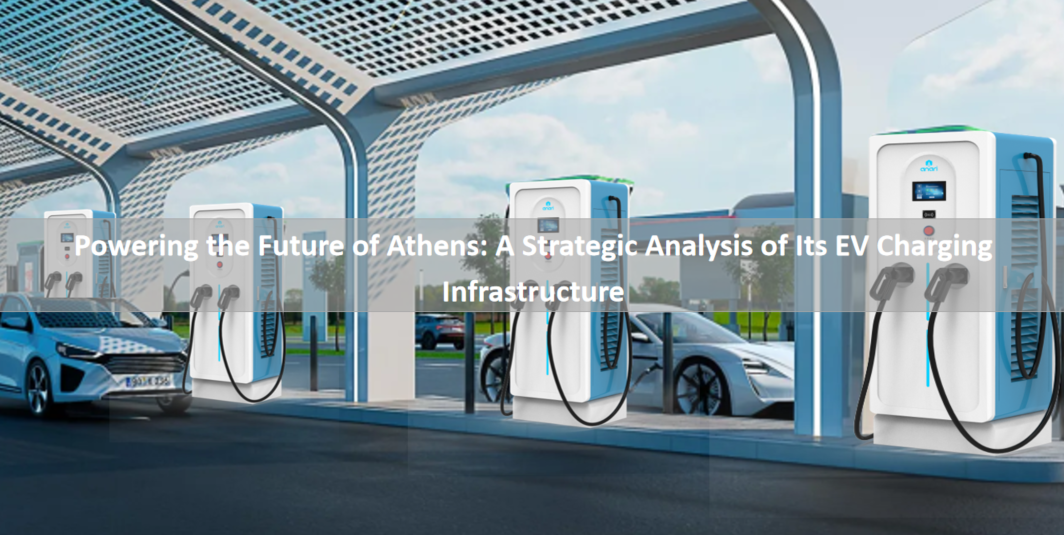
1. Market Overview
1.1 Summary of Market Size
Athens is experiencing accelerated growth in electric mobility infrastructure, supported by national ambitions and EU recovery funds. The metropolitan area currently hosts approximately 900-1,100 public charging stations (points). Private charging points, predominantly in suburban residences and newer apartment buildings, are estimated at 3,500-4,500 units. The overall vehicle-to-public-station ratio remains high at approximately 25:1, indicating infrastructure is playing catch-up with growing EV adoption. The technology mix is shifting; DC fast charging stations (50-150kW) now represent about 25% of public installations, while AC charging (mostly 22kW) constitutes 75%. In terms of power capacity, DC chargers contribute over 60% of total available public charging power, a critical factor for a city with high taxi and tourist vehicle utilization.
1.2 Spatial Layout
Distribution reflects Athens’ complex urban geography and socioeconomic divides:
Administrative Areas: Highest concentration in the central and southern affluent municipalities (Athens, Glyfada, Alimos, Marousi). Northern suburbs (Kifisia, Ekali) show strong private installation but fewer public points. Western suburbs (Peristeri, Aigaleo) and Piraeus have emerging but sparse coverage.
Business Districts: The central business corridor along Kifissias Avenue and the southern coastal zone (Elliniko redevelopment, Flisvos Marina) are priority areas. Major malls (The Mall Athens, Golden Hall) serve as key charging hubs.
Residential Areas: Penetration is highest in newer apartment complexes with dedicated parking. Retrofitting in the dense, older polykatoikies (apartment blocks) of the central basin is the principal challenge, limited by outdated electrical panels and shared parking.
Work Areas & Transportation Hubs: Moderate coverage at office parks in Marousi and the airport corridor. Eleftherios Venizelos International Airport (ATH) has a growing charging park. Coverage at major ferry terminals in Piraeus and suburban railway stations is minimal but planned.
Spatial Matching Degree: Alignment with EV ownership (concentrated in higher-income zones) is moderate. A significant mismatch exists in high-traffic tourist corridors (downtown, Acropolis periphery) and dense residential zones where demand is growing but infrastructure is lacking. Placement along major traffic axes (Attiki Odos, Syngrou Avenue) is improving.
1.3 Scenario Penetration
Residential Communities: Low to Moderate. Heavily dependent on building age and resident consensus. Facilitated by new legislation (Law 4951/2022) simplifying installation in multi-tenant buildings.
Commercial Real Estate: High. A standard amenity for new office buildings, shopping centers, and hotels seeking sustainability certification.
Public Parking Lots: Moderate. The municipal parking organization (O.S.A.) is progressively integrating charging. On-street charging in "blue zone" parking is in pilot phases.
Dedicated Areas: Emerging in corporate fleet depots, electric taxi queues (a key focus), and municipal vehicle bases.
Intercity Travel: Developing. The National Recovery Fund-backed "Evelpidon" project aims to install DC fast chargers every 60km on major highways, connecting Athens to Thessaloniki, Patras, and Lamia.
2. Competitive Landscape
2.1 Market Concentration Analysis
The market is fragmented but consolidating, with state-owned utilities playing a defining role.
By Number of Operating Stations: The clear leader is Foton, the charging subsidiary of the Public Power Corporation (PPC), leveraging its nationwide footprint. This is followed by E-Trading (owned by motorway operator GEK TERNA) and Eurobank's Epsilon network. Shell Recharge and BP Pulse are entering through forecourt conversions.
By Total Charging Power: PPC/Foton and E-Trading lead, focusing on DC corridor development. IONITY has a limited but high-power presence on the Attiki Odos.
By Charging Volume: PPC/Foton likely leads due to network size, with E-Trading and key urban destination operators (e.g., at malls) also significant.
2.2 Competition: Leaders, Challengers, Participants
Leaders: PPC (Foton) (scale, utility integration), E-Trading/GEK TERNA (strategic highway locations).
Challengers: Shell Recharge, BP Pulse, IONITY, and automotive importers (e.g., Škoda Auto, Volkswagen Group through partnerships).
Participants: Local installers, supermarket/hotel chains, and municipal initiatives.
In-depth Analysis of Major Operators
PPC (Foton):
Operation Strategy: Self-built dominance, leveraging PPC's real estate, grid access, and capital. Active in public-private partnerships for municipal projects.
Network Characteristics: Nationwide coverage strategy with dense urban clusters in Athens. Product mix from 22kW AC to 150kW+ DC.
Pricing Strategy: Competitive per-kWh pricing, integrated PPC energy customer discounts, and tailored fleet packages.
User Experience: Dedicated "Foton" app and RFID. Reliability can be uneven; online rates are impacted by vandalism and grid-related issues in some areas.
3. Operational Efficiency
3.1 Key Performance Indicators (KPIs)
Single Station Daily Utilization Rate: Averages 8-15%. Highly variable: 20-30% at premium mall/coastal locations in summer, below 10% in isolated urban spots. Seasonal tourism creates significant demand peaks.
Single Station Daily Charging Amount: AC: 25-60 kWh. Urban DC: 100-250 kWh.
Average Service Fee Revenue per Station: AC: €8-15/day. DC: €30-70/day.
Failure Rate/Online Rate: A key challenge. Industry average may be 90-94%. Issues stem from grid voltage fluctuations, extreme heat, and vandalism. Premium networks target >95%.
3.2 Profitability Analysis
Cost Structure (50kW DC Station Example):
Equipment & Installation: €40,000-60,000 (high import/installation costs).
Land/Site Rent: Varies widely; can be revenue-sharing in high-demand zones.
Electricity Cost: Commercial tariffs + significant demand charges which heavily impact DC station economics.
Operation & Maintenance: Higher than EU average due to climatic stress and need for rapid technical support.
Break-even Point: For a 50kW charger, given high capex and demand charges, achieving a 6-8 year payback requires a consistent 18-22% utilization, which is currently only viable at prime sites.
Profit Model Expansion: Advertising partnerships at charging parks. Integration with renewable energy (solar canopies) to reduce costs and enhance branding. Tourist-focused packages with hotels and car rentals. Data services for growing corporate fleets.
4. Challenges, Trends and Strategic Recommendations
4.1 Core Challenge Identification
Supply Side: Aging and constrained low-voltage grid in the urban center is the paramount bottleneck. Complex permitting for public land use. High upfront investment amid uncertain short-term returns.
Demand Side: Range and charger anxiety persist due to uneven geographic coverage. Fragmented payment systems (multiple apps/cards). Lack of public awareness on home installation rights (Law 4951/2022).
Policy & Regulation: Accelerated implementation of the adopted Greek and EU frameworks (AFIR). Need for standardized technical specs and open data protocols. Clarification of electricity resale rules for condominiums.
4.2 Future Development Trends
Technology Trends: Deployment of 150kW+ HPC at strategic entry/exit points of the city. Solar-plus-storage charging hubs to alleviate grid pressure. Smart charging trials linked to time-of-use tariffs.
Operation Trends: Gradual market consolidation around 2-3 major players. Development of "charging hubs" at convenient retail locations. Increased roaming integration with other European networks.
Competition Trend: Transition from grant-funded deployment to commercial operation. Energy companies and oil marketers will aggressively compete for prime sites. Increased M&A activity.
4.3 Strategic Advice
For Government/Regulatory Authorities (Greek State, Municipality of Athens):
Planning: Create a master plan and digital map prioritizing grid upgrades in high-demand zones. Mandate pre-cabling and reserved capacity in all new constructions and major renovations.
Regulation: Fast-track permits for public charging and enforce the "right to plug" in existing apartments. Implement AFIR regulations on ad-hoc payment and pricing transparency.
Incentives: Redirect subsidies from mere hardware to support for grid connection costs and smart charging/V2G capabilities. Introduce time-of-use electricity tariffs for public stations.
For Operators/Investors:
Go-to-Market: Co-locate with high-dwell-time destinations (supermarkets, entertainment venues). Form alliances with taxi associations and large fleet operators for guaranteed baseline utilization.
Service Improvement: Invest in robust hardware resilient to heat. Implement a simple, universal payment method (contactless card) at all stations. Develop a strong, localized O&M team for rapid response.
For Automakers/Real Estate Developers:
Automakers: Partner with leading CPOs (e.g., PPC, E-Trading) for preferential access and service packages for customers, rather than self-building.
Real Estate Developers: Install ample conduit and electrical capacity in all new parking facilities. Offer managed charging services as a building amenity to increase property value and attract tenants.




















.png)

