Executive Summary
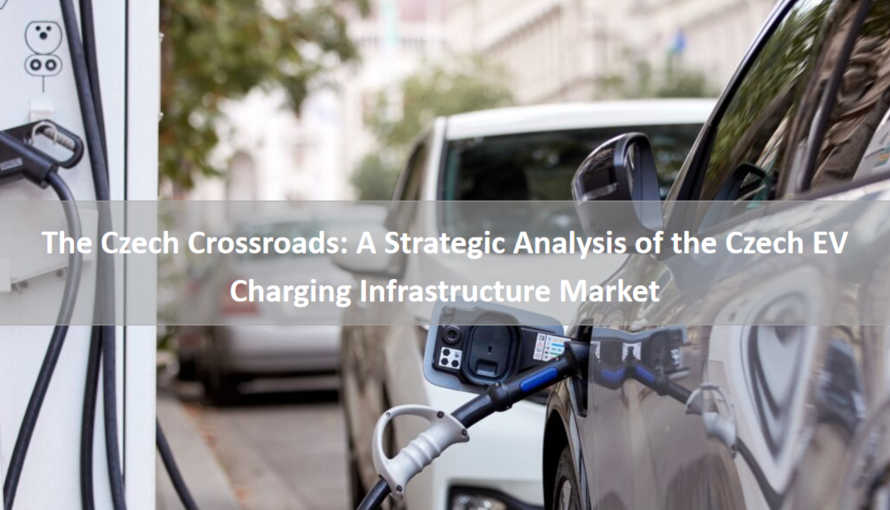
The Czech Republic stands at a pivotal intersection of European automotive history and its electric future. As a nation with one of the highest per-capita car production rates globally—home to Škoda Auto and major Hyundai and Toyota-Peugeot-Citroën plants—its economic identity is deeply tied to internal combustion engine (ICE) manufacturing. This legacy creates a unique market dynamic: a cautious but inevitable transition, driven by EU regulatory pressure, corporate strategy, and nascent local demand. The development of EV charging infrastructure is progressing steadily but reflects this caution, characterized by utility-led development, strategic EU fund absorption, and a focus on practical urban and corridor coverage.
This analysis concludes that the Czech EV charging market is on the cusp of accelerated growth, transitioning from a pilot phase to a systematic build-out. The market will be defined by a pragmatic, no-frills approach prioritizing coverage and reliability over technological experimentation. Success hinges on forming alliances with the dominant state-backed utility, understanding the nuanced grant landscape, and providing robust, EU-compliant hardware suited to continental climate challenges. For Anari Energy, the Czech market represents a strategic opportunity to embed the Vulco DC Series as the reliable, high-performance backbone for the nation's emerging charging corridors and municipal projects, establishing a stronghold in Central Europe's industrial core.
1. The Czech Republic's National Charging Station Policy: EU Alignment and Pragmatic Implementation
Czech policy is fundamentally shaped by EU directives and a pragmatic focus on leveraging available funds without overly disruptive national subsidies.
1.1 The National Clean Mobility Action Plan
This plan, aligned with the EU's AFIR (Alternative Fuels Infrastructure Regulation), sets the framework for infrastructure development. Targets are methodical rather than aggressive, focusing on ensuring minimum coverage along the TEN-T core network and in urban agglomerations. The state's role is primarily coordinative and facilitative.
1.2 The Dominance of EU Funding
The Modernisation Fund and Recovery and Resilience Facility (RRF) are the primary financial engines for public charging infrastructure. Development is heavily project-based, tied to successful grant applications from municipalities, utilities, or private consortia. Understanding the tender processes of the Ministry of Industry and Trade (MPO) and the Ministry of Transport is a critical competency.
1.3 Supportive but Limited Direct Incentives
While purchase subsidies for EVs exist (the "Škoda Electric" and other programs), they are modest compared to Western Europe. The focus for infrastructure is on removing barriers and co-financing projects through EU funds, rather than creating a high-subsidy, high-risk environment.
2. Current Development Status of Charging Stations in the Czech Republic
The infrastructure network is developing logically, with clear leaders emerging in a still-young market.
2.1 Utility-Led Network Expansion
The state-controlled energy giant ČEZ Group is the unequivocal market leader through its ČEZ ESK network. Leveraging its brand trust, grid connections, and real estate, it is building the most comprehensive national network, focusing on highways (D1, D5) and major cities. Other regional utilities are following suit.
2.2 The "Škoda Factor" and OEM Influence
As the national champion, Škoda Auto's transition strategy heavily influences the market. Its investment in the Electrify Bohemia charging network (in partnership with PPE) and its upcoming EV model roll-out are key demand drivers. Other OEMs are present but with less strategic weight.
2.3 Focus on Prague and Key Corridors
Infrastructure is concentrated in the Prague metropolitan area and along the primary highway corridors connecting to Germany, Poland, and Austria. Coverage in secondary cities and rural areas remains sparse, representing both a gap and a future opportunity tied to EU cohesion funding.
3. The Czech Republic's Requirements for Charging Stations (Climate, Grid & Standards)
The operational environment demands resilience, compliance, and cost-effectiveness.
3.1 Continental Climate Resilience
Experiencing cold winters (down to -20°C in regions) and warm summers, hardware must have a wide operational temperature range. Effective battery preconditioning support in winter and thermal management to prevent summer throttling are essential. Robust construction to withstand freeze-thaw cycles is a must.
3.2 Full EU and National Technical Compliance
As an EU member, full compliance with CCS2 standards, CE marking, and metering directives is mandatory. Additionally, integration with the Czech grid requires adherence to local technical norms set by the distribution system operators (ČEPS, regional DSOs). Products must be pre-certified for smooth market entry.
3.3 Pragmatic Durability and Low TCO
The market values reliability and low total cost of ownership over flashy features. Hardware must be durable, easy to maintain, and energy-efficient. Vandal resistance is important for public units in urban areas.
4. Growth Opportunities in the Czech EV Charging Market
Opportunities align with EU funding priorities and the nation's economic geography.
4.1 Winning EU-Funded Public Tenders
The most significant near-term opportunity lies in successfully bidding for projects funded by the Modernisation Fund or RRF. These will focus on filling geographic gaps, deploying HPC on highways, and municipal charging in smaller cities. Consortiums involving Czech integrators, utilities, and technology providers will be key.
4.2 Serving the Industrial and Logistics Fleet
The Czech Republic's strong manufacturing and logistics base (centered in Moravia-Silesia, Ústí nad Labem) will see fleet electrification. This creates demand for depot charging solutions and dedicated charging at industrial parks. This B2B segment prioritizes uptime and operational cost savings.
4.3 The "Destination Charging" Build-Out for Tourism
As a major tourist destination (Prague, Český Krumlov, spa towns), there is growing need for reliable destination charging (both AC and fast DC) at hotels, attractions, and along scenic routes. Partnerships with tourism boards and hotel chains present a viable niche.
5. Major Players in the Czech Charging Stations Market
The landscape is consolidating around a few dominant, well-capitalized entities.
- The National Champion: ČEZ Group (ČEZ ESK). The dominant force, with the capital, infrastructure, and strategic intent to build the national backbone.
- The Automotive Incumbent: Škoda Auto/Electrify Bohemia. A key influencer and network builder, focused on supporting its brand and customers.
- Oil & Gas Transitioners: MOL (in partnership with local players), Shell. Leveraging existing fuel station networks for strategic corridor sites.
- International CPOs: Ionity. Focused on ultra-fast charging on major transit corridors like the D5 to Germany.
- Regional Utilities and Municipal Projects: Smaller players developing networks in their specific regions or cities with EU support.
6. Opportunities for the Anari Energy Vulco DC Series in the Czech Republic
The Vulco DC Series is positioned as the premium, reliable workhorse for the Czech market's foundational build-out.
6.1 The High-Reliability Partner for Utility Roll-Outs.
For ČEZ, network uptime and driver satisfaction are critical to maintaining its leadership and public trust. The Vulco DC's proven reliability in extreme continental climates minimizes operational risk and maintenance costs, making it an ideal partner for their nationwide expansion, especially in demanding locations.
6.2 The Industrial-Grade Solution for Fleet Depots.
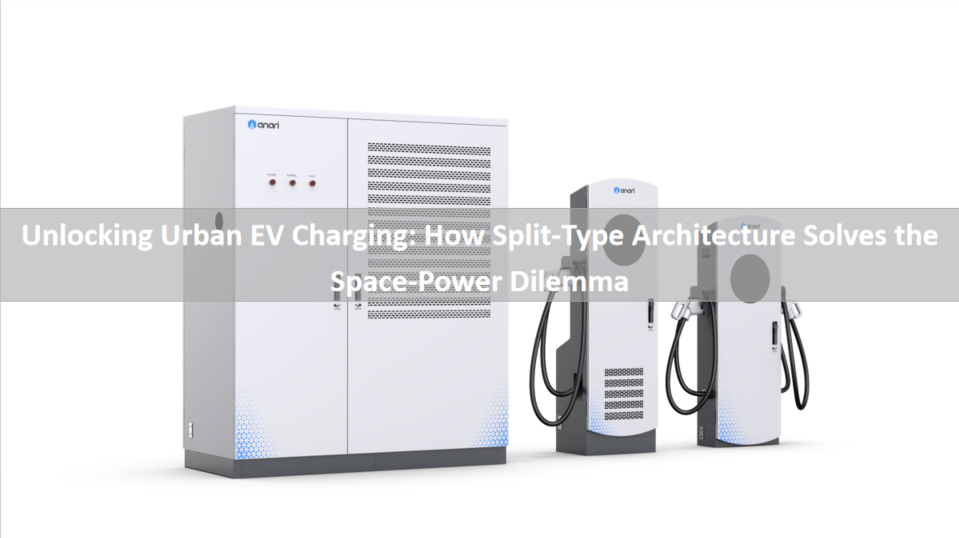
For the manufacturing and logistics fleets that form the backbone of the Czech economy, downtime is lost revenue. The Vulco DC's robust design, high uptime, and scalable power through modular cabinets provide a dependable foundation for depot electrification. Its smart load management optimizes energy costs, a key TCO argument.
6.3 Winning Tenders Through Certified Compliance and Performance.
For consortia bidding on EU-funded projects, proposing a technically superior and fully certified solution de-risks the bid. The Vulco DC's full compliance with EU and anticipated Czech technical norms, combined with its high-performance data, strengthens grant applications and tender submissions.
6.4 Establishing a Brand for Quality in a Growing Market.
By establishing early reference sites—such as a key highway HPC hub with ČEZ or a major industrial depot—Anari can position the Vulco DC Series as the benchmark for quality and reliability. In a market that prioritizes pragmatism, a reputation for "set-and-forget" durability is a powerful competitive moat.
Conclusion and Strategic Outlook
The Czech EV charging market is characterized by steady, predictable growth underpinned by EU mandates and the strategic pivots of its industrial giants. It is a market where relationships, regulatory knowledge, and proven reliability trump flashy innovation.
The coming years will see a methodical filling of the infrastructure map, driven by successful EU fund absorption. The competitive landscape will favor technology providers who can seamlessly integrate into Czech utility and engineering partnerships, offering products that are both sophisticated in their compliance and rugged in their simplicity.
For Anari Energy, the Czech Republic is a critical strategic beachhead in Central Europe. Success here—providing the reliable backbone for the nation's transition—offers a powerful proof point for neighboring markets like Poland, Slovakia, and Hungary. It is a market where earning trust through performance can secure a long-term leadership position in the heart of Europe's automotive landscape.



















.png)

