
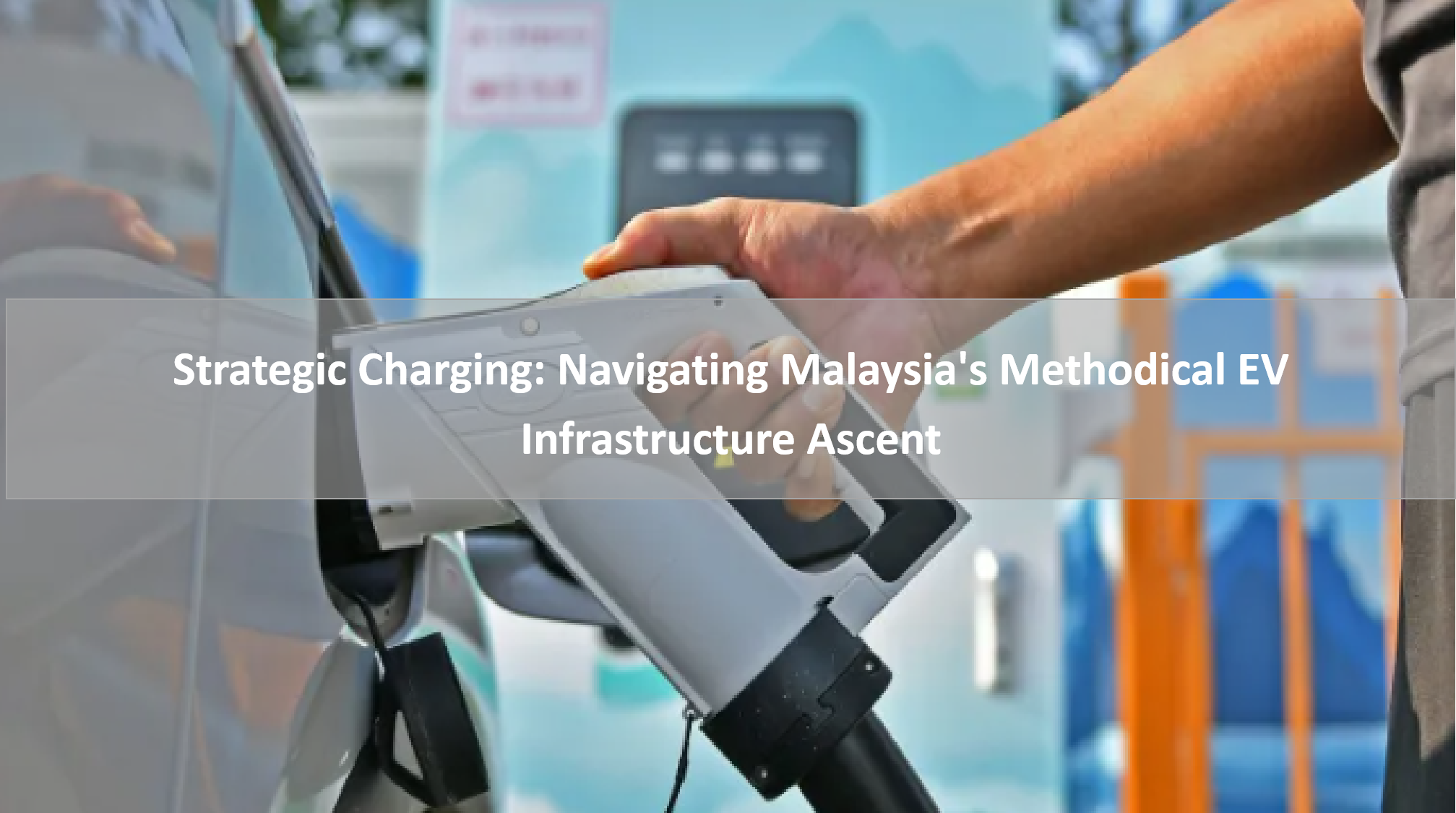
Executive Summary
Malaysia's electric vehicle (EV) transition is characterized by a methodical, government-led approach, distinct from the aggressive, subsidy-driven models of its neighbors. The market is at a critical juncture, having moved past initial pilot projects and is now scaling towards a comprehensive national network. Growth is catalyzed by a combination of targeted fiscal incentives, the proactive involvement of the national utility giant Tenaga Nasional Berhad (TNB), and a burgeoning demand for premium and commercial EVs.
This analysis concludes that Malaysia's EV charging market presents a high-value, albeit complex, opportunity. The development will be heavily influenced by public-private partnerships (PPPs), with a clear trajectory from urban centers to highway corridors. A key insight is the emergence of a bifurcated demand: one for high-reliability, high-uptime DC fast charging (DCFC) for premium private EVs and commercial fleets, and another for a widespread network of affordable AC destination charging. Success hinges on navigating the regulatory landscape, forming alliances with key property and utility players, and deploying hardware that can withstand tropical operating conditions while delivering consistent performance. For technologically advanced and resilient solutions like the Anari Energy Vulco DC Series, the opportunity lies in becoming the preferred partner for network operators and commercial fleets who prioritize reliability and total cost of ownership over initial purchase price.
1. Malaysia's National Charging Station Policy: A Targeted and Incentive-Driven Framework
The Malaysian government, primarily through the Ministry of Transport and the Ministry of Energy and Natural Resources, has constructed a policy environment that de-risks early investment and sets clear national targets.
1.1 The National Automotive Policy (NAP) 2020 and Low Carbon Mobility Blueprint (LCMB) 2021-2030
These documents form the strategic core of Malaysia's EV ambition. The LCMB is particularly significant, outlining quantifiable targets: 10,000 EV charging stations by 2025, with a mix of AC and DC chargers.
A 38% reduction in GHG emissions from the transportation sector by 2030.
Direct fiscal incentives for the installation of charging equipment.
Strategic Insight: The 2025 target is aggressive and has created a tangible deadline, driving action from both government agencies and private entities. For operators and installers, this represents a clear, time-bound market opportunity backed by policy intent.
1.2 Fiscal Incentives: Stimulating Supply and Demand
The government is using tax structures effectively to stimulate the market:
For Charging Station Operators (CSOs): Full exemption from income tax for 10 years until 2032, and investment tax allowance of 100% on qualifying capital expenditure.
For Manufacturers/Assemblers: Incentives for local assembly (CKD) of EVs and EV components, including charging stations.
For Consumers: Full import and excise duty exemptions for EVs (until end-2025), and road tax exemptions.
Strategic Implication: The tax exemptions for CSOs significantly improve the return on investment (ROI) calculus, making the business case for deploying charging infrastructure far more attractive. This pulls private capital into the market.
1.3 The Central Role of Tenaga Nasional Berhad (TNB)
As the national utility, TNB is not just a power provider but a key ecosystem developer. Through its subsidiary, TNB Electron, it is actively deploying charging stations, developing an open-access charging network management system, and investing in grid upgrades to support EV load.
Strategic Implication: TNB's involvement provides credibility and scale. However, it also means that the market's architecture—including payment systems and grid integration standards—will be heavily influenced by TNB's strategy. Partnering or aligning with TNB is a critical success factor.
2. Current Development Status of Charging Stations in Malaysia
The market is transitioning from early adoption to early growth, with infrastructure concentrated in economically viable locations.
2.1 Geographic Concentration and Corridor Development
The majority of public charging stations are currently located in the Klang Valley, Penang, and Johor Bahru—regions with high population density and purchasing power. The initial phase focused on AC destination charging at shopping malls, office buildings, and hotels. The current phase is seeing the rapid deployment of DC fast chargers (50kW-180kW) along key North-South Expressway corridors, creating the backbone for inter-city EV travel.
2.2 The Operator Landscape: A Mix of State and Private Players
The market features a blend of state-linked and private operators. TNB Electron and PETRONAS (Gentari) are leading the charge, leveraging their existing real estate (substations and fuel stations, respectively). Private players like ChargeSini and JomCharge are building networks through partnerships with property developers. This creates a competitive but collaborative environment.
2.3 The Fleet Electrification Niche
The electrification of commercial fleets, particularly ride-hailing vehicles (via Grab et al.) and last-mile logistics vans, is gaining momentum. These high-utilization vehicles have a fundamentally different charging profile than private cars, requiring reliable, fast charging during short operational windows. This segment is underserved and represents a high-uptime, high-volume opportunity for specific charging solutions.
3. Malaysia's Requirements for Charging Stations (Climate & Grid)
Malaysia's tropical climate and urban density impose specific requirements on charging infrastructure.
3.1 Tropical Resilience: Heat and Humidity
Consistently high temperatures (28-35°C) and extreme humidity (often over 80%) are the primary environmental challenges. Chargers must have:
Advanced Thermal Management: Passive cooling is insufficient. Liquid-cooled cables and internally cooled power electronics are preferred to prevent thermal throttling and maintain rated charging speed.
High Ingress Protection (IP Rating): A minimum of IP54 for general use, and IP65 for coastal or heavy rainfall areas, is essential to protect against moisture and dust.
3.2 Grid Compatibility and Power Quality
In dense urban areas, grid capacity can be a constraint. Furthermore, power quality can vary.
Requirement: Chargers with smart power management capabilities are crucial. Features like dynamic load balancing allow a site to host multiple chargers without expensive grid upgrades. Built-in protection against voltage fluctuations is also a key durability feature.
3.3 Space Efficiency and Vandal Resistance
In crowded urban centers and public parking facilities, chargers need a small physical footprint. Furthermore, public infrastructure must be designed to deter vandalism.
Strategic Implication: The market will gravitate towards "set-and-forget" charging solutions that require minimal maintenance, deliver consistent performance in a harsh climate, and can operate within the constraints of existing urban electrical infrastructure.
4. Growth Opportunities in Malaysia's Electric Vehicle Charging Station Market
Beyond the general market expansion, several high-value vectors are emerging.
4.1 The Commercial Fleet Depot Charging Boom
As ride-hailing and logistics companies commit to electrification, the demand for depot charging will explode. The opportunity is not just in selling hardware but in providing an end-to-end "Depot Charging Solution" that includes load management software, scheduled charging, and maintenance services. This segment values Total Cost of Ownership (TCO) and vehicle uptime above all else.
4.2 The High-Value Highway Corridor
The ongoing rollout of DCFC on the North-South Expressway is a foundational project. The next wave will be the development of charging hubs at key rest stops, combining multiple DCFC stalls, retail amenities, and potentially energy storage systems to manage grid demand. This requires high-power, ultra-reliable chargers.
4.3 The "Silver-to-Gold" Conversion of Existing Real Estate
There is a massive opportunity to retrofit existing commercial and residential properties with EV charging. Property developers and management companies are seeking trusted partners to provide scalable, manageable, and safe charging solutions for their tenants, creating a long-term B2B partnership model.
5. Major Players in Malaysia's Charging Stations Market
The competitive landscape is consolidating around well-funded, strategic players.
The Utility Anchor: TNB Electron. The most powerful player, controlling grid access and deploying its own network. They set the de facto technical and operational standards.
The Energy Giant in Transition: PETRONAS (Gentari). Leveraging its vast network of fuel stations and corporate capital to build a competitive charging network, often in partnership with OEMs.
Aggressive Private Networks: ChargeSini, JomCharge. Building extensive networks through hyper-local partnerships with malls, hotels, and restaurants. They compete on network density and user experience.
Automotive OEMs: BMW, Mercedes-Benz, and Hyundai are installing chargers at dealerships and premium locations to support their customers and enhance brand value.
Competitive Insight: The market is shifting from a race for location count to a competition on network reliability, charging speed, and user experience. A charger that consistently delivers its advertised power without downtime is a key differentiator for network operators.
6. Opportunities for the Anari Energy Vulco DC Series in Malaysia
The Vulco DC Series is strategically positioned to address the most critical needs of the evolving Malaysian market.
6.1 Becoming the Fleet Operator's Partner of Choice:
The Vulco DC Series, with its modular design and advanced load management, is an ideal solution for depot charging. Fleet operators can start with a lower power investment and scale cost-effectively. The series' proven reliability in high-temperature, high-humidity environments ensures maximum vehicle uptime, which is the core KPI for any commercial fleet. This allows Anari Energy to move beyond a hardware sale to a strategic partnership based on guaranteeing operational readiness.
6.2 Winning High-Value Tenders for Highway Corridors:
For players like TNB and Gentari building out highway DCFC hubs, network uptime and reputation are paramount. The Vulco DC Series’ robust engineering and resistance to thermal throttling ensure that an EV driver receives the promised charging speed even on a hot day, enhancing customer satisfaction and network credibility. This makes it a lower-risk, higher-performance choice for these foundational infrastructure projects.
6.3 Providing a Premium Solution for Property Developers:
High-end residential and commercial developments seek premium amenities. The Vulco DC Series, with its sleek design and superior performance, serves as a future-proof infrastructure investment for property developers looking to attract affluent tenants and buyers, and to meet evolving green building standards.
6.4 Demonstrating Superior Total Cost of Ownership (TCO):
While the initial CapEx of a premium charger may be higher, the Vulco DC Series wins on TCO in the Malaysian context. Its durability reduces maintenance costs and downtime, and its energy efficiency lowers operational expenses. For a network operator managing hundreds of sites, this long-term value proposition is far more compelling than a low upfront cost.
Conclusion and Strategic Outlook
Malaysia's EV charging market is on a clear, government-supported growth trajectory. The period from now until 2025 is critical for establishing market leadership and securing prime locations and partnerships.
The market will mature rapidly, and the basis of competition will inevitably shift from the number of ports to the quality of service. Network uptime, charging speed consistency, and seamless user experience will become the key differentiators. Companies that invest now in reliable, climate-resilient, and intelligent charging infrastructure will be best positioned to capture long-term value.
Anari Energy, with the Vulco DC Series, is not just selling a charger; it is offering a strategic asset for building a reliable and reputable charging network. By focusing on the high-uptime demands of commercial fleets and the quality requirements of leading network operators, Anari can secure a pivotal and profitable role in Malaysia's electric future.



















.png)

