The African EV Charging Paradox: Navigating Barriers and Seizing Opportunity in an Emerging Market
Executive Summary:
The global transition to electric mobility is inevitable, yet its trajectory is not uniform. While Africa's current Electric Vehicle (EV) penetration is nascent, it is on the cusp of a transformative leap, driven not by luxury consumer markets but by pragmatic economic and environmental necessities. This report analyzes the burgeoning charging infrastructure market across Africa's key economies—South Africa, Nigeria, Egypt, Algeria, Ethiopia, Morocco, and Kenya. We identify a critical paradox: the very challenges stifling widespread adoption—grid,the harsh climates, and cost sensitivity—are creating a unique market window for robust, decentralized, and economically viable charging solutions. The successful players in this space will not be those who simply transplant Western or Asian models, but those who engineer for African realities. Anari Energy, with its strategically developed Pales DC Series, is poised to address this gap, offering a purpose-built solution that turns infrastructural constraints into operational strengths.
1. Charging Station Policies of Key African Nations
Government policy is the primary catalyst for EV infrastructure development. Across Africa, policy landscapes are fragmented but evolving rapidly from rhetoric to actionable frameworks.
- South Africa: As the most industrialized nation, South Africa leads with a structured approach. The Draft Green Transport Strategy and tax incentives for EV manufacturing aim to achieve a 2.5% EV share in new car sales by 2030. However, the policy focus remains largely on vehicle assembly, with charging infrastructure development left primarily to private enterprise, creating a need for self-sustaining business models.
- East African Community (Kenya, Ethiopia): These nations are leapfrogging traditional industrial models. Kenya's National Energy Efficiency and Conservation Strategy and Ethiopia's Green Legacy Initiative directly link e-mobility to national energy security and environmental goals. Nairobi is emerging as a hub for electric motorcycle and bus startups, supported by favorable tax regimes on EV imports and components, implicitly encouraging private investment in charging networks.
- North Africa (Egypt, Morocco, Algeria): Policy here is driven by energy diversification and economic strategy. Morocco, an automotive manufacturing powerhouse, offers the "Franchise Taxe" incentive for EV and battery production. Egypt is leveraging its hosting of COP27 to push its National Climate Strategy 2050, which includes targets for EV adoption. Algeria, traditionally reliant on hydrocarbons, is beginning to explore e-mobility as part of a broader economic diversification plan. These top-down initiatives are creating fertile ground for public-private partnerships in infrastructure.
- West Africa (Nigeria): Policy is nascent but driven by acute necessity. With some of the world's highest fuel costs and severe pollution in cities like Lagos, the government is formulating the National Automotive Industry Development Plan, which includes provisions for EVs. The real driver, however, is the crippling cost of petrol, making the economic case for electric fleets compelling even without substantial subsidies.
Anari Insight: The policy environment is characterized not by lavish subsidies, but by strategic enabling. This places the onus on charging infrastructure providers to deliver solutions that are financially viable without heavy state support, highlighting the need for cost-effective and rapidly deployable models.
2. Current Development Status of Charging Stations in Africa
The African charging infrastructure market is in the "islands of development" phase. The landscape is a patchwork of pilot projects and early-stage commercial deployments, concentrated in urban centers and along major economic corridors.
- Urban Concentration: Charging points are predominantly found in capital cities like Nairobi, Cape Town, and Cairo, located at shopping malls, luxury hotels, and corporate offices. These are often AC slow chargers, serving the initial wave of private EV owners.
- Corridor Development: A more strategic trend is the development of charging corridors. Projects are underway to install DC fast chargers along key routes, such as the Nairobi-Nakuru highway in Kenya or between major cities in South Africa. This is critical for enabling inter-city logistics and travel, a key market for electric buses and trucks.
- Technology Mix: The market is currently dominated by AC chargers due to lower costs. However, for commercial applications (buses, logistics fleets), the demand for DC fast charging is inherent. The constraint is not just the charger cost, but the immense grid capacity required, which is often unavailable.
- The "Pilot Project" Paradigm: Many existing installations are donor-funded or corporate CSR initiatives. While they raise awareness, their long-term operational sustainability is often unproven. The market is now transitioning towards commercially-driven, profit-seeking investments.
Anari Insight: The current status reveals a critical gap: a lack of commercially-scalable DC charging solutions. The existing infrastructure is either too slow for commercial use or too grid-dependent for widespread deployment. This gap represents the core market opportunity.
3. Imperative Requirements for Charging Stations in the African Context
The African operating environment imposes non-negotiable requirements on hardware, fundamentally differentiating it from developed markets.
- Climate Resilience: Charging piles must endure extreme and variable conditions.
- Dust and Sand (IP54+): The Sahara and Kalahari deserts necessitate protection against fine particulate matter that can destroy electronics.
- Humidity and Rain (IP54+): Tropical climates in West and Central Africa and seasonal rains require robust sealing against moisture.
- High Temperatures: Thermal management systems must operate efficiently in consistent heat to preserve battery life and charger integrity.
- Grid Independence and Power Stability: This is the single most critical factor. Unreliable grid power, frequent brownouts, and complete lack of grid access in rural areas mandate solutions that are not grid-reliant.
Integrated Solar Compatibility: The ability to integrate directly with solar PV systems is not a luxury but a core operational requirement for off-grid and weak-grid locations.Battery Buffer Storage: To mitigate grid instability and manage demand charges, chargers must be compatible with battery energy storage systems (BESS).
- Ruggedization and Vandal-Resistance (IK08+): In environments with limited security, hardware must be physically robust to deter theft and vandalism. A sturdy, impact-resistant shell is essential.
- Operational Simplicity and Ease of Maintenance: With a potential shortage of highly specialized technicians, chargers must be easy to install, operate, and maintain. Modular designs and readily available components are crucial to minimize downtime.
Anari Insight: The African market does not merely need "chargers"; it needs all-terrain energy delivery units. Product design must be rethought from the ground up, prioritizing resilience and independence over advanced features that are irrelevant in this context.
4. Growth Opportunities in the Charging Station Market in Africa
The growth will not be led by passenger vehicles but by commercially-driven use cases where the Total Cost of Ownership (TCO) argument is overwhelming.
- Electric Bus Fleets: Major African cities are choking on pollution from diesel buses. Municipalities and private operators in Lagos, Nairobi, and Cairo are actively piloting electric buses. This creates a concentrated, high-utilization demand for depot-based and terminal-based DC fast charging.
- Electric Logistics and Last-Mile Delivery: The e-commerce boom, led by companies like Jumia, is driving demand for efficient urban delivery. Electric vans and motorcycles offer significantly lower running costs. This segment requires decentralized charging hubs at distribution centers.
- Heavy-Duty Mining and Logistics: The mining sector, a cornerstone of economies like South Africa and the DRC, is exploring electric trucks for underground operations and short-haul logistics to reduce emissions and operational costs. This requires ultra-robust, high-power charging solutions.
- Energy Company Diversification: Oil and gas companies and national utilities see EV charging as a logical diversification strategy. TotalEnergies and Shell are already installing chargers at their retail stations across the continent. For them, a reliable, low-maintenance product is key to building a new brand promise.
- Micro-Mobility and Battery-Swapping Networks: The massive adoption of electric motorcycles and tuk-tuks for public transport represents a parallel charging ecosystem, often better served by centralized battery-swapping stations, which themselves require robust DC power supplies.
5. Major Players in the Charging Station Market in Africa
The competitive landscape is taking shape, with distinct categories of players.
- International Giants: Companies like ABB and Schneider Electric have a presence, often through their local industrial distributors. Their products are high-spec but can be cost-prohibitive and sometimes over-engineered for local needs, with complex maintenance requirements.
- Regional Specialists: Local startups and energy companies are emerging, such as Kenya's Ampersand (battery-swapping for motorcycles) and GridCars in South Africa. Their strength is deep local market knowledge, but they may lack the global R&D scale and manufacturing capability.
- Chinese Manufacturers: Chinese brands are making inroads with competitively priced hardware. However, concerns over long-term quality, after-sales service, and spare parts availability can be a barrier for large-scale infrastructure investors.
- Oil and Gas Majors: TotalEnergies and Shell are not manufacturers but are becoming pivotal customers and channel partners. They are curating a selection of charger brands for their continent-wide networks.
Anari Insight: The market is open for a player that combines the engineering rigor and global quality of an international leader with the cost-effectiveness, ruggedization, and local market focus of a regional specialist.
6. Strategic Opportunity for the Anari Energy Pales DC Series
The Pales DC Series is not merely another product; it is a strategic response to the core challenges and opportunities identified in this report. It is engineered to excel precisely where the African market needs it most.
- Addressing the Core Paradox:
Grid Independence: The Pales DC Series' native DC architecture allows for seamless integration with solar arrays and battery storage. This turns the continent's grid instability into a competitive advantage for early adopters, enabling them to charge with clean, low-cost, reliable solar power.
Exceptional Cost-Effectiveness: Its economy model design offers a compelling TCO. The low initial investment reduces barrier-to-entry for installers and operators, while its high energy efficiency (>96%) directly translates to lower operational expenses, a critical factor for high-utilization commercial fleets.
- Built for the Environment:
The IP54 rating ensures protection against the pervasive dust of the Sahel and the heavy rains of the tropics.
The IK08 impact resistance provides the necessary ruggedization for unsupervised public or depot environments, ensuring longevity and reducing maintenance costs.
- Enabling Commercial Scalability:
For a logistics company in Nigeria, the Pales DC Series provides a reliable, off-grid way to power its delivery van fleet.
For a bus operator in Kenya, it offers a cost-effective way to deploy multiple DC fast chargers in a depot without requiring a prohibitively expensive grid upgrade.
For an energy company in Egypt looking to build a charging network, it represents a dependable, low-maintenance asset that can operate reliably in remote locations.
Conclusion and Strategic Recommendation:
The African charging station market is at an inflection point. The narrative is shifting from "if" to "how," and the "how" must be uniquely African. Success will belong to those who provide solutions that are resilient, economically rational, and tailored to the continent's specific operational realities.
Anari Energy, through the Pales DC Series, is strategically positioned to lead this charge. We offer not just hardware, but a pragmatic pathway to electrification. For stakeholders across the value chain—from fleet operators and energy companies to investors and governments—the message is clear: the future of African e-mobility will be built on foundations of resilience and efficiency, not on transplanted, fragile models.
We invite potential partners across Africa to engage with us. Le t us build this resilient charging infrastructure together.
About Anari Energy: Anari Energy is a world-leading new energy charging pile company committed to engineering reliable, intelligent, and accessible EV charging solutions for global markets. Our Pales DC Series exemplifies our dedication to understanding and solving the unique energy challenges of emerging economies.
0
Comments


Leave a Comment
Your email address will not be published. Required fields are marked *
Your Name*
Your Email*
Submit Comment

You Might Also Like...
-
Global EV Charging Infrastructure Market Landscape: 2025-2030
The global EV charging market is transitioning from being "policy-driven" to "dual policy-and-market-driven," with intensifying regional divergence: Southeast Asia is benefiting from manufacturing relocation, resource-rich Latin American countries are accelerating electrification, energy giants in the Middle East and Africa are diversifying into new energy, and the European market is entering the advanced stage of standardization and smart charging.2026 Mar,06 -
Overview of the Electric Vehicle and Charging Market in Central Asia
This article aims to provide a comprehensive overview of the current situation, infrastructure, policy environment, market challenges and opportunities, as well as industry associations in the electric vehicle and charging market of Central Asia.2026 Feb,05 -
Overview of the Australia Electric Vehicle and EV Charging Market
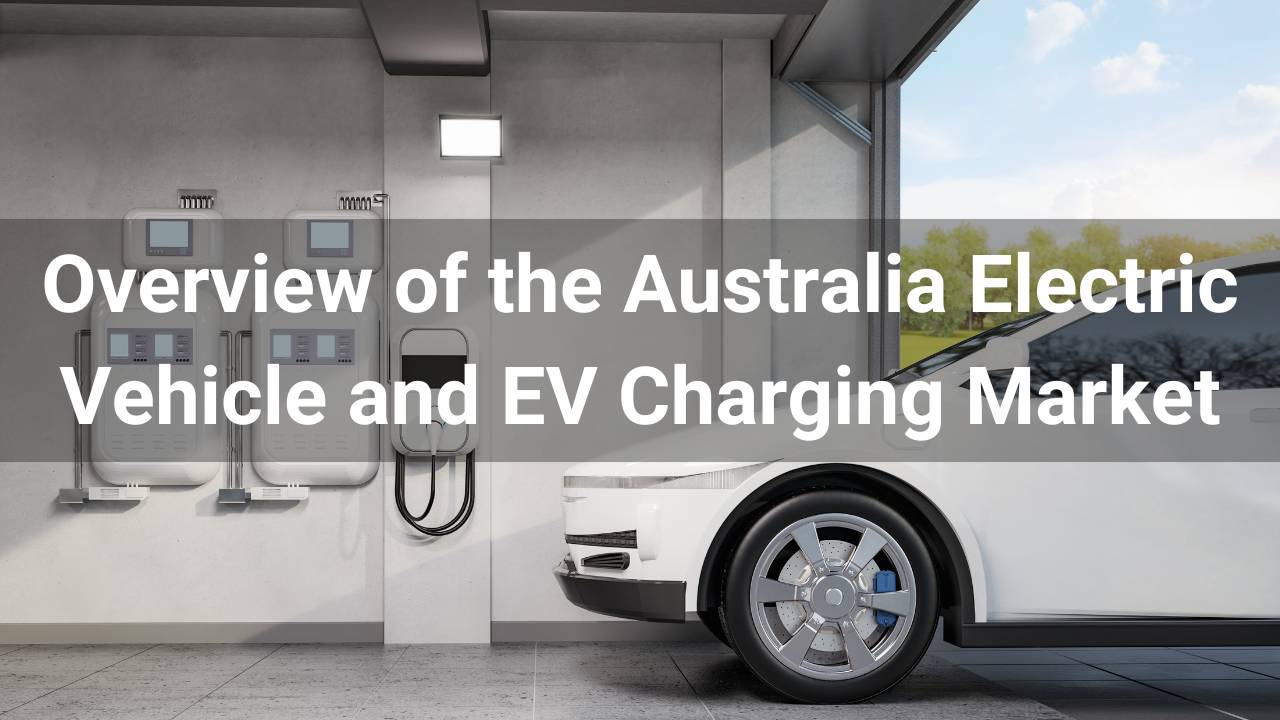
Australia's electric vehicle (EV) market is rapidly expanding, with Tesla leading the high-end segment and Chinese brands like BYD gaining traction among mid-to-low-end consumers.2026 Feb,05