




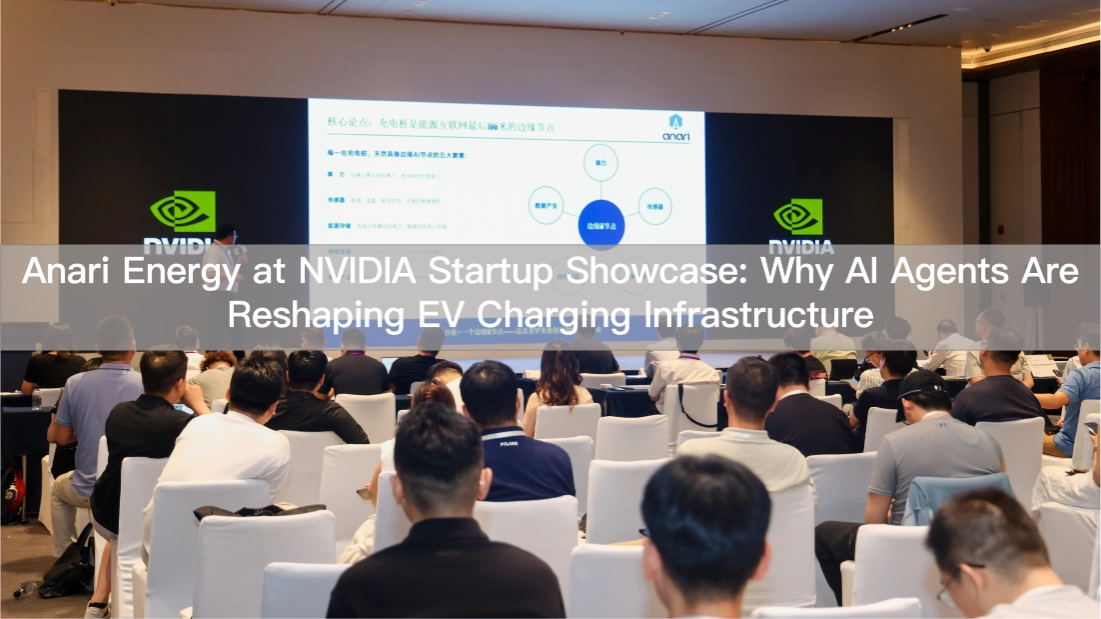
On July 31, 2026, NVIDIA’s Startup Showcase landed in Xi’an for the first time. The event focused on autonomous AI agents, physical AI, and large language model deployment — a gathering that looked like an AI startup ecosystem meetup on the surface. But if you work in EV charging infrastructure, the signal was louder than the agenda suggested.
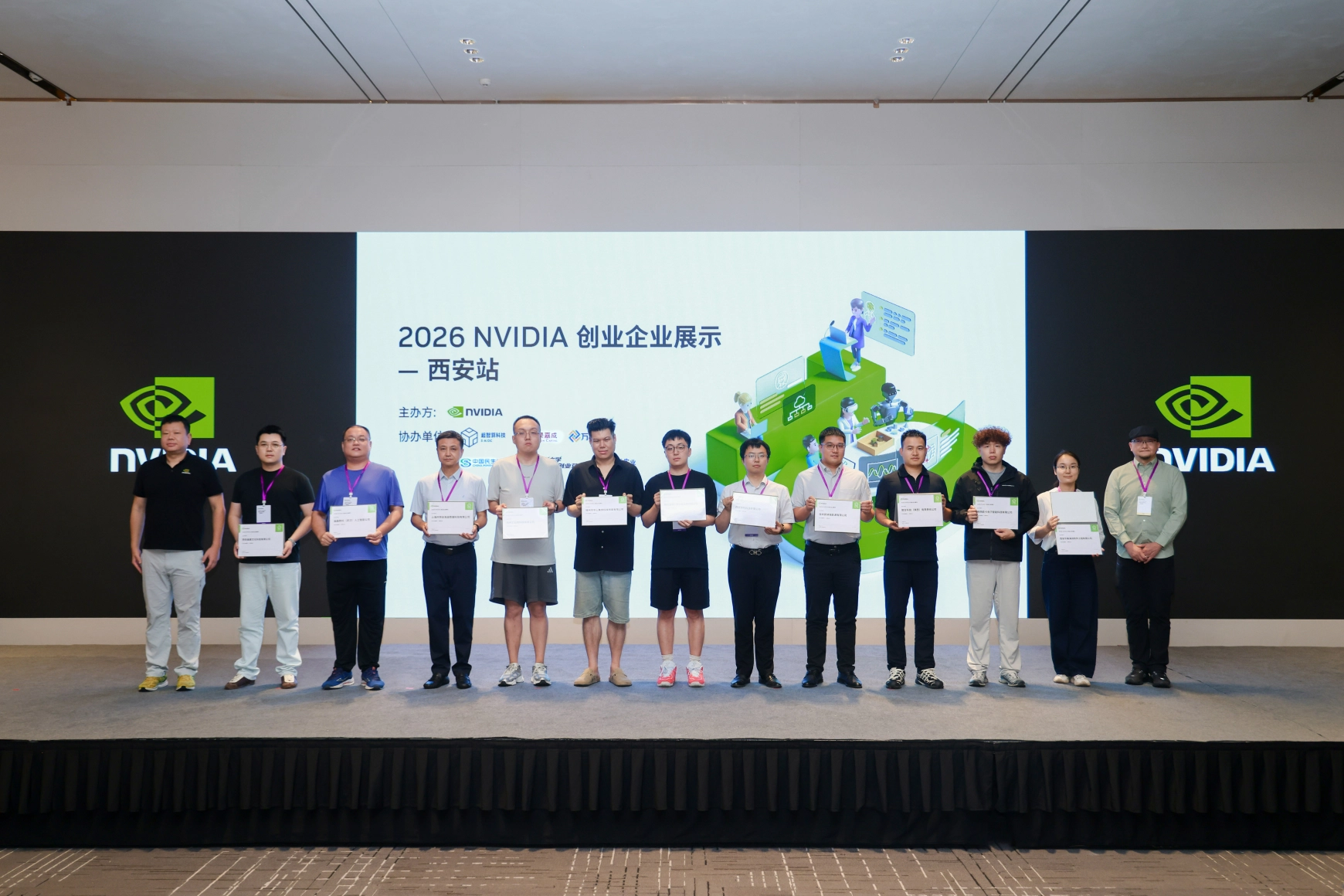
NVIDIA’s Startup Showcase is a nationwide series running since 2017 — ten consecutive years of connecting Chinese tech startups with technical guidance, venture capital, and industry partnerships. The 2026 edition spans Suzhou, Wuhan, Beijing, Chengdu, Shanghai, Macau, and beyond. Xi’an serves as the core stop for western China.
AI agents are moving out of chat windows and into the physical world. When they start making real-time decisions about equipment scheduling, diagnostics, and operations, EV charging stations — distributed energy nodes sitting on every city block — will be among the first infrastructure to be rebuilt.
1. Anari Energy’s Perspective: EV Chargers Are Natural Edge Nodes for AI Agents
As a global EV charging infrastructure company, Anari Energy has a clear read on this shift:
Every DC fast charger is fundamentally a distributed edge computing device.
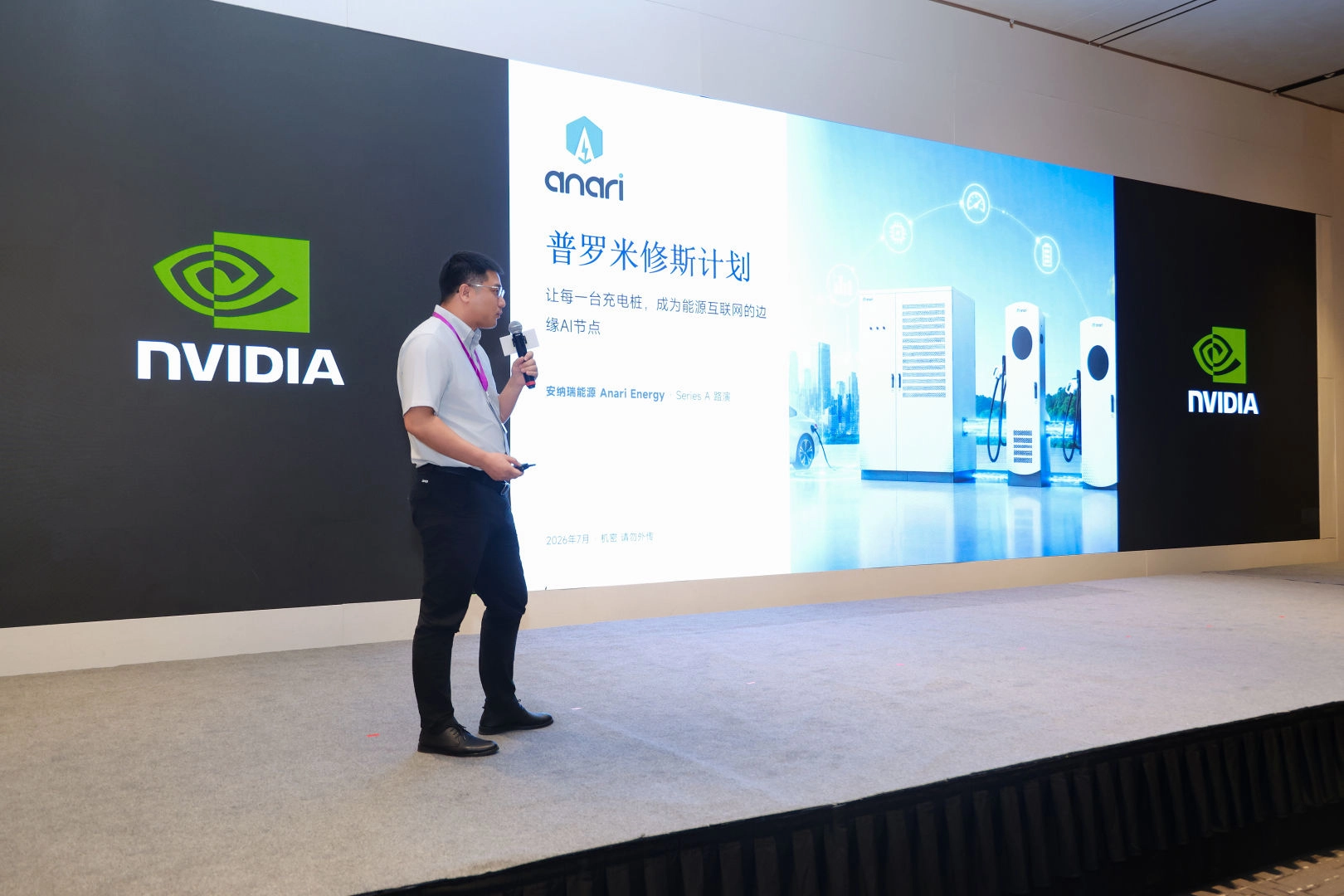
A 120kW DC fast charger contains power modules, a control board, communication modules, metering chips, and multiple sensors. It continuously generates data streams — current, voltage, temperature, charging curves. Under the OCPP (Open Charge Point Protocol) framework, this data can be remotely read and controlled by a CSMS (Charging Station Management System).
When an AI agent is deployed at the charging station edge, it can read these data streams directly and make localized decisions: dynamically adjusting charging power based on real-time electricity pricing and grid load, predicting equipment failures and auto-triggering maintenance work orders, or optimizing charge-discharge sequences in solar-plus-storage-plus-EV charging scenarios.
1.1 OCPP Gives AI Agents a Standardized Hardware Language
OCPP 2.0.1 introduces Smart Charging, Device Monitoring, and ISO 15118 Plug & Charge — capabilities that essentially provide standardized device control interfaces for external intelligent systems.
For AI agent developers, this means no need to understand every manufacturer’s proprietary communication protocols. A single OCPP-compliant interface connects to any compatible charger. Anari Energy’s full product line supports OCPP 1.6J.
1.2 Solar + Storage + EV Charging: Where AI Agents Deliver the Most Value
In a PV + BESS + EV charging triad, an AI agent simultaneously handles:
- Solar output forecasting and fluctuation smoothing
- Battery charge-discharge strategy and cycle-life optimization
- Charging station power allocation and grid demand response
- Revenue-maximizing scheduling under time-of-use electricity pricing
This complexity has already surpassed what manual rule-based systems can handle. The AI agent’s value here is turning every kilowatt-hour’s charge-discharge timing into a profit-optimal decision — not an experience-based estimate.
2. AI + EV Charging: Three Deployment Scenarios Accelerating Now
Based on current technology maturity and industry demand, AI agents in charging infrastructure are accelerating in three directions:
2.1 Scenario 1: Predictive Maintenance
| Traditional Approach | AI Agent Approach |
| Dispatch repair after failure | 72-hour early warning from power module temperature curves and current harmonic signatures |
| Scheduled manual inspections (high labor cost, high miss rate) | 24/7 health monitoring across all equipment, auto-generated maintenance work orders |
| Experience-based spare parts inventory | Dynamic inventory optimization from failure prediction models |
2.2 Scenario 2: Dynamic Smart Charging
| Traditional Approach | AI Agent Approach |
| Fixed power allocation per charger | Dynamic allocation based on real-time electricity price, grid available capacity, and user demand |
| Manual power reduction during grid overload | Agent predicts load peaks and initiates flexible derating 15 minutes ahead |
| Revenue from fixed electricity price spread | Real-time margin optimization combining time-of-use pricing and demand response incentives |
3.3 Scenario 3: Energy Internet Node Autonomy
When a charging station connects to the broader energy internet — V2G (Vehicle-to-Grid) reverse feed-in, virtual power plant dispatch, carbon trading — the AI agent becomes each site’s autonomous operations brain: independently making charge-discharge decisions, bidding into power markets, and calculating carbon emissions — without human intervention.
4. Anari Energy’s AI Strategy: From Edge AI Compute Platform to Energy Agent
Anari Energy has treated AI capability as a core differentiator for EV chargers since day one, not an add-on feature. Our technical roadmap:
Phase 1 (Complete): Hardware-Ready. Full DC fast charger product line supports OCPP 1.6J with edge computing capability, providing the hardware foundation for AI agent deployment.
Phase 2 (In Progress): Data Loop. Real-time charging station data collection, cloud aggregation, and model training infrastructure are under development, targeting a digital twin model for every charging station.
Phase 3 (Planned): Energy Agent. Deploy autonomous scheduling capability at every charging station using AI agent frameworks — from power allocation to revenue optimization, from fault diagnosis to carbon footprint accounting, all handled autonomously.
5. Conclusion: Infrastructure Companies Need to Watch AI Agents — and Ask the Right Questions
The signal from NVIDIA’s Xi’an event is not “the EV charging industry will be disrupted by AI.” It is this: AI agents are gaining the ability to enter the physical world, and charging infrastructure is one of the highest-value deployment scenarios available.
For Anari Energy and the broader industry, the right question is not “Should we use AI?” It is:
- Do your EV chargers have the edge compute capacity to run an AI agent?
- Do your devices support open protocols like OCPP 1.6J so AI agents can actually read your hardware?
- Can your data infrastructure support continuous AI model training and iteration?
The answers will determine who secures a position in the next wave — when AI agents start permeating physical infrastructure at scale.
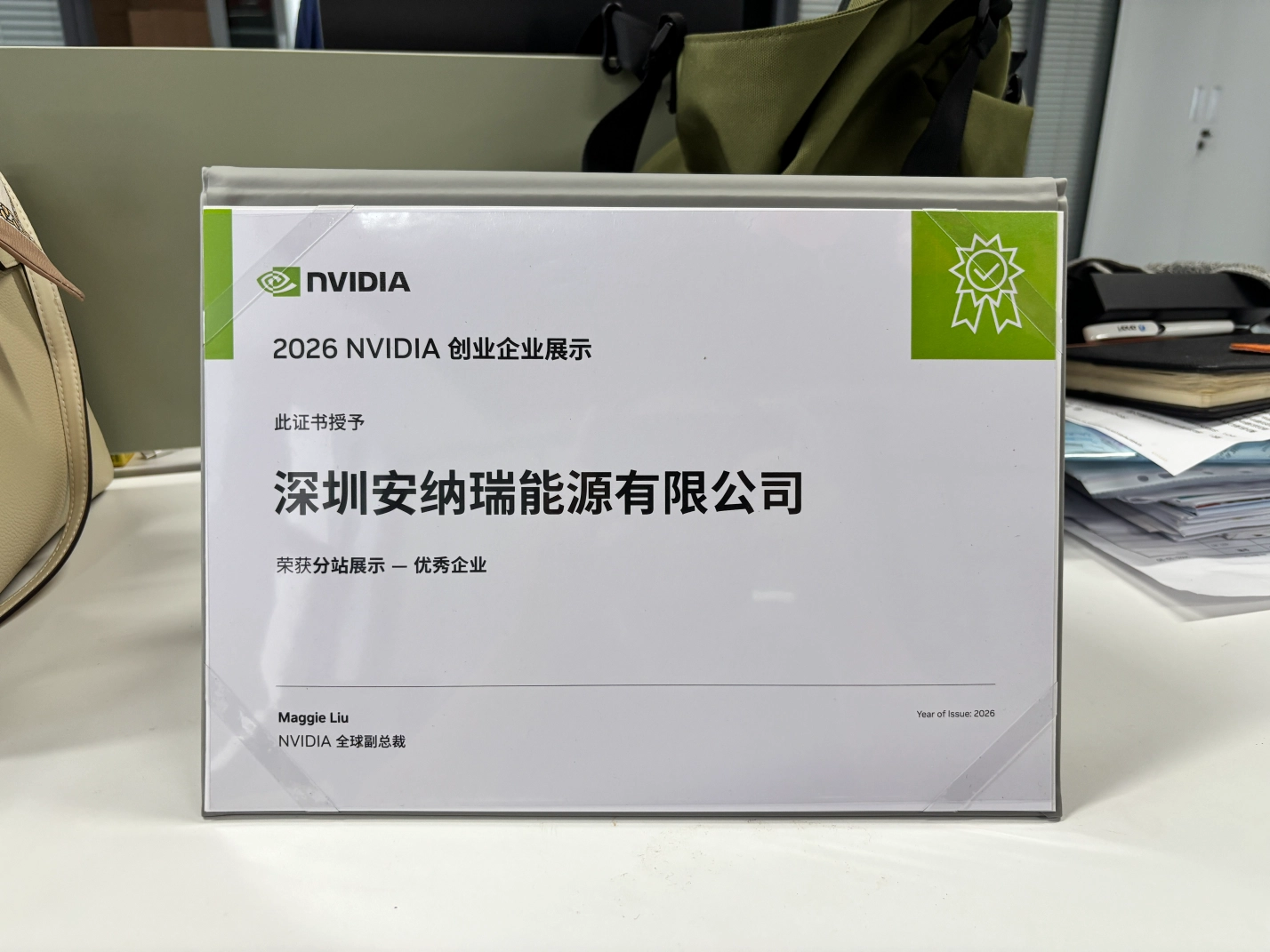
About Anari Energy
Anari Energy (www.anariev.com) is Shenzhen Anari Energy Co., Ltd.’s global EV charging infrastructure brand, headquartered in Shenzhen with operations across Eastern Europe, the Middle East, Central Asia, Southeast Asia, South America, and Africa. The company focuses on DC fast chargers and solar-plus-storage-plus-charging integrated solutions, driven by AI-powered energy scheduling technology that turns every kilowatt-hour’s charge-discharge timing into a profit-optimal decision.
NVIDIA event information referenced in this article is sourced from NVIDIA’s official blog and public reports. Anari Energy has not entered into a formal partnership with NVIDIA. The analysis of AI agent applications in EV charging infrastructure represents Anari Energy’s independent industry assessment.