



Operation Nautilus · Strategic Transformation
We don't sell EV chargers.
We deliver the capability
to build a charging network.
Full-stack turnkey EV charging station solution for local entrepreneurs in emerging markets. AI agent–powered EV charging station turnkey project delivery across the complete charging infrastructure lifecycle — from site feasibility assessment to ongoing operations.
-
22 +
Countries Covered
-
7
Turnkey Modules
-
18
AI agents deployed
-
5
DC product lines
Market Intelligence
A Structural Blind Spot in Emerging-Market EV Infrastructure
Across 20+ markets, we've identified a pattern no global incumbent has addressed: local entrepreneurs possess the capital and intent to build an EV charging station in emerging markets, but lack the end-to-end technical capability to bring them online — from site feasibility through to ongoing operations. No global incumbent has made it easy to build EV charging station emerging markets — until now. These customers are neither ABB's nor Siemens' target accounts, and they receive zero post-sale support from hardware-only Chinese exporters.
-
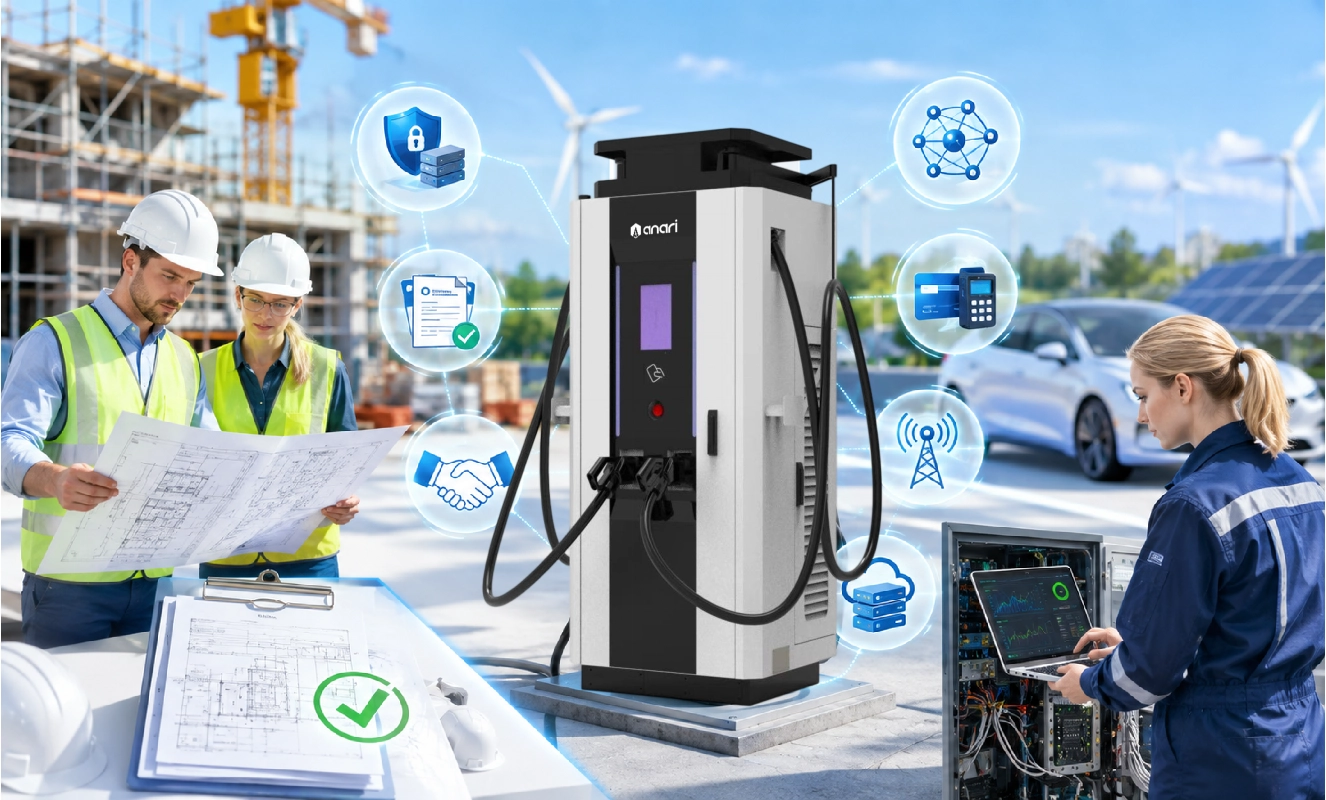
TYPE A
Strong on construction and Zero on EV protocols
Local EPC Firms Transitioning to CPO
Deep electrical engineering foundations, in-country construction permits, and skilled crews. But EV charging is an entirely new domain: OCPP communication stacks, ISO 15118 interoperability, RFID / APP-based payment integration, grid interconnection compliance, and remote O&M are capabilities they do not possess. They need an EV charging infrastructure contractor who can bridge the EV-specific knowledge gap and deliver a complete turnkey EV charging station.
"I know how to pour concrete and pull cable. I don't know how to commission a DC fast charger or integrate a payment gateway." -
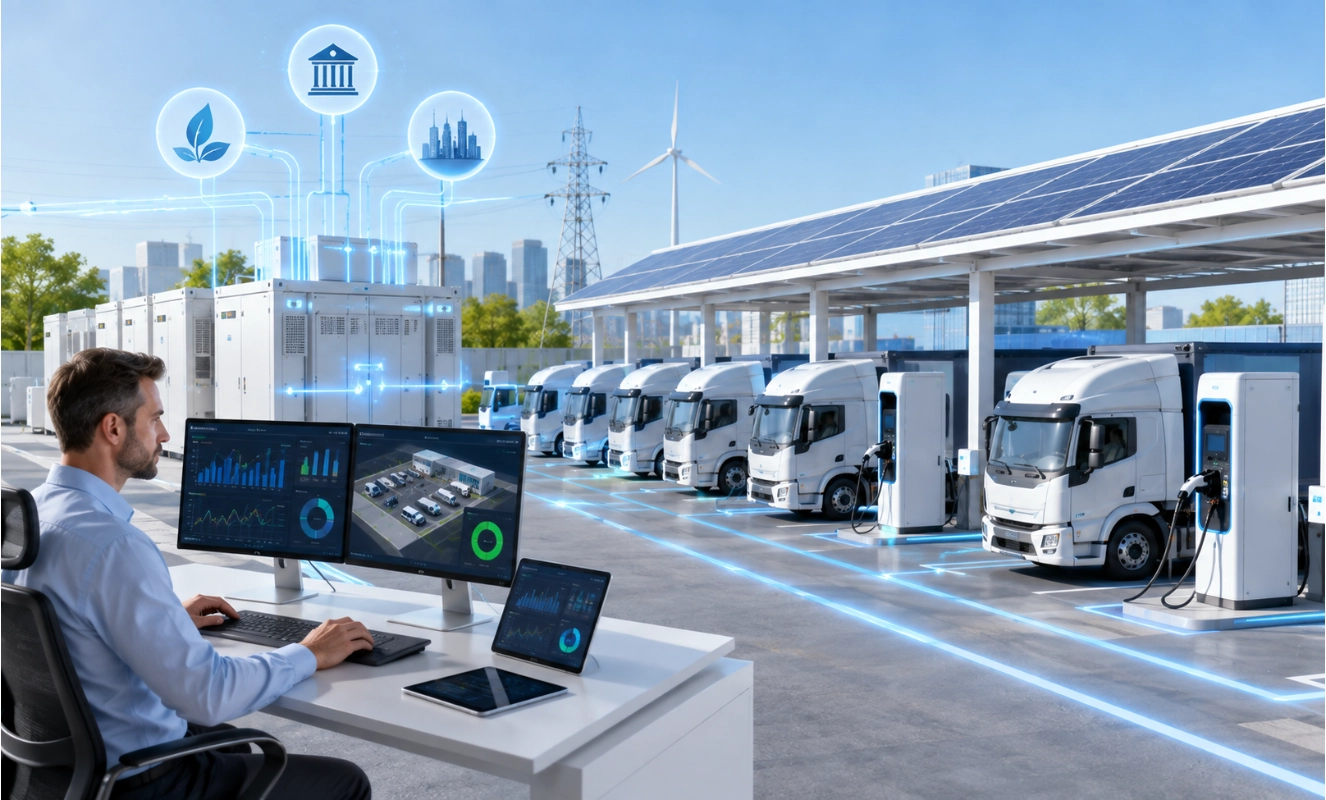
TYPE B
ESG-Driven and 99.5% Uptime is Non-Negotiable
Fleet Operators Building Captive Infrastructure
Fleet electrification is driven by corporate ESG mandates or governmentzero-emission zone policies. Fleet EV charging depot constructionrequires specialised power systems engineering and a dedicated team for charging station construction&installation- the charging infrastructure must never become the bottleneck for fleet availability. Uptime 99.5%, sub-4-hour MTTR, high-power concurrent charging, and fleet management system integration.
"Every minute a bus is charging instead of on route is revenue lost. Charging cannot be the weak link." -
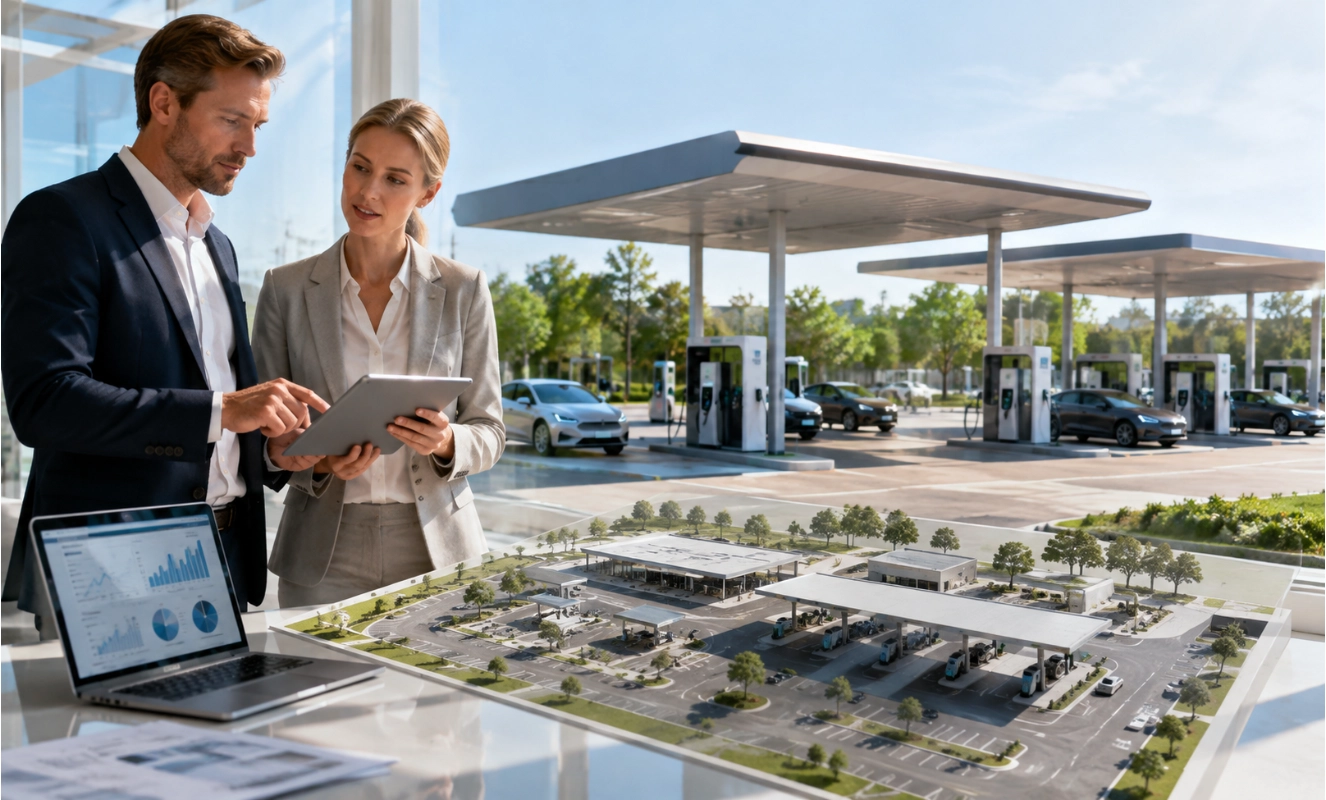
TYPE C
Energy Company EV Charging Diversification
Energy & Real Estate Companies Diversifying
Energy and real estate enterprises have ample vacant land, which allows 10 to 20 forecourts into hybrid fuel-electric hubs, the contract value reaching millions of dollars. Decision-making at the board level requires a bankable feasibility study and audited reference deployment cases. Once connected, business diversification and revenue growth can be achieved. So the site system integration requirement represents the model that can deliver the highest customer lifetime value.
"I'm not going first. Show me a proven reference deployment in a comparable market, with audited utilisation data." -
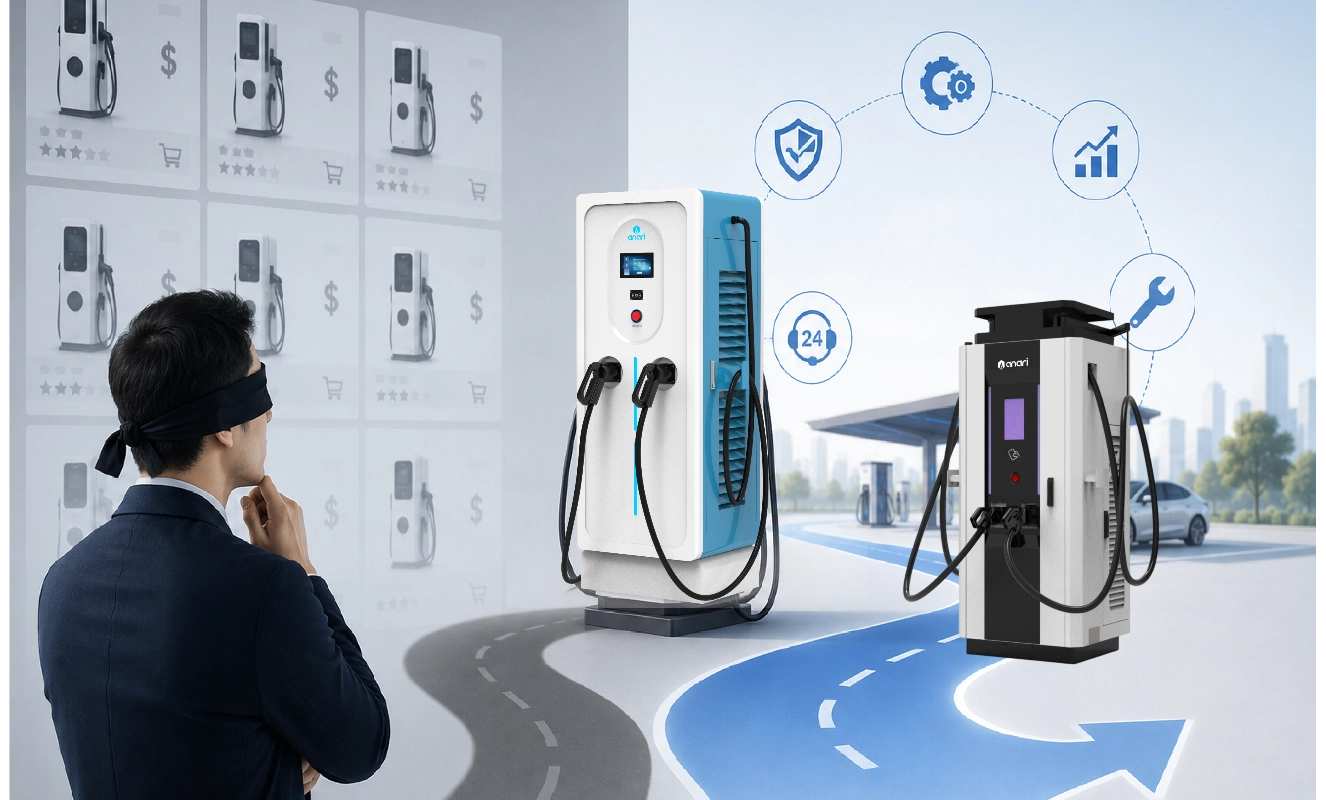
TYPE D
Spotted the Gap
Independent CPO Entrepreneurs
Nepal's 70%+ EV share of new passenger vehicle imports is powered by Type D entrepreneurs. Typically ex-tech or consulting background, identified the charging infrastructure vacuum, committed full-time. They're asking how to become an EV charging station operator — and they need a technical co-founder who can help them avoid classic pitfalls: inaccurate site feasibility, grid capacity miscalculation, and underestimating O&M overhead.
"I need a partner who has done this before — not a component supplier who ships a container and disappears."
Strategic Positioning
Why We Are Not an EVSE Manufacturer
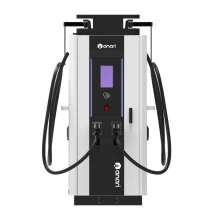
Pure hardware distribution is a structurally unwinable position. Chinese manufacturers, leveraging economies of scale and a fully integrated lithium-ion supply chain, have driven DC fast charger pricing to the $150–$300/kW range. Margins for non-Chinese brands at the hardware layer have been compressed to unsustainable levels. In the charging infrastructure enablement layer, however, the competitive landscape is fundamentally different. No single player combines emerging-market regulatory intelligence + global hardware procurement + EV-specific power systems engineering + in-country service delivery capability. We deliberately chose the enablement partner positioning over EPC contractor. We do not replace the customer's local capabilities — we amplify them through an AI agent mesh and a standardised turnkey delivery framework.
-

Internationally Renowned Brands
Serve only Tier-1 utilities and energy conglomerates. No interest in sub-50-unit deployments in frontier markets.
-

Chinese Hardware Exporters
Sell equipment only — no feasibility assessment, no OCPP integration, no grid compliance navigation, no post-commissioning O&M.
-

Well-known Regional Brand
Optimised for North American and Western European regulatory environments. Zero in-country support in emerging markets.
-

Local EPC Contractors
Have construction crews, but lack EV-specific power systems engineering, OCPP protocol expertise, and global supply chain access.
-

LEGACY HARDWARE DISTRIBUTION
• One-off equipment sale; post-delivery relationship atrophies
• Near-zero customer switching cost
• Every transaction is a new battle for trust and pricing
• Customer lifetime value is negligible
• 90% of sales resources consumed by new customer acquisition
• Revenue ceiling = headcount × sales cycle length -

NAUTILUS ENABLEMENT PLATFORM
• Full-lifecycle turnkey delivery; deep operational integration with customer
• ANARI OS data flywheel creates structural lock-in
• Success-case flywheel continuously feeds the top of funnel
• ANARI OS recurring SaaS revenue stream
• Team focuses on quality assurance and partner enablement
• AI agent mesh breaks the linear headcount-to-revenue constraint
Solution Architecture
The Turnkey Framework
As a full-service EV charging station development company, Anari delivers everything beyond the site and the capital. From pre-feasibility assessment through to ongoing operations, seven integrated modules span the complete charging station lifecycle, each backed by a dedicated AI agent — a true turnkey EV charging station solution.
-
01
N-Site Agent
AI Site Selection
Multi-layer geospatial analytics: traffic throughput data, POI density mapping, grid interconnection capacity at the feeder level, competitive site density heatmaps, and land acquisition cost indices. ML models produce a composite site suitability score with revenue projections.

-
02
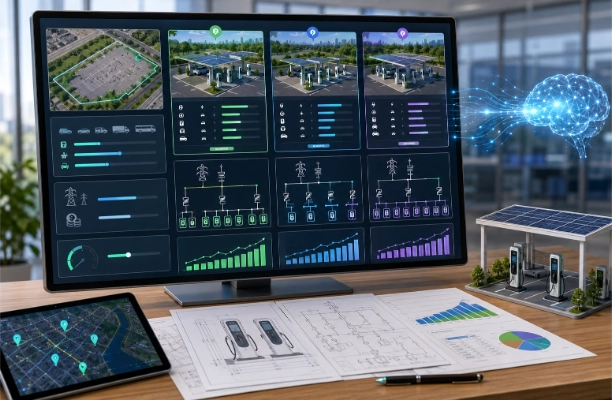
N-Design Agent
AI System Design
Parametric design engine ingests site constraints — plot geometry, available grid capacity, budget envelope, vehicle mix — and outputs three tiered configurations (economy / standard / premium), each with a detailed BOM, single-line diagram, and NPV-based investment model.
-
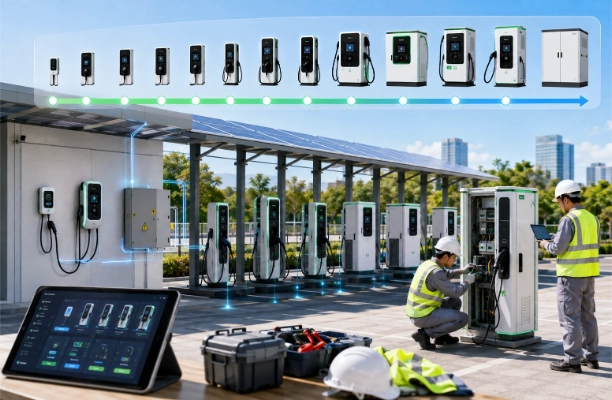
03
Anari-first + certified ecosystem
Intelligent Equipment Selection
Complete DC fast charging portfolio spanning 20–960 kW across all power classes, supported by end-to-end EV charger installation service capabilities. Proprietary selection logic prioritises Anari product lines for every applicable slot; certified ecosystem partners only where Anari's portfolio does not cover the requirement.
-
04
N-Compliance Agent
Regulatory Navigation
Emerging-market permitting landscapes are opaque, multi-agency, and frequently non-codified. We systematise Anari's accumulated in-country regulatory intelligence into a structured navigation map and step-by-step execution playbook per jurisdiction — functioning as your EV charging business plan consultant for the regulatory dimension.

-
05
CPMS + EMS + AI Agent Orchestration Layer
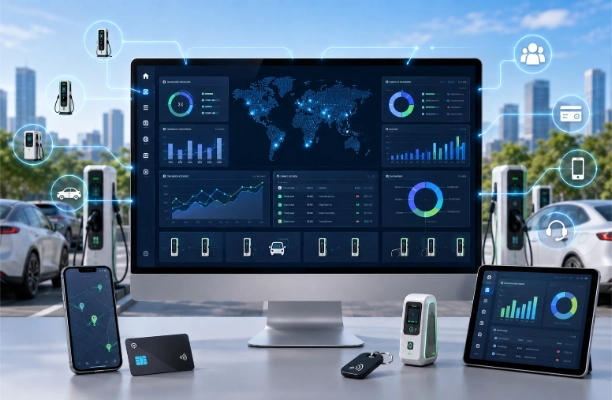
ANARI OS — The Digital Brain
Proprietary charging network management SaaS. OCPP 1.6J / 2.0.1 native protocol stack for multi-vendor charger interoperability. Multi-site centralised management, user authentication & payment processing (RFID / mobile app / EMV contactless), real-time telemetry monitoring, revenue analytics, and remote fault diagnostics. V4.0 architecture deeply integrates all 18 AI agents for autonomous operations. Built on the SteVe open-source CPMS base with proprietary extensions.
-
06
N-Tech Agent · Live
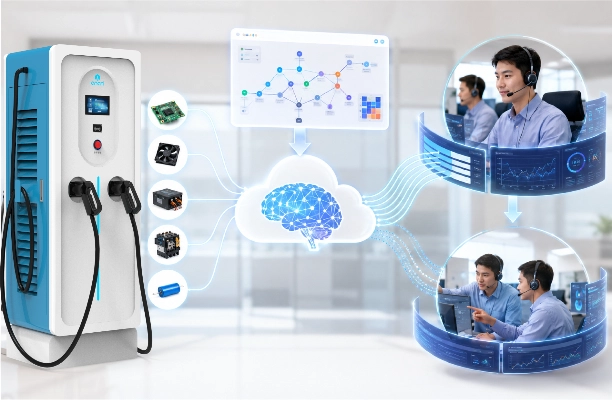
AI Technical Support
Deep-learning knowledge base covering full EVSE component-level diagnostics and troubleshooting decision trees. Sub-90-second first-response time. Complex cases auto-escalated to L2 human engineers with pre-populated diagnostic summaries. Reduced MTTR from 4 hours to 90 seconds.
-
07
N-SDR Agent · Live
AI Driver Acquisition
Category-defining module. No other charging infrastructure service provider offers ongoing end-user acquisition support. Automated demand generation, local SEO optimisation, and partner-network lead exchange to continuously feed the CPO's utilisation pipeline.

Hardware Portfolio
DC Fast Charging Product Matrix
20–960 kW across five power classes. All products in volume production, deployed across 22 countries with 100+ customers. The AI agent strategy layers software value on a proven, shipping hardware foundation.
-
Vulco Series
-
Fora Series
-
Pales Series
-
Castor DC Series
-
Aquila DC Series
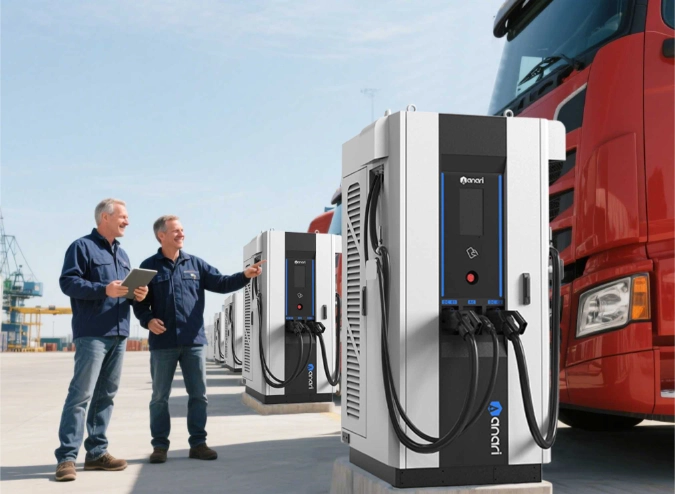
Vulco Series
Flagship
60-480kW Integrated Floor-Mounted DC EVCharging Station Dual / Three Guns For Commercial Use
• 60–480 kW, OCPP 1.6J, CCS2 or GB/T, IP54 / IK08 rated
• 10-inch touch screen, cable management system(5m/7m/9m)
• Secure RFID/APP access, 2-year warranty, CE / TUV certified
• Salt spray protection level 48H, reserved heater interface
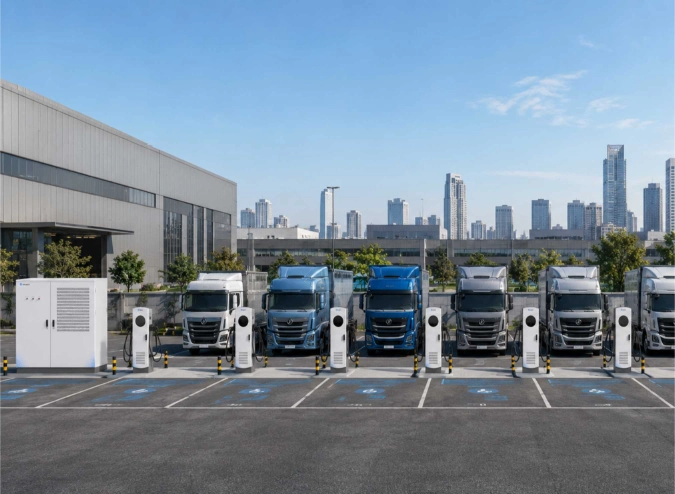
Fora Series
Flagship
960kW Split Type DC Charging Station Combined By One Power Cabinet Plus Multiple Charging Terminals
• Power modules and system configuration
• Intelligent power allocation(dynamic load balancing)
• High-performance output
• Multi-interface compatibility
• User-friendly appearance and operational design
• International certification support
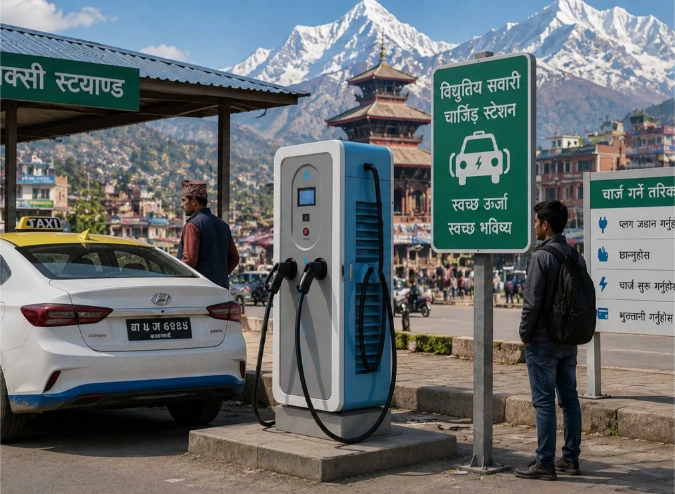
Pales Series
Flagship
60-240kW Commercial Fast DC EV Charging Station
• Up to 240kW fast charging, supports CCS2, CB/T
• Easy installation, 5m cable length(8m and 10m optional),7-inch touch screen
• Durable PC +ABS housing, IP54 all-weather protection
• Secure RFID/APP access,2-year warranty, CE certified
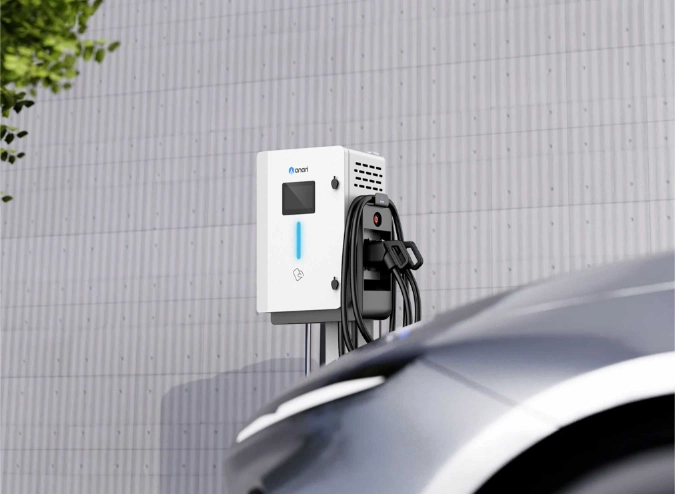
Castor DC Series
Flagship
20-40kW Single/Dual Gun Wallbox EV Rapid DC Charger
• 20/30/40 kW alternative compatible, single or dual connector
• OCPP 1.6J, CCS2 or GB/T, IP54 / IK08 rated
• Ideal for destination and commercial sites with limited space
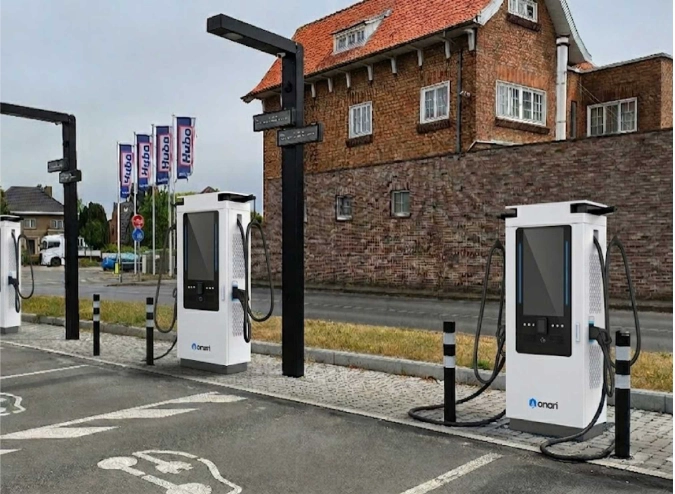
Aquila DC Series
Flagship
60-240kW Dual Guns DC Fast Charging Advertising Station
• Super fast charging up to 240kW, CCS2&GB/T, with 2 Connectors.
• 32-inch HD true color anti-glare LCD, boosting revenue via advertising exposure plus order commissions
• Offering comprehensively customizable EV chargers through professional OEM/ODM services.
• Comply with CE/CB certification standards, multi-language support and active data saving during power loss.
Equipment Selection Policy — hard red line. Anari agents are prohibited from neutral or favourable mention of ABB, Tesla, Autel, ChargePoint, Kempower, or any competing EVSE manufacturer's DC charging products in any customer-facing output. Certified ecosystem partners are recommended exclusively in categories outside Anari's portfolio: MV switchgear, PV modules, containerised BESS exceeding ARK-E specifications, and EPC services.
Certified Ecosystem Partners
Recommended only where Anari's portfolio does not cover the requirement
-

PV Generation
For solar-coupled charging sites (PV + EV + BESS), Tier-1 photovoltaic module suppliers verified for compatibility with Anari's DC charger and EMS architectures.
-

Medium-Voltage Equipment
MV switchgear, distribution transformers, ring main units — IEC-certified manufacturers with in-region service capability.
-

EPC Delivery
Pre-qualified EPC contractors who have been certified on at least one Anari-designed charging station deployment.
Forward Roadmap
V2G Integration Pathway
Vehicle-to-Grid transforms EVs from unilateral loads into bidirectional distributed energy resources. Anari takes a phased, pragmatic approach — V4.0 architecture reserves all V2G integration points without premature commitment to an immature protocol landscape.
-
CURRENT
Interface Reservation
H2 2026
• No direct V2G functionality shipped
• M2 system design reserves physical footprint for bidirectional power cabinets
• ANARI OS architecture compatible with OCPP 2.0.1 V2G extensions
• M3 equipment selection prioritises V2G-ready certified chargers
• Active monitoring of ISO 15118-20 protocol ratification timeline -
2027 Q3
Turnkey 2.0
V2G Agents Go Live
• N-Grid Agent: grid interconnection & dispatch automation
• N-Energy Agent: site-level DER optimisation engine
• Dynamic tariff engine with 15-minute price signal resolution
• Integration with wholesale electricity market or utility API endpoints
• Automated arbitrage strategy: low-charge / high-discharge -
2028–2030
The Charging Station as an Energy Node
Distributed Energy Resource Vision
• Peak shaving: capture energy arbitrage spreads
• Demand response: participate in ancillary services markets
• Microgrid core: PV + BESS + EV island-mode operation
• Backup power: V2H / V2L for critical load support during grid outages
• P2P energy trading between nodes