



Table of Contents
As electric vehicle (EV) adoption accelerates across global markets, destination charging has shifted from a niche sustainability gesture to a core infrastructure requirement. For resorts, commercial parking garages, and hospitality properties, EV charging is no longer just an operational utility—it is a decisive factor in booking conversion, customer retention, and ancillary revenue generation.
Modern travelers actively filter hotel booking platforms and navigation apps for properties with reliable on-site charging. Similarly, urban commuters and retail visitors increasingly choose parking garages where they can replenish their battery while they work, dine, or shop. Properties that delay deployment risk losing high-value, eco-conscious demographics to better-equipped competitors. Conversely, operators who approach EV charging strategically can transform underutilized parking stalls into high-margin, brand-enhancing assets.
This guide examines how hospitality operators and parking facility managers can plan, deploy, and monetize commercial EV charging infrastructure effectively, ensuring long-term scalability and operational resilience.
Understanding Dwell Times and Charging Profiles
A common mistake in commercial EV deployment is treating all parking environments as identical. In reality, the optimal mix of charging hardware depends heavily on dwell time—how long a vehicle remains parked—and the specific expectations of the driver.
Resorts and Full-Service Hotels
Hospitality properties typically serve two distinct guest profiles:
- Overnight Guests (8–14 hours): Guests staying overnight have ample time to recharge. AC Level 2 chargers (7 kW to 22 kW) are cost-effective for overnight replenishment, ensuring guests wake up to a full battery.
- Transient Visitors (1–3 hours): Day-spa patrons, conference attendees, restaurant diners, and travelers stopping for lunch cannot rely on slow AC charging. Offering mid-power DC fast charging (20 kW to 120 kW) enables these visitors to add substantial range during a brief stay, capturing foot traffic from regional EV drivers who might otherwise bypass the property.
Commercial Parking Garages
Parking structures experience higher turnover and more diverse usage patterns than hotels:
- Commuter Garages (6–9 hours): Office workers need predictable, load-balanced AC charging or shared low-power DC units that guarantee a sufficient top-up by the end of the workday.
- Retail, Airport, and Mixed-Use Garages (1–4 hours): Short-term parkers prioritize speed and convenience. Deploying commercial DC fast chargers (60 kW to 240 kW) in designated quick-turnaround zones maximizes bay utilization and generates higher revenue per stall.
Matching Property Types to Optimal Charging Infrastructure
| Property Type | Typical Dwell Time | Primary User Persona | Recommended Charger Mix | Key Operational Priority |
|---|---|---|---|---|
| Destination Resorts | 8–48+ hours (overnight) / 2–4 hours (day visitors) | Leisure travelers, luxury EV owners, spa/dining guests | 70% AC Level 2 (11–22 kW) + 30% DC Fast (40–120 kW) | Seamless guest experience, brand aesthetics, weather/coastal durability |
| Business & Urban Hotels | 8–12 hours | Corporate travelers, rideshare/fleet vehicles, conference attendees | 60% AC Level 2 + 40% DC Fast (60–180 kW) | High uptime, valet workflow integration, transparent billing |
| Commercial Parking Garages | 1–8 hours | Commuters, shoppers, urban residents without home charging | Tiered zones: AC for long-stay levels; DC Fast (60–240 kW) near entry/exit | Bay turnover, automated idle-fee enforcement, grid load management |
| Boutique Inns & Motels | 8–10 hours | Road-trip travelers passing along highway corridors | Compact DC Rapid Chargers (20–40 kW) + AC Level 2 | Low capital expenditure, minimal electrical upgrades, zero-app payment |
Strategic Business Benefits Beyond Sustainability
While corporate ESG (Environmental, Social, and Governance) mandates often initiate EV charging projects, the strongest justification for resorts and parking operators is commercial performance.
1. Higher Occupancy and Direct Bookings
Major Online Travel Agencies (OTAs) and map platforms feature dedicated EV charging filters. Properties listed with verified, reliable chargers gain immediate visibility among a demographic that statistically demonstrates higher average household income and longer booking windows. For resorts in remote or scenic regions—where public fast-charging corridors may be sparse—on-site DC charging eliminates range anxiety and directly converts hesitant travelers into confirmed guests.
2. Extended Dwell Time and Ancillary Spend
In mixed-use parking garages and resort complexes, charging sessions naturally anchor drivers to the premises. A 30-to-45-minute DC fast-charging session gives a driver the exact window needed to order a meal, visit a lounge, or browse on-site retail. Across commercial deployments, properties routinely observe higher food, beverage, and retail spend from EV drivers compared to internal combustion engine (ICE) visitors.
3. Direct and Secondary Revenue Streams
Modern charging stations support multiple monetization layers:
- Energy and Session Fees: Billing per kWh, per minute, or via flat valet-charging packages.
- Idle Fees: Automated penalties for vehicles that remain plugged in after reaching full charge, protecting bay availability while generating supplemental revenue.
- Digital Out-of-Home (DOOH) Advertising: Commercial DC charging stations equipped with high-definition LCD displays allow properties to promote on-site dining, spa packages, loyalty programs, or third-party local advertisers—turning parking bays into high-visibility digital billboards.
Infrastructure Planning: Power, Grid Limits, and Site Design
Deploying commercial EV infrastructure in existing hospitality properties and multi-level parking structures requires careful electrical and physical engineering. Poorly planned installations frequently lead to budget overruns, tripped breakers, or stranded assets.
Overcoming Grid Constraints with Dynamic Load Management
Many legacy hotels and urban parking garages operate near their existing transformer capacity. Upgrading utility service to support multiple high-power chargers can cost tens or hundreds of thousands of dollars and introduce multi-month permitting delays.
Dynamic Load Management (DLM) solves this bottleneck. By continuously monitoring real-time building loads—such as HVAC systems, elevators, and commercial kitchens—DLM automatically allocates available spare capacity across active EV chargers. During peak hotel demand, charging power scales down slightly; overnight, when building loads drop, chargers ramp up to full output. In high-power commercial setups, pairing dynamic power allocation with modular DC cabinets allows operators to run multiple 60 kW+ dispensers on a constrained grid connection without triggering demand-charge spikes or expensive switchgear replacements.
Physical Site Design and Environmental Resilience
Hardware placement and durability directly impact both maintenance costs and guest satisfaction:
- Environmental Protection: Coastal resorts, mountain lodges, and open-air parking decks expose electronics to salt fog, high humidity, extreme heat, freezing temperatures, and lightning. Selecting commercial-grade stations rated at IP54 or higher with corrosion-resistant, salt-fog-tested enclosures is critical to prevent premature hardware failure.
- Accessibility and Layout: Charging bays should comply with local accessibility standards (such as ADA guidelines), featuring wide aisles, level surfaces, accessible screen heights, and retractable cable management systems that keep heavy DC cables off the ground and prevent tripping hazards.
- Wayfinding and Lighting: Clear signage from the garage entrance or resort driveway prevents non-EV drivers from “ICE-ing” (blocking) charging stalls. Well-lit, visually distinct bays also enhance perceived safety for guests charging late at night.
- Modular Scalability: Electrical conduit and trenching represent a substantial portion of civil construction costs. Forward-thinking operators install “make-ready” conduit for future bays during initial construction and select DC stations with expandable power modules, allowing capacity to grow alongside EV adoption without ripping up concrete twice.
Software, Open Protocols, and Frictionless Guest Experience
Hardware is only half of a successful EV charging deployment. Commercial chargers typically remain in service for 7 to 10 years, meaning the software architecture governing them determines long-term operational freedom and profitability.
Avoiding Vendor Lock-In with OCPP
One of the most costly pitfalls in commercial EV charging is purchasing hardware tied to a proprietary, closed-loop software backend. While closed systems may appear turnkey in year one, they lock property owners into a single vendor’s pricing, transaction fees, and feature roadmap. If the software provider raises subscription rates, delivers poor uptime, or fails to integrate with a hotel’s Property Management System (PMS) or garage gate-control system, migrating away often requires replacing 40% to 60% of the physical hardware investment.
The industry safeguard against lock-in is OCPP (Open Charge Point Protocol)—specifically OCPP 1.6J and OCPP 2.0.1. OCPP acts as a universal communication standard between charging hardware and any compliant Charge Station Management System (CSMS). With OCPP-native stations, hospitality groups and parking operators retain complete control:
- Unified Multi-Site Management: Manage chargers from different manufacturers under one software dashboard.
- Remote Diagnostics and OTA Updates: Resolve roughly 80% of software faults remotely via Over-The-Air (OTA) firmware updates and real-time fault diagnostics, dramatically reducing expensive technician truck rolls.
- Future Readiness: OCPP 2.0.1 lays the protocol foundation for ISO 15118 Plug & Charge and Vehicle-to-Grid (V2G) bi-directional energy management.
Financial & Operational Comparison: Proprietary vs. OCPP-Native Networks
| Operational Factor | Closed / Proprietary Systems | OCPP-Native Systems (1.6J / 2.0.1) | Impact on Property ROI |
|---|---|---|---|
| Software Flexibility | Locked to hardware vendor’s platform permanently | Freedom to switch or integrate any OCPP-compliant CSMS | Protects capital investment over a 10-year lifecycle |
| Expansion & Procurement | Forced to buy future units from the original vendor | Competitive bidding across any OCPP-certified hardware | Lowers CapEx during phase-two scaling |
| Maintenance & Uptime | Often relies on proprietary service contracts | Real-time remote fault reading, OTA updates, modular swaps | Reduces on-site maintenance costs and boosts uptime |
| Hospitality Integration | Limited API access for PMS or parking gate systems | Open APIs for loyalty apps, room-key RFID, and gate billing | Streamlines valet and guest billing workflows |
| Future Technology (V2G) | Requires full hardware replacement | Software-upgradable via OCPP 2.0.1 standard | Future-proofs property against obsolescence |
Designing a Frictionless Payment Flow
Hospitality guests and short-term garage parkers resent being forced to download a new smartphone app, create an account, and preload a digital wallet just to charge for an hour. To maximize utilization and guest satisfaction scores, commercial chargers should support:
- Contactless Payment Terminals: Direct tap-to-pay via credit/debit cards, Apple Pay, or Google Pay.
- RFID / Room Keycard Access: Allowing resort guests to tap their room key to initiate charging and post fees directly to their hotel folio.
- QR Code Web Checkout: Instant browser-based payment without app store downloads.
Monetization Models and ROI Optimization
Determining how to price EV charging requires balancing guest goodwill with direct financial return. Properties generally adopt one of three models:
- Complimentary Amenity (Hospitality-Focused): Luxury resorts often bundle AC overnight charging into the resort fee or offer it free to loyalty members, while charging a market rate for high-speed DC fast charging used by non-guests or quick-turnaround visitors.
- Cost-Recovery Pricing: Setting kWh rates slightly above the local commercial utility tariff to cover electricity, networking fees, and routine maintenance, ensuring the amenity is budget-neutral.
- Profit-Center Dynamic Pricing: Common in commercial parking garages and high-traffic hotels. Operators align charging tariffs with Time-of-Use (TOU) utility rates—charging higher margins during peak daytime hours and offering discounted off-peak rates to balance grid demand.
Preventing Bay Congestion
In busy parking garages and urban hotels, a fully charged vehicle occupying a prime DC fast-charging bay represents lost revenue and frustrated arriving guests. Automated CSMS rules should send an SMS or app notification 10 minutes before a session completes, followed by a reasonable grace period (e.g., 15–30 minutes). If the vehicle remains plugged in beyond the grace window, an automated per-minute idle fee incentivizes prompt relocation, keeping turnover high without requiring confrontational enforcement from parking attendants or hotel staff.
Anari Commercial DC Charging Solution: Built for Hospitality and Parking Excellence
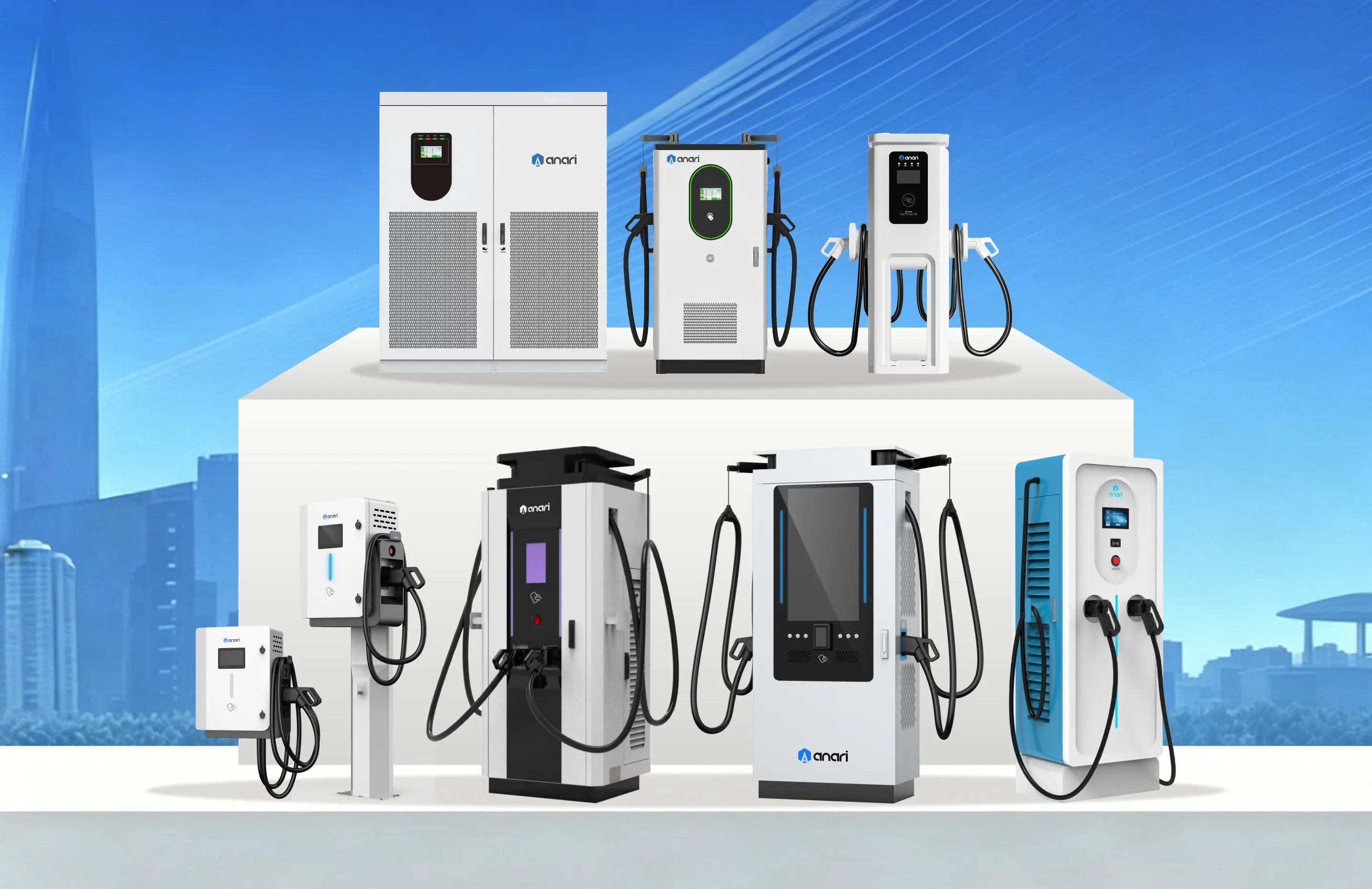
Selecting the right hardware partner is critical to achieving high uptime, guest satisfaction, and predictable return on investment. Anari Energy delivers a comprehensive portfolio of Commercial DC Charging Solutions engineered specifically for high-demand commercial environments, including hospitality properties, destination resorts, and multi-level parking facilities.
Key advantages of the Anari Commercial DC Charging Solution include:
- Native OCPP 1.6J & 2.0.1 Interoperability: Every Anari DC charger ships with OCPP 1.6J and 2.0.1 natively pre-integrated—not retrofitted. Anari hardware has passed first-attempt integration testing with leading global CSMS platforms including Driivz, Ampeco, and ChargeLab, ensuring zero vendor lock-in, remote OTA diagnostics, and effortless multi-site management.
- Versatile Product Range & 99%+ EV Compatibility: From compact 20–40 kW wallbox rapid chargers ideal for boutique hotels and constrained garage pillars, to 60–480 kW floor-mounted stations and 60–240 kW dual-gun advertising DC chargers featuring 32-inch HD LCD displays, Anari covers every commercial dwell profile. A wide 200–1000V output voltage range ensures compatibility with over 99% of EVs on the road.
- Dynamic Power Allocation & Modular Scalability: Designed around the principle of “one-time deployment, long-term profitability,” Anari DC stations support expandable power modules and intelligent dynamic load balancing—enabling properties to deploy multiple high-power chargers on existing grid capacity while avoiding costly infrastructure upgrades.
- All-Climate Stability & High Uptime: Built to withstand harsh resort and outdoor garage environments, Anari chargers are IP54/IK08 rated and engineered to be weatherproof, lightning-proof, salt-fog-resistant, and corrosion-resistant. Integrated A-HAL dual-chip redundancy prevents dropped charging sessions during faults, while hot-swappable power modules allow field repairs in under 30 minutes.
- Brand Customization & Extra Revenue: Operators can customize cabinet colors, logos, cable management, and multilingual UI interfaces to match luxury resort or corporate branding, while optional HD advertising screens turn every charging bay into an additional revenue channel.
FAQ
1. How many EV chargers should a resort or parking garage install initially, and how can we scale without expensive grid upgrades?
Industry best practices recommend electrifying 5% to 10% of total parking spaces during an initial phase, while installing “make-ready” electrical conduit for an additional 15% to 20% to minimize future civil construction costs. To avoid costly utility transformer upgrades as demand grows, deploy chargers equipped with Dynamic Load Management (DLM) and modular power architecture. This allows multiple stations to share existing electrical capacity intelligently and lets you add power modules incrementally as utilization increases.
2. Should hospitality properties offer EV charging for free or charge guests a fee?
The most effective strategy is a tiered pricing model. Many hotels and resorts provide complimentary or low-cost AC Level 2 overnight charging as a perk for registered guests or loyalty members—driving direct bookings and positive reviews—while applying market-rate kWh pricing to on-site DC fast chargers. This ensures that transient visitors, local commuters, and high-power users cover electricity and capital costs, turning the charging hub into a self-sustaining profit center.
3. How do we prevent fully charged vehicles from blocking EV parking bays in busy garages and hotels?
Combine clear signage with automated idle fees managed through an OCPP-compliant backend platform. Once a vehicle finishes charging, the system notifies the driver and initiates a brief grace period (typically 15 to 30 minutes). If the car is not moved, a per-minute overstay fee automatically applies. For full-service hotels and resorts with valet parking, integrating EV charging into valet workflows allows staff to rotate charged vehicles out of charging bays proactively, maximizing charger availability for all guests.