



Table of Contents
The global hospitality industry is undergoing a structural shift in guest expectations. As electric vehicle (EV) adoption accelerates across leisure and corporate travel segments, charging infrastructure is no longer a niche sustainability perk—it is a decisive booking factor. While many hotels initially installed slow Level 2 alternating current (AC) chargers as a courtesy amenity for overnight guests, forward-thinking hoteliers are now deploying direct current (DC) fast chargers to unlock substantial new profit centers.
Transitioning from basic overnight charging to commercial-grade EV DC charging fundamentally changes the economics of a hotel parking lot. Instead of viewing parking spaces as static overhead, properties can monetize energy delivery, capture high-spending transient visitors, elevate room rates, and create recurring advertising income. Below is a comprehensive breakdown of how hotels can strategically leverage DC fast charging to drive measurable revenue growth.
Why EV DC Charging Outperforms AC Charging for Hotel Revenue
To understand the revenue potential of DC fast charging, hospitality operators must distinguish between two distinct customer segments: overnight guests and transient visitors.
Standard Level 2 AC chargers deliver between 7 kW and 22 kW, requiring 6 to 10 hours to replenish an EV battery. While adequate for guests sleeping at the property, AC chargers suffer from low turnover. Once a vehicle plugs in at 6:00 PM, that bay generates zero additional utility until the next morning. Furthermore, daytime diners, conference attendees, and highway travelers cannot practically use slow chargers during a 45-minute stop.
Commercial DC fast chargers—typically ranging from 40 kW to 240 kW—deliver an 80% charge in 20 to 45 minutes. This rapid turnaround allows a single parking bay to serve 8 to 15 vehicles per day, multiplying both direct energy sales and on-property foot traffic.
Table 1: Level 2 AC vs. DC Fast Charging in Hospitality
| Metric | Level 2 AC Charging (7–22 kW) | DC Fast Charging (40–240 kW) |
|---|---|---|
| Average Charging Time | 6–10 hours | 20–45 minutes |
| Daily Bay Turnover | 1–2 vehicles per day | 8–15+ vehicles per day |
| Primary Target Audience | Overnight hotel guests | Overnight guests, diners, MICE attendees, highway travelers |
| Pricing Power | Low (often expected for free) | High (drivers willingly pay a premium for speed) |
| Ancillary Spend Capture | Limited to existing guests | High (attracts non-guest F&B, spa, and lounge spending) |
| Best Hospitality Use Case | Long-stay resorts, overnight parking | Urban hotels, airport/highway hotels, full-service resorts |
By pairing a few AC units for long-term parking with dedicated DC fast chargers for rapid turnover, hotels capture the entire spectrum of EV demand without leaving money on the table.
Direct Revenue Streams: Monetizing Energy, Space, and Attention
Installing EV DC charging stations creates immediate, trackable cash flow directly from the parking facility. Hotel operators can stack multiple monetization models to maximize per-bay profitability.
1. Tiered and Dynamic Charging Tariffs
Unlike AC charging, which guests frequently expect as a complimentary amenity like Wi-Fi, EV drivers universally recognize DC fast charging as a paid utility. Hotels can configure flexible pricing structures through a Charge Station Management System (CSMS):
- Per-kWh Billing: Charging a competitive retail markup above the commercial utility rate. Even with modest markups of 0.20 to 0.35 per kWh, high utilization generates steady gross margins.
- Time-of-Use (TOU) Pricing: Dynamically adjusting rates to reflect peak grid demand and local traffic surges, protecting profit margins during expensive utility windows while offering discounted off-peak rates to attract budget-conscious drivers.
- Dual-Tier Guest vs. Public Pricing: Offering preferred rates to registered hotel guests via room keycards or loyalty apps while charging full public rates to walk-in drivers.
2. Idle and Overstay Fees
A common bottleneck in public EV charging is “bay hogging”—vehicles remaining plugged in long after reaching a full charge. Implementing automated grace periods (e.g., 10 to 15 minutes post-charge) followed by per-minute idle fees accomplishes two goals simultaneously: it incentivizes drivers to move their vehicles promptly to keep turnover high, and it generates supplemental revenue when bays are occupied unnecessarily.
3. Premium Valet and VIP Bundles
Luxury and full-service properties can integrate DC fast charging into high-margin hospitality packages. Offering a “Guaranteed Fast Charge & Valet” add-on during the booking process or at check-in appeals to time-pressed business travelers. Valet staff can rotate guest EVs through a back-of-house DC charger, delivering a fully charged vehicle in under an hour and commanding a flat service fee of 25 to 50 per stay.
4. Digital Out-of-Home (DOOH) Advertising
Modern commercial DC charging stations are increasingly equipped with high-definition LCD screens. Positioned at eye level in high-traffic parking zones, these screens command captive attention during payment initiation and charging sessions. Hotels can monetize this digital real estate in two ways:
- External Ad Sales: Partnering with local luxury retailers, golf courses, tour operators, or automotive brands to run video and static display ads.
- Internal Cross-Promotion: Promoting high-margin hotel services—such as happy hour specials, spa packages, or weekend brunch—directly to transient EV drivers stepping out of their vehicles.
Indirect Revenue Streams: Driving Occupancy and Ancillary Spend
While direct charging fees cover operational costs and contribute to payback, the largest financial upside for hotels often comes from indirect revenue uplift. EV drivers represent one of the most lucrative demographics in travel. Industry data consistently shows that EV owners have higher average household incomes, spend more on dining and experiences, and exhibit strong brand loyalty toward properties that cater to their charging needs.
1. Boosting Occupancy and Average Daily Rate (ADR)
Online Travel Agencies (OTAs) such as Booking.com, Expedia, and Google Hotels now feature prominent “EV Charging” search filters. Properties listed with reliable fast charging immediately rise to the top of filtered search results, capturing bookings from competitors that lack infrastructure.
Beyond OTAs, listing DC stations on dedicated EV navigation platforms—including PlugShare, ChargeHub, and in-vehicle infotainment maps—turns the hotel into a programmed waypoint for road-trippers. Because fast charging eliminates range anxiety, properties can command a 5% to 10% ADR premium compared to non-EV-ready hotels in the same market tier.
2. Monetizing Dwell Time via Food & Beverage (F&B)
A 30-to-45-minute DC fast charge aligns seamlessly with hospitality dwell times. Rather than sitting in their cars, transient drivers look for clean restrooms, Wi-Fi, and refreshments. Hotels that position DC chargers near the main entrance, café, or lobby bar convert passing motorists into paying F&B patrons.
Smart operators amplify this conversion by integrating digital incentives—such as automatically texting a 10% café voucher or complimentary espresso code once a charging session begins. Capturing just 20 to 35 in food and beverage spend per transient charging session rapidly outweighs the profit from the electricity itself.
3. Winning Corporate, Fleet, and MICE Business
Corporate travel managers and event planners operate under increasingly strict Environmental, Social, and Governance (ESG) mandates. Hosting a regional conference or securing a corporate lodging contract often requires demonstrating measurable sustainability initiatives. Offering on-site DC fast charging positions a hotel as an ESG-compliant venue, helping sales teams win lucrative MICE (Meetings, Incentives, Conferences, and Exhibitions) bookings.
Additionally, hotels near airports or commercial hubs can negotiate off-peak charging contracts with local electric taxi fleets, rideshare operators, and executive chauffeur services, guaranteeing predictable baseline utilization during quiet daytime or late-night hours.
Financial Modeling: Estimating Hotel DC Charging ROI
To illustrate how stacked revenue streams work in practice, consider a mid-sized, 150-room full-service hotel installing two 120 kW dual-gun DC fast chargers (4 total charging connectors). Assuming conservative utilization of 6 sessions per connector per day (24 sessions total), average energy delivery of 35 kWh per session, and modest ancillary conversion, the annual revenue potential is substantial.
Table 2: Illustrative Annual Revenue Projection (2x 120 kW Dual-Gun DC Chargers)
| Revenue Stream | Key Assumptions | Estimated Annual Gross Revenue |
|---|---|---|
| Direct Charging Fees | 24 sessions/day × 35 kWh × $0.25 net margin/kWh × 365 days | $76,650 (Net Energy Margin) |
| Incremental Room Bookings | 2 extra EV-driven room nights/week × $180 ADR × 52 weeks | $18,720 |
| Transient F&B & Amenity Spend | 35% of non-guest chargers (~6/day) spending $25 avg. | $54,750 |
| DOOH Screen Advertising | 2 ad-enabled stations generating $300/month each | $7,200 |
| Total Estimated Annual Uplift | Combined Direct + Indirect Value | $157,320 |
Note: Actual financial performance depends on local utility tariffs, demand charges, regional EV penetration, and site visibility. Government grants, utility make-ready incentives, and commercial tax credits frequently offset 30% to 50% of initial capital expenditure (CapEx), compressing the typical payback period to 18–36 months.
Controlling Costs: Smart Energy and Software Architecture
Increasing revenue is only half of the profitability equation; controlling capital and operational expenditures (OpEx) is equally vital. Two technical strategies protect hoteliers from hidden costs:
Dynamic Power Allocation (Load Balancing)
Upgrading a hotel’s main electrical transformer or switchgear can easily add six figures to a project budget. Modern DC charging systems solve this through dynamic load balancing. By intelligently distributing available power across active connectors in real time—and throttling output slightly when the hotel’s HVAC or kitchen loads peak—operators can deploy multiple fast chargers within existing grid limits, avoiding costly utility upgrades and punitive peak demand charges.
Open Protocols (OCPP) Over Proprietary Lock-In
Buying commercial EV hardware is a 10-year operational commitment. One of the costliest mistakes hoteliers make is purchasing chargers tied to a manufacturer’s closed, proprietary software. If that software lacks dynamic pricing, fails to integrate with property management systems, or raises subscription fees, switching platforms can require replacing 40% to 60% of the hardware.
Selecting chargers built natively on the Open Charge Point Protocol (OCPP 1.6J and 2.0.1) decouples hardware ownership from software management. Operators retain full freedom to choose or switch CSMS backends at any time. Furthermore, OCPP enables remote diagnostics and Over-the-Air (OTA) firmware updates, allowing operators to resolve roughly 80% of minor faults remotely—eliminating expensive technician dispatches and maintaining the 99%+ uptime required for guest satisfaction.
Implementation Blueprint for Hoteliers
- Conduct a Site and Electrical Audit: Evaluate parking layout, traffic visibility from adjacent roads, and spare capacity on the main electrical panel.
- Right-Size the Hardware: Match power levels to guest dwell times. Boutique urban hotels may thrive with compact 40 kW–60 kW DC units, whereas highway and resort properties benefit from 120 kW–240 kW dual-gun stations.
- Eliminate Payment Friction: Ensure chargers support contactless credit/debit card tap-to-pay alongside RFID and mobile apps. Transient drivers abandon stations that force mandatory app downloads.
- Optimize Digital Visibility: Register stations immediately on Google Maps, PlugShare, Apple Maps, and OTA amenities checklists to drive day-one utilization.
Powering Hospitality Profitability: Anari Commercial DC Charging Solution
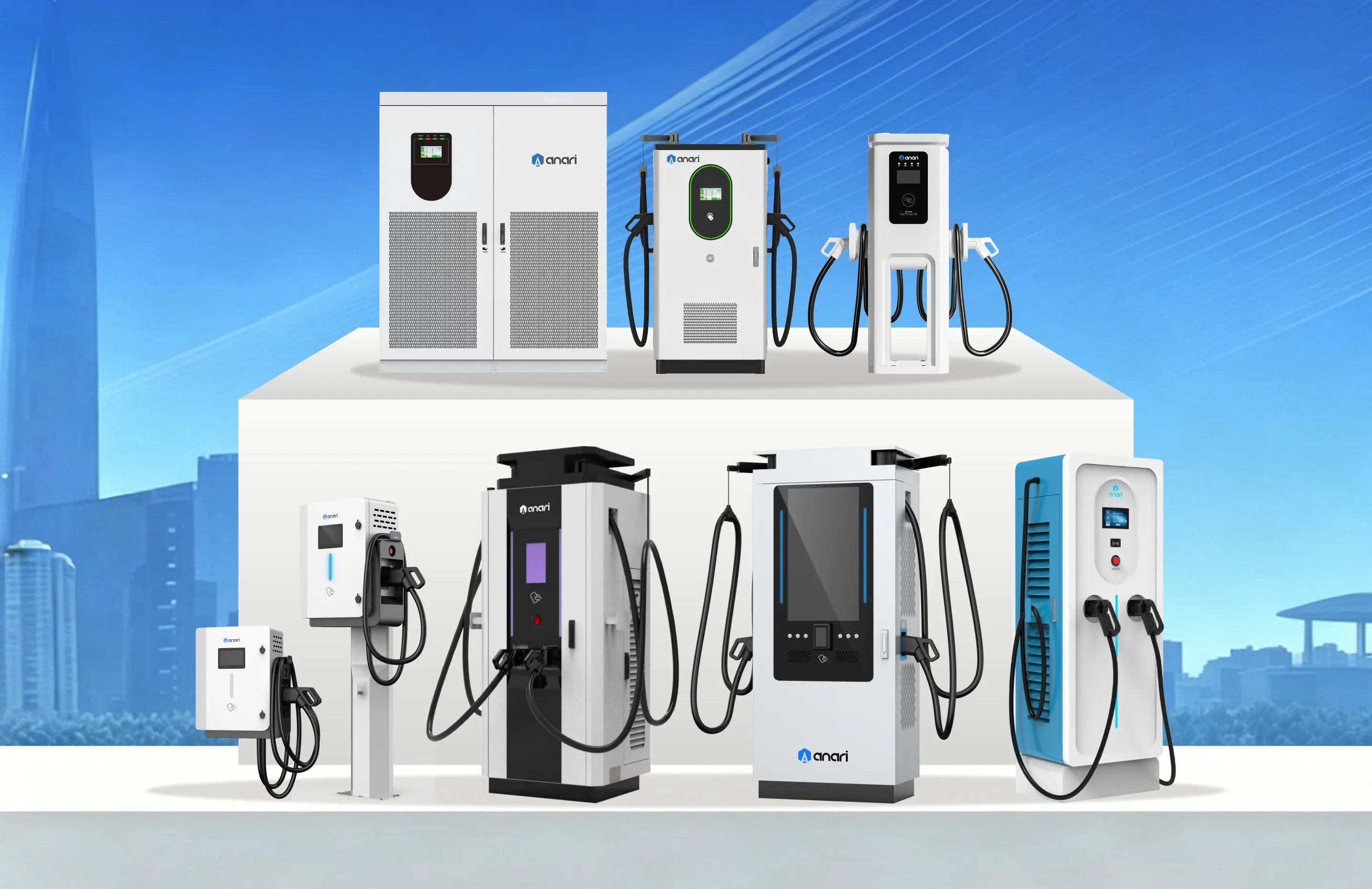
Selecting the right hardware partner is critical to achieving long-term reliability and maximum ROI. Anari Energy delivers a comprehensive Commercial DC Charging Solution specifically engineered to help commercial venues and hospitality operators turn EV charging into a scalable, worry-free revenue stream.
Key advantages of the Anari Commercial DC Charging Solution for hotels include:
- Built-In Revenue Diversification: Beyond high-efficiency charging, Anari’s DC Series (60–240 kW) features integrated 32-inch HD True Color LCD advertising screens, allowing hotels to generate passive video/image ad revenue and promote on-site dining or spa services directly at the bay.
- True OCPP 1.6J & 2.0.1 Native Interoperability: Every Anari DC charger ships with native OCPP integration—pre-validated on the first pass with leading global CSMS platforms including Driivz, Ampeco, and ChargeLab. Hoteliers avoid vendor lock-in, gain remote OTA diagnostics that slash on-site maintenance by over 60%, and remain ready for future Vehicle-to-Grid (V2G) monetization.
- Dynamic Power Allocation & Modular Scalability: Anari’s intelligent load balancing maximizes existing hotel grid capacity to avoid expensive infrastructure upgrades. Expandable power modules (across a portfolio spanning 20–40 kW compact wallboxes up to 480 kW commercial stations) enable “one-time deployment, long-term profitability” as EV demand grows.
- Unmatched Compatibility and Uptime: With a 200–1000V wide-voltage output compatible with over 99% of EVs on the market, A-HAL dual-chip redundancy, and hot-swappable power modules (allowing sub-30-minute field repairs), Anari ensures public-grade reliability even in extreme climates (IP54/IK08, salt-fog and corrosion resistant).
- Bespoke Brand Customization & Turnkey Support: Hotels can customize cabinet colors, logos, cable management, and UI languages to align seamlessly with property aesthetics, backed by full-process support from AI site assessment to 72-hour global critical spares delivery.
FAQs
1. Should a hotel offer EV DC charging for free as an amenity, or charge a fee?
Hotels should almost always charge a fee for DC fast charging. Unlike slow Level 2 AC chargers—which are sometimes offered complimentary to overnight guests—DC fast chargers draw significant electricity and incur higher equipment and utility demand costs. EV drivers expect to pay for fast charging. A best-practice hybrid approach is charging standard market rates to the public while offering registered hotel guests discounted rates, loyalty-point redemptions, or bundled VIP parking packages.
2. Will installing DC fast chargers overload my hotel’s existing electrical grid?
Not if the system is properly engineered. By conducting an initial load audit and deploying commercial DC chargers equipped with dynamic power allocation, hotels can intelligently share available electrical capacity across multiple chargers. The system automatically adjusts charging output during peak hotel energy usage (such as evening HVAC or kitchen peaks), eliminating the need for expensive transformer upgrades while keeping all charging bays operational.
3. How long does it take for a hotel to achieve ROI on commercial DC fast chargers?
While timelines vary based on local electricity costs, regional EV adoption, and available government rebates, most well-positioned hotels achieve full payback within 18 to 36 months. Properties that actively market their chargers on OTAs and EV navigation maps, leverage utility make-ready incentives, and capture indirect F&B and room-rate uplift typically reach profitability on the faster end of that spectrum.