



Table of Contents
Electric vehicle (EV) adoption has moved well beyond early adopters, reshaping guest expectations across the hospitality sector. Today, travelers actively filter hotel bookings on platforms like Google Maps, Booking.com, and TripAdvisor by a single, decisive amenity: on-site EV charging. Properties that lack reliable charging infrastructure risk losing high-value leisure and corporate guests to competitors down the road.
However, selecting the right EV charging hardware is rarely a one-size-fits-all decision. Installing chargers that are too slow frustrates daytime visitors and transit travelers, while over-investing in ultra-high-power infrastructure without matching demand can strain both capital budgets and electrical panels. Determining the best EV charger for your hotel requires aligning charging technology with guest dwell times, property layout, grid capacity, and long-term revenue goals.
Understanding EV Charger Types for Hospitality
Commercial EV chargers fall into three primary categories. While all deliver electricity to a vehicle’s battery, their power output, installation complexity, and suitability for hotel environments differ substantially.
Level 1 Chargers (120V AC)
Level 1 charging relies on a standard household outlet and delivers roughly 1.4 kW to 2.4 kW of power, adding only 3 to 5 miles of range per hour. While virtually free to deploy, Level 1 is unsuitable for modern commercial hospitality. A guest staying 10 hours overnight would gain less than 50 miles of range—far short of what road-trippers or regional business travelers require.
Level 2 AC Chargers (208V–240V AC)
Level 2 stations are the traditional workhorses of destination charging. Operating between 7 kW and 22 kW (depending on single-phase or three-phase electrical supply), a commercial Level 2 unit delivers 25 to 60 miles of range per hour.
For overnight guests parked for 8 to 12 hours, Level 2 AC charging easily replenishes a depleted EV battery to 100% by morning. Hardware and installation costs are relatively modest, making it feasible to equip multiple parking bays without triggering major utility upgrades.
DC Fast Chargers / Level 3 (20 kW – 480 kW DC)
Direct Current (DC) fast chargers bypass the vehicle’s onboard AC-to-DC converter, delivering high-voltage power directly to the battery. Commercial DC units span a wide spectrum—from compact 20 kW–40 kW wall-mounted rapid chargers to 60 kW–480 kW floor-mounted stations.
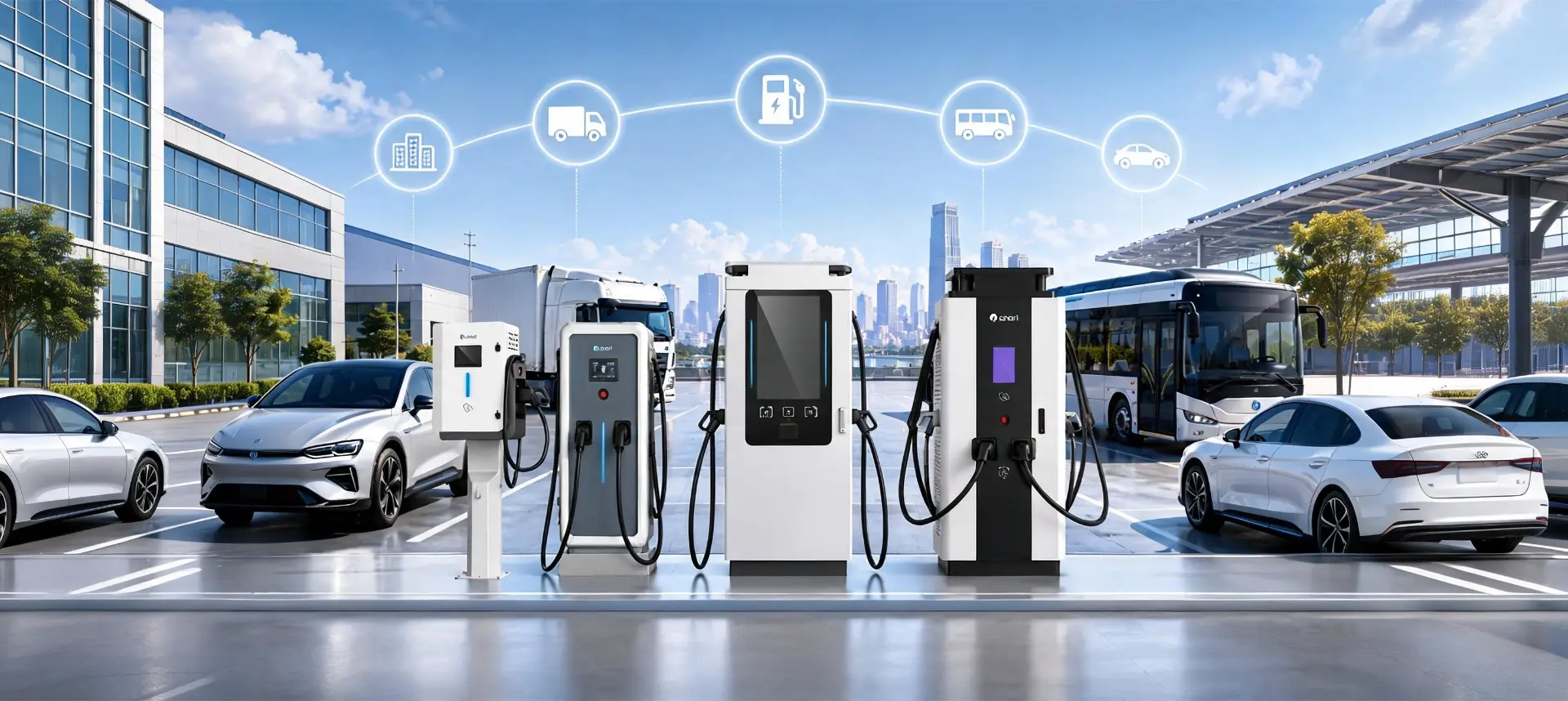
Depending on the charger’s output and the vehicle’s acceptance rate, a DC fast charger can bring a battery from 20% to 80% in 15 to 60 minutes. While DC stations carry higher upfront equipment and installation costs, they unlock capabilities that AC chargers cannot: serving short-stay diners, conference attendees, highway travelers, and ride-hailing fleets while generating direct charging revenue.
Comparison of EV Charger Types for Hotels
| Feature | Level 1 (AC) | Level 2 (Commercial AC) | Compact DC (20–40 kW) | High-Power DC (60–480 kW) |
|---|---|---|---|---|
| Power Output | 1.4 – 2.4 kW | 7 – 22 kW | 20 – 40 kW | 60 – 480 kW |
| Typical Charging Time (20%–80%) | 24+ hours | 4 – 8 hours | 1 – 2 hours | 15 – 45 minutes |
| Ideal Guest Dwell Time | N/A (Obsolete) | 6 – 12 hours (Overnight) | 1 – 3 hours (Dining/Spa) | 20 – 60 minutes (Transit) |
| Relative Hardware & Install Cost | Minimal | Low to Moderate | Moderate | High |
| Best Hospitality Fit | Not recommended | Resorts, extended-stay, overnight guest bays | Boutique hotels, urban business hotels, restaurants | Highway hotels, large resorts, conference centers |
Matching the Charger to Your Hotel Profile
The “best” charger depends directly on how guests interact with your property. Evaluating average dwell time and visitor traffic patterns provides a clear blueprint for hardware selection.
1. Full-Service Resorts and Extended-Stay Properties
Guests at destination resorts or extended-stay hotels typically park their vehicles for 10 hours or longer. Here, Level 2 AC chargers (11 kW–22 kW) should form the foundation of your parking strategy, allowing a larger number of guests to plug in simultaneously overnight. Supplementing these bays with one or two 60 kW–120 kW DC fast chargers accommodates guests arriving with critically low batteries who want a quick top-up before heading out for evening activities.
2. Highway, Airport, and Transit Hotels
Properties located near major interstate corridors or regional airports attract travelers focused on speed and convenience. Guests may arrive late, depart early, or stop specifically to recharge while grabbing breakfast or lunch. For these properties, commercial DC fast chargers (60 kW–240 kW) are the optimal choice. High-speed DC stations also position the hotel on public EV navigation apps, driving non-guest foot traffic to on-site restaurants, cafes, and lounges.
3. Boutique and Urban Business Hotels
City-center hotels often face strict spatial constraints, limited parking stalls, and tight electrical room capacity. Because business travelers frequently come and go throughout the day for meetings, a 7 kW AC charger may not deliver enough range during a two-hour midday break. Compact wall-mounted DC chargers (20 kW–40 kW) strike an ideal balance—requiring minimal footprint while delivering three to five times the speed of standard AC units.
4. Conference Centers and Event Venues
Properties that host weddings, corporate summits, and banquets experience predictable surges of daytime visitors who stay for 2 to 5 hours. A hybrid deployment works best: a bank of Level 2 AC chargers for overnight hotel guests paired with dual-gun 60 kW–180 kW DC fast chargers near the main entrance or valet zone to ensure rapid turnover during peak event hours.
Recommended EV Charging Mix by Hotel Category
| Hotel Category | Average Guest Dwell Time | Recommended Charging Strategy | Suggested Power Rating |
|---|---|---|---|
| Luxury Resort / Extended Stay | 12+ hours | 80% Level 2 AC + 20% DC Fast | 11–22 kW AC / 60–120 kW DC |
| Highway / Transit Hotel | 1 – 8 hours | 30% Level 2 AC + 70% DC Fast | 11 kW AC / 120–240 kW DC |
| Urban Business / Boutique Hotel | 2 – 10 hours | 50% Level 2 AC + 50% Compact DC | 7–22 kW AC / 20–40 kW DC |
| Conference & Banquet Hotel | 3 – 12 hours | 60% Level 2 AC + 40% Dual-Gun DC | 11–22 kW AC / 60–180 kW DC |
Key Technical and Operational Factors to Consider
Selecting between AC and DC is only the first step. Long-term reliability and return on investment depend on four critical technical specifications.
1. Open Protocols (OCPP) vs. Proprietary Software
Purchasing commercial EV chargers is a 10-year operational commitment. One of the costliest mistakes hoteliers make is installing proprietary hardware locked to a single manufacturer’s backend software. If that vendor raises subscription fees or fails to deliver features like dynamic pricing or property management system (PMS) integration, switching software often requires replacing the entire hardware fleet.
To protect your investment, insist on chargers with native OCPP 1.6J and OCPP 2.0.1 (Open Charge Point Protocol) compliance. OCPP separates hardware ownership from software management, allowing your hotel to connect chargers to any certified Charge Station Management System (CSMS), switch providers without hardware changes, and resolve up to 80% of technical faults remotely via over-the-air (OTA) diagnostics.
2. Grid Capacity and Dynamic Load Balancing
Many older hotels operate near the upper limit of their existing electrical transformers. Installing multiple commercial chargers at full fixed power can trigger costly utility upgrades running into tens or hundreds of thousands of dollars.
Dynamic Load Balancing (DLB) solves this bottleneck by intelligently distributing available power across active charging sessions in real time. For example, if a hotel has a limited 200 kW allocation, a load-balanced network can safely operate multiple 60 kW DC stations or dozens of AC chargers simultaneously—automatically throttling output during peak building loads (such as HVAC surges) and ramping power back up overnight.
3. Universal Vehicle Compatibility
Hotel guests drive a diverse mix of EVs, ranging from 400V compact sedans to 800V luxury SUVs and performance models. Commercial DC chargers should support a wide voltage output (200V–1000V) to ensure seamless compatibility across virtually all EV makes and models. Equally important is selecting the right connector standards for your region—such as CCS1/NACS in North America or CCS2 in Europe and international markets—to eliminate adapter headaches for guests.
4. Durability, Weatherproofing, and Aesthetics
Outdoor hotel parking lots expose charging equipment to rain, extreme heat, freezing temperatures, and, in coastal resorts, corrosive salt fog. Commercial units should feature robust ingress and impact protection ratings (such as IP54 and IK08 or higher), corrosion-resistant enclosures, and ergonomic cable management systems that keep heavy charging cords off the ground. For upscale brands, customizable cabinets and user interfaces ensure the charging zone complements the property’s visual identity rather than detracting from it.
Monetization Models and ROI for Hoteliers
Viewing EV charging solely as a sunk cost misses its commercial potential. Hotels typically deploy one of three financial models to maximize ROI:
- Value-Added Amenity: Offering complimentary Level 2 charging exclusively to registered guests or loyalty program members. The electricity cost—often just a few dollars per overnight session—is easily absorbed into the Average Daily Rate (ADR) while boosting direct bookings and guest satisfaction scores.
- Pay-Per-Use and Tiered Pricing: Charging per kilowatt-hour (kWh) or per minute for DC fast charging. Using an OCPP-enabled backend, hotels can offer discounted rates to overnight guests via RFID keycards or promo codes while billing public walk-in drivers at standard commercial rates. Adding automated idle fees after a vehicle reaches full charge prevents bay hogging and maximizes station turnover.
- Ancillary Revenue and Advertising: Commercial DC stations equipped with high-definition digital screens allow hotels to promote on-site dining specials, spa packages, or local partner advertisements directly to a captive audience. Furthermore, public DC fast chargers attract EV drivers who frequently spend 30 to 45 minutes purchasing coffee, meals, or retail items inside the property.
Government tax credits, utility make-ready rebates, and corporate ESG (Environmental, Social, and Governance) incentives further shorten the payback period, often reducing upfront capital expenditure by 30% to 50%.
Why Consider the Anari Commercial DC Charging Solution for Your Hotel
For hotels looking to deploy reliable, future-proof fast charging without falling into vendor lock-in, the Anari Commercial DC Charging Solution offers a compelling balance of performance, flexibility, and commercial return. Engineered specifically for high-uptime commercial environments—including hospitality, retail, and public parking—Anari’s DC lineup addresses the core pain points hotel operators face:
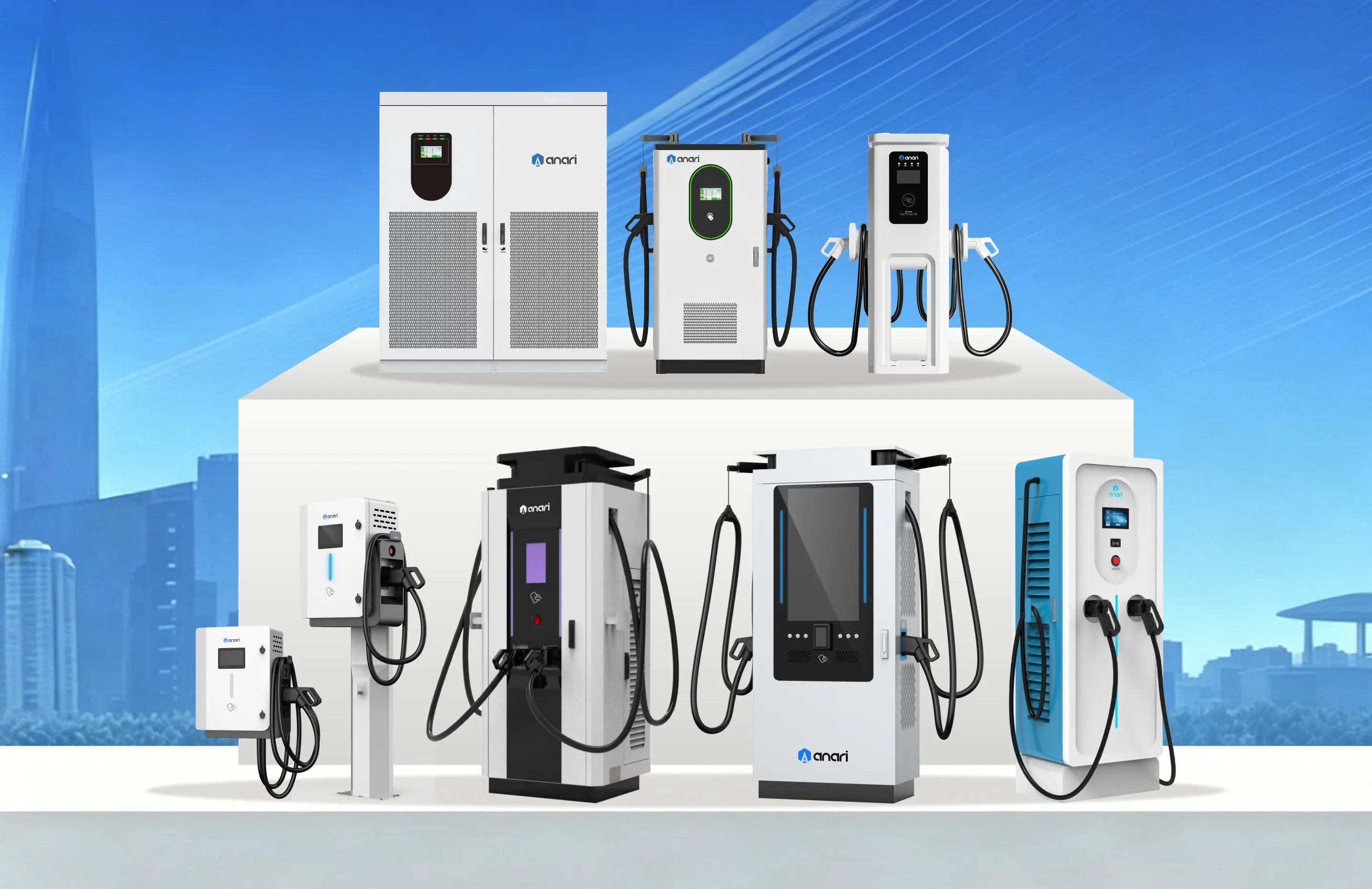
- Tailored Power Range & Modular Scalability: From compact 20 kW–40 kW wall-mounted rapid chargers (such as the hospitality-focused Castor DC Series) to 60 kW–480 kW floor-mounted stations, Anari covers every hotel footprint. Expandable power modules allow properties to start with today’s demand and scale capacity effortlessly without replacing cabinets.
- Native OCPP 1.6J & 2.0.1 Freedom: Every Anari DC charger ships with native OCPP 1.6J and 2.0.1 pre-integrated—passing first-time interoperability testing with leading global CSMS platforms like Driivz, Ampeco, and ChargeLab. Hoteliers retain full software control, benefit from remote OTA diagnostics that resolve roughly 80% of issues without technician dispatches, and stay ready for future V2G (Vehicle-to-Grid) capabilities.
- 99%+ EV Compatibility & Smart Grid Protection: With a 200–1000V wide-voltage output, Anari stations seamlessly serve over 99% of EVs on the road. Built-in dynamic power allocation enables multi-charger deployments on existing electrical infrastructure, helping hotels avoid six-figure grid upgrades.
- Brand Customization & Extra Revenue Streams: Anari supports full brand customization—including hotel logos, cabinet colors, multi-language UI, and cable management. Optional commercial DC units with integrated 32-inch HD advertising screens (such as the Aquila DC Series) turn charging bays into direct advertising and F&B promotion channels.
- Industrial-Grade Reliability: Designed for harsh climates with weatherproof, lightning-proof, and salt-fog-resistant enclosures (IP54/IK08), A-HAL dual-chip redundancy, and hot-swappable power modules that allow field repairs in under 30 minutes, Anari delivers the consistent uptime guests expect from a premier hospitality brand.
FAQs
1. Should my hotel install Level 2 AC chargers, DC fast chargers, or a combination of both?
For most mid-to-large hotels, a hybrid approach delivers the strongest return. Level 2 AC chargers (11 kW–22 kW) are the most cost-effective solution for overnight guests who park for 8+ hours, while one or more commercial DC fast chargers (40 kW–180 kW) cater to highway travelers, conference attendees, and dining visitors who need a rapid top-up in 20 to 60 minutes. Smaller boutique or highway properties with limited stalls often benefit most from compact 20 kW–40 kW or 60 kW DC units to maximize daily vehicle turnover.
2. How many EV chargers does a hotel need to start?
A practical industry benchmark is to equip 5% to 10% of your total parking spaces with active EV chargers during your initial rollout, while installing conduit (“make-ready” infrastructure) to an additional 15%–20% of spaces for future expansion. For a 100-room hotel, starting with four to six Level 2 AC ports and one dual-gun DC fast charger provides strong coverage without overextending upfront capital.
3. Will installing commercial EV chargers require an expensive electrical grid upgrade?
Not necessarily. While older properties often have limited spare transformer capacity, modern commercial charging solutions utilize dynamic load balancing to share available power safely across multiple stations. By automatically adjusting output based on real-time building demand, hotels can deploy multiple AC and DC chargers within their existing electrical footprint and avoid costly utility upgrades.