



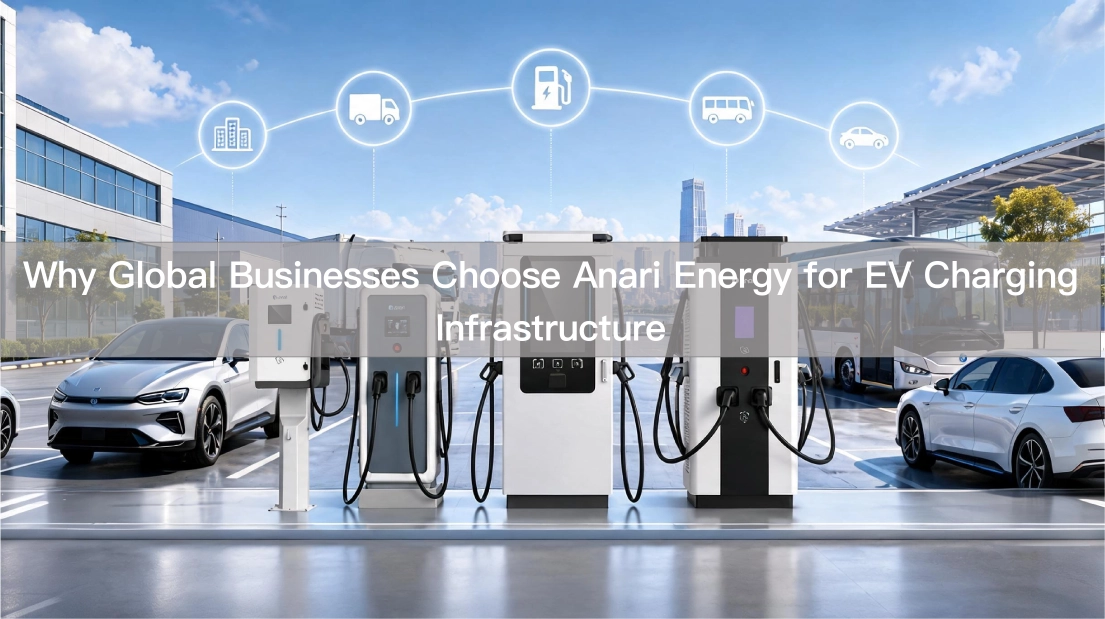
In a market crowded with EV charger manufacturers, what separates a transactional hardware vendor from a long-term infrastructure partner? For over 100 corporate clients across 30+ countries, the answer lies in three differentiating capabilities that define how Anari Energy approaches every engagement: flexible customization that treats every brand as unique, minimum order quantities designed for real-world market entry, and delivery commitments backed by a 20,000 m² self-operated factory.
Headquartered in Shenzhen, Anari Energy has delivered 2,820+ charging units since beginning independent operations in 2021. With branches in Xi’an, Turkey, Dubai, and products certified to CE, TÜV, and CB standards, the company serves distributors, CPOs, fleet operators, and installers across seven major regions. Here is what makes Anari Energy different.
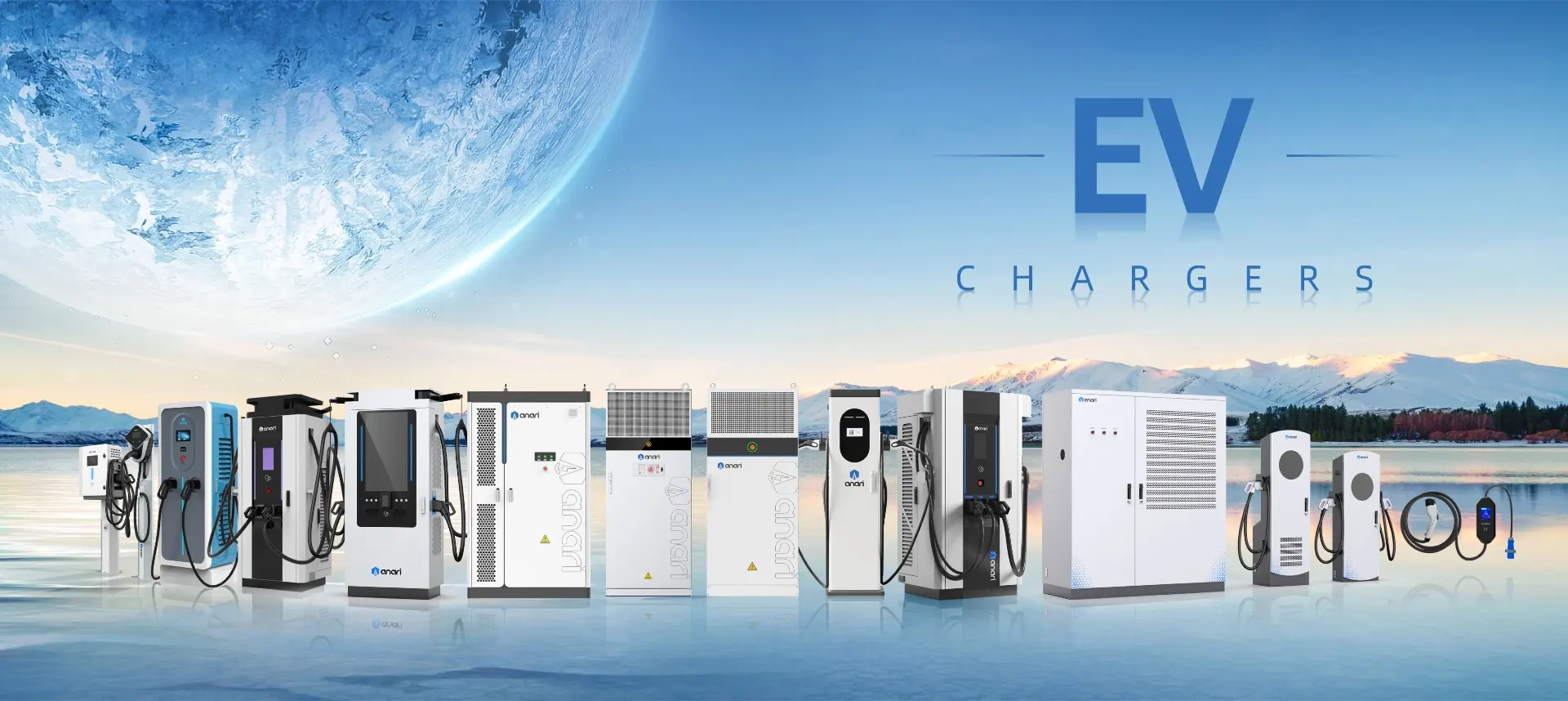
1. Flexible Customization — Your Brand, Amplified
For distributors and operators building regional brands, off-the-shelf products with a manufacturer’s logo are a missed opportunity. Anari Energy treats every customer’s brand as an asset to be amplified, not hidden behind someone else’s nameplate.
1.1 Visual Identity Integration
Every customer-facing surface of an Anari Energy charger can carry your brand. From logo printing directly on the charging unit to customized nameplates and private-label packaging, your equipment arrives looking like it was built by your own factory. This extends to the user manual — produced in your language, with your brand identity — and even the packaging design, which can incorporate your artwork and brand guidelines.
1.2 Hardware Customization
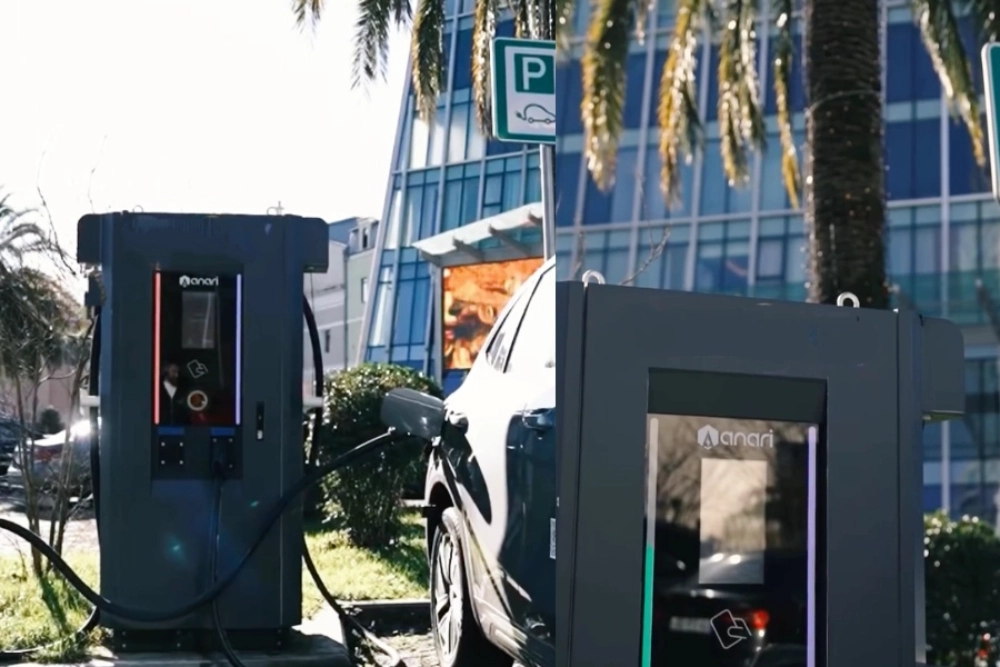
For DC charging stations, customization goes beyond cosmetics. Customers can specify the spraying color and pattern of the charging station cabinet, ensuring visual consistency with their site architecture or corporate identity. The gun cable management system — a critical usability detail that affects daily operator experience — can be configured to match your operational preferences.
1.3 Software and Payment Experience
The charging interface itself — the screen where your end users interact with every day — supports full UI customization including language localization. More importantly, the POS payment method can be configured to match local market preferences, whether that means integration with regional payment gateways, RFID card systems, or mobile app-based payment flows.
This level of customization is not a premium add-on. It is the standard engagement model, reflecting Anari’s belief that global markets are too diverse for one-size-fits-all products.
2. Flexible Minimum Order Quantities — Market Entry Without the Inventory Burden
One of the most persistent barriers for companies entering new EV charging markets is the minimum order quantity (MOQ) demanded by manufacturers. Conventional suppliers often require container-sized commitments that force distributors to tie up capital in inventory before they have validated local demand.
Anari Energy takes a fundamentally different approach, structured around realistic market entry scenarios:
| Product Series | Minimum Order Quantity |
| AC Series (Wallbox & Portable, 3.5–22 kW) | 30 units |
| DC Series (Fast Charging, 20–480 kW) | 5 units |
| BESS Series (Battery Energy Storage) | 1 unit |
These thresholds are designed to match how businesses actually grow: starting with a pilot deployment, proving the business case with real utilization data, then scaling. For partners with demonstrated commitment and clear growth trajectories, these MOQs can be further adjusted — because Anari Energy measures partnership value in long-term cooperation, not individual order volume.
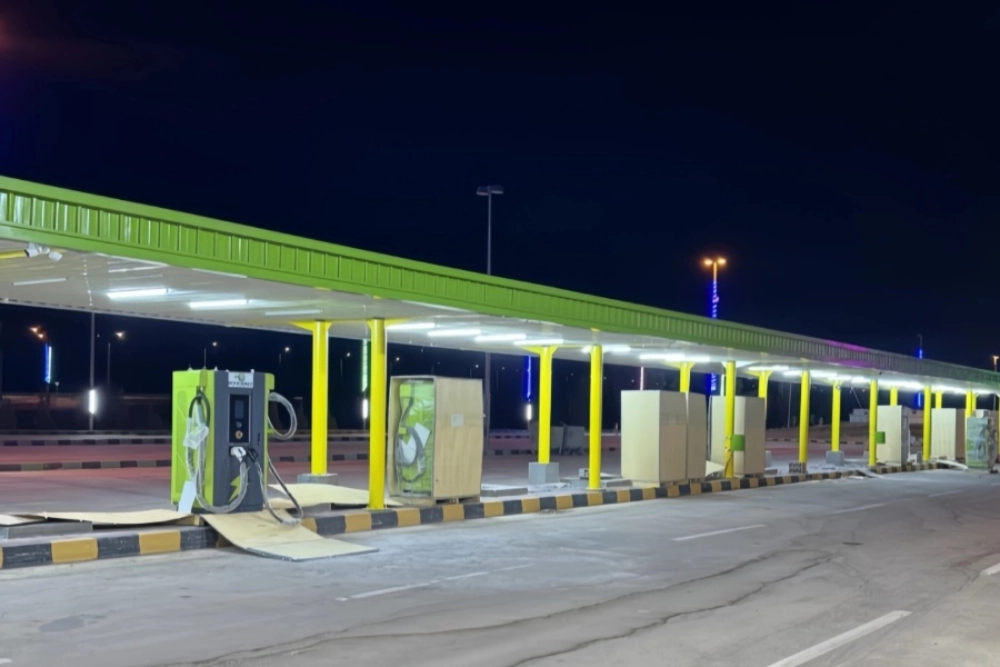
This flexibility is particularly significant in emerging EV markets across Southeast Asia, the Middle East, Central Asia, and South America, where infrastructure buildout is accelerating but capital deployment must be phased. By removing the inventory burden, Anari Energy enables its partners to test, learn, and scale at a pace that matches local market reality.
3. Rapid Delivery Capability — Capacity That Keeps Commitments
In the infrastructure business, delivery timelines directly impact project economics. Every week of delay in charger deployment is a week of lost charging revenue and eroded stakeholder confidence.
The industry average production cycle for DC chargers is 45 working days, and testing and shipping require an additional 45-60 days, which means that an order placed today may not be delivered to the customer until three to four months later.
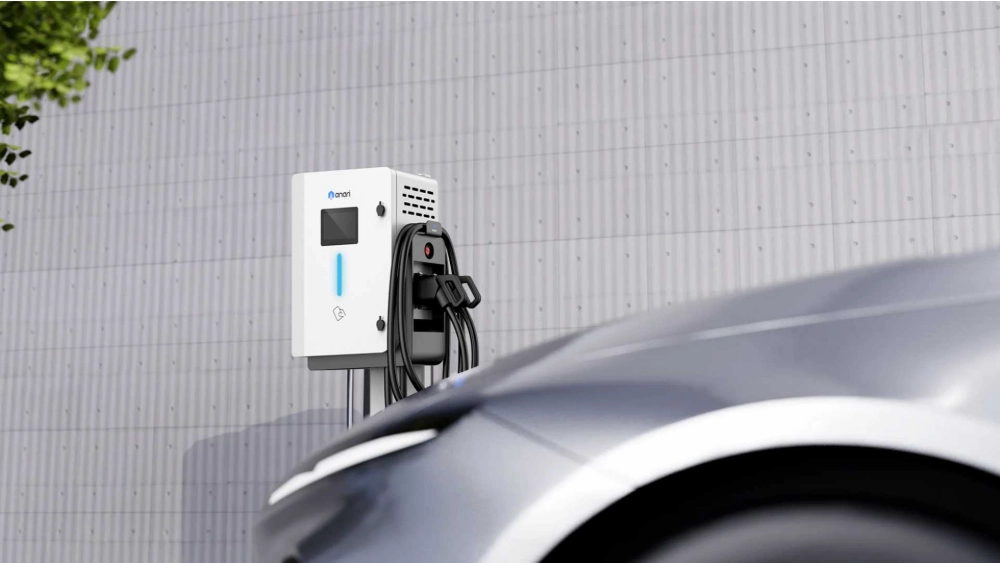
Anari’s delivery model is built on a different foundation: a self-operated 20,000 m² factory with automated production lines, supported by a 100+ person R&D engineering team. This vertical integration translates into concrete timelines:
• DC series production cycle: 30 working days
• Delivery cycle: 30–45 working days (adjusted based on customization requirements)
These timelines far exceed the industry average for comparable product categories. This is possible because Anari Energy controls its own production capacity rather than depending on third-party manufacturing partners whose schedules can shift unpredictably.
For fleet operators facing deployment deadlines and CPOs racing to capture market share, the difference between 45 working days and the industry norm of 60–80 working days is not marginal — it can mean launching a charging site an entire quarter earlier.
4. Engineering That Supports the Promise
Flexible customization, low MOQs, and fast delivery would mean little if the underlying hardware did not perform reliably in the field. Anari’s engineering foundation is what makes the commercial promises credible.
4.1 Modular Architecture for Future-Proof Investment
The entire DC charger series is built on a modular design philosophy. Rather than replacing an entire unit when power requirements grow, operators can upgrade by swapping only the power module — going from 120 kW to 480 kW without replacing the charger housing, cabling, or installation infrastructure. This reduces upgrade costs by over 70% compared to full-unit replacement and ensures that today’s investment does not become tomorrow’s stranded asset.
The same modularity transforms maintenance. When a fault occurs, the affected module is identified, extracted, and replaced on-site in approximately 15 minutes — compared to the weeks of downtime that accompany traditional return-to-factory repair models.
4.2 Efficiency That Lowers Operating Costs
At 96% peak conversion efficiency, Anari’s DC chargers deliver approximately 4% more energy to the vehicle per 100 kWh consumed compared to the ~92% industry average. For a busy commercial charging site processing 500 kWh per day, that 4% gap represents roughly 20 kWh of additional billable energy daily — or over 7,000 kWh annually — flowing directly to the operator’s bottom line rather than dissipating as heat.
4.3 Multi-Standard, Multi-Market
A single Anari Energy DC charger supports CCS1, CCS2, GB/T, and CHAdeMO connectors, enabling a single hardware platform to serve markets from Europe to Southeast Asia. Protection ratings of IP54–IP65 with 48-hour salt spray certification ensure reliable operation in environments ranging from Middle Eastern desert heat to Nordic coastal winters. The operating temperature range of -30°C to +50°C covers virtually all deployed scenarios globally.
4.4 Global Support Infrastructure
Behind the hardware is a support system designed around the principle that issues should be identified before the customer notices them. Regional pre-positioned parts warehouses in key markets ensure that critical spare parts ship locally — and the replace-before-repair policy means faulty components are swapped immediately rather than waiting for diagnosis and repair cycles. System uptime across the installed base stands at 99.7%.
A Partner, Not Just a Supplier
The 2,820+ chargers Anari Energy has deployed since 2021 share a common thread: each one represents a customer relationship where the initial order was just the starting point. With an 80% customer re-purchase rate within six months, the data confirms what the engineering suggests — when a manufacturer treats your brand as its own, removes barriers to market entry, and delivers on time, the relationship naturally extends beyond the first transaction.
For businesses evaluating EV charger manufacturing partners — whether for a pilot deployment of five DC units or a nationwide AC charger rollout — the decision criteria should extend beyond spec sheets and unit pricing. Customization flexibility determines brand equity. MOQ structure determines cash flow velocity. Delivery reliability determines time-to-revenue. And the engineering foundation determines whether all three promises hold up over years of operation in the field.
Anari Energy invites you to test these claims against your own procurement criteria.
——————————————————————————————
Discover how Anari Energy’s Customization, MOQ, and Delivery Advantages can accelerate your EV charging deployment. Contact our team at inquiry@anarienergy.com or visit www.anariev.com to schedule a consultation.