



The transition toward zero-emission transportation is accelerating at an unprecedented pace. For logistics companies, delivery services, and public transit operators, transitioning to electric mobility is no longer merely an environmental initiative; it is a core operational imperative. However, the ultimate success of this transition hinges on one foundational element: designing and implementing a highly reliable depot charging system.
Unlike public charging stations that cater to sporadic passenger vehicle use, a commercial depot must operate with industrial-grade reliability. Vehicles must be fully charged and ready for deployment at precise times. A failure in the depot’s infrastructure directly translates to vehicle downtime, missed deliveries, and significant financial losses. Therefore, designing a robust commercial EV depot requires a meticulous, systems-level approach that aligns operational requirements with electrical engineering, hardware selection, and intelligent software management.
This comprehensive guide explores the critical steps, technical considerations, and strategic best practices required to design a dependable and scalable commercial charging depot.
1. Analyzing Fleet Operational Parameters
The foundation of any robust charging network is a granular understanding of how your vehicles operate. Before evaluating hardware or contacting utility providers, fleet operators must define their exact energy requirements based on daily utilization. Purchasing chargers without a clear operational matrix often leads to either costly over-engineering or crippling under-capacity.
Key Operational Metrics to Evaluate
- Vehicle Specifications: Different vehicle classes (e.g., light-duty vans vs. heavy-duty Class 8 trucks) have vastly different battery capacities and energy acceptance rates.
- Daily Route Distances (Duty Cycles): Calculate the exact energy consumed during a typical route, factoring in payload weights, topography, and seasonal weather variations (which can impact battery efficiency).
- Dwell Times: This is the most critical metric. Dwell time refers to the continuous block of time a vehicle spends parked at the depot. A vehicle parked for 12 hours overnight requires vastly different infrastructure than a vehicle that only docks for a 45-minute shift change.
| Vehicle Class | Example Application | Avg. Battery Capacity | Typical Dwell Time | Recommended Charging Approach |
| Light-Duty (Class 1-2) | Last-mile delivery | 60 – 100 kWh | 8 – 12 hours (Overnight) | AC Level 2 (7kW – 19kW) |
| Medium-Duty (Class 3-6) | Box trucks, step vans | 150 – 250 kWh | 6 – 10 hours | High-power AC or Low-power DC |
| Heavy-Duty (Class 7-8) | Regional haul, drayage | 300 – 600+ kWh | 2 – 6 hours | High-power DC Fast Charging (150kW+) |
| Transit Buses | Urban public transit | 250 – 500 kWh | 4 – 6 hours / En-route | DC Fast Charging / Overhead Pantograph |
Table 1: Typical Commercial EV Operational Matrix
2. Evaluating Site Infrastructure and Power Availability
The invisible bottleneck in fleet electrification is often the local utility connection. Designing a depot requires moving massive amounts of electrical current, which necessitates an early and thorough evaluation of the site’s electrical backbone.
Conducting a Site Walkthrough and Energy Audit
Engage a qualified electrical engineer to conduct a comprehensive site audit. This involves assessing the current switchgear, transformers, and electrical panels. The goal is to determine the facility’s existing spare power capacity. If your facility currently operates with 500 kW of spare capacity, but your initial EV fleet requires 1 MW of power to charge simultaneously, significant upgrades will be necessary.
Utility Engagement
Engage your local utility provider at the very beginning of the planning phase. Upgrading a local distribution grid to accommodate a new high-power charging facility can take anywhere from six months to over two years. Discuss your current energy needs as well as your five-year expansion plan. Utilities can often provide guidance on new rate structures designed specifically for electric commercial fleets, which can drastically impact long-term operational costs.
Distributed Energy Resources (DERs)
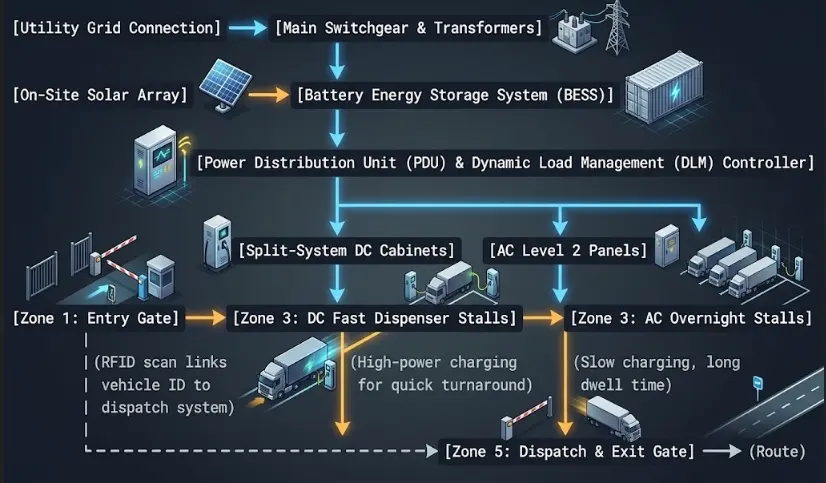
If grid upgrades are prohibitively expensive or severely delayed, consider integrating on-site energy generation and storage. Solar canopies combined with Battery Energy Storage Systems (BESS) can supplement grid power. BESS allows you to store energy from the grid during off-peak, low-cost hours, and dispense it to your vehicles during peak times, bypassing grid capacity constraints.
3. Selecting the Right Hardware Architecture
Selecting the appropriate hardware involves balancing capital expenditure, charging speed, and long-term durability. Commercial environments are harsh; therefore, hardware must be ruggedized, weather-resistant (NEMA 3R or IP54 ratings at minimum), and backed by robust warranties.
AC Level 2 vs. DC Fast Chargers
- AC Level 2 Chargers: These deliver alternating current to the vehicle’s onboard charger. They are highly cost-effective, require less complex electrical infrastructure, and are ideal for light-to-medium duty vehicles with long overnight dwell times.
- DC Fast Chargers (DCFC): These bypass the vehicle’s onboard charger, delivering direct current directly to the battery. While significantly more expensive and infrastructure-intensive, DC fast chargers are mandatory for heavy-duty vehicles or any fleet operating on tight turnaround schedules.
Dispenser Configurations
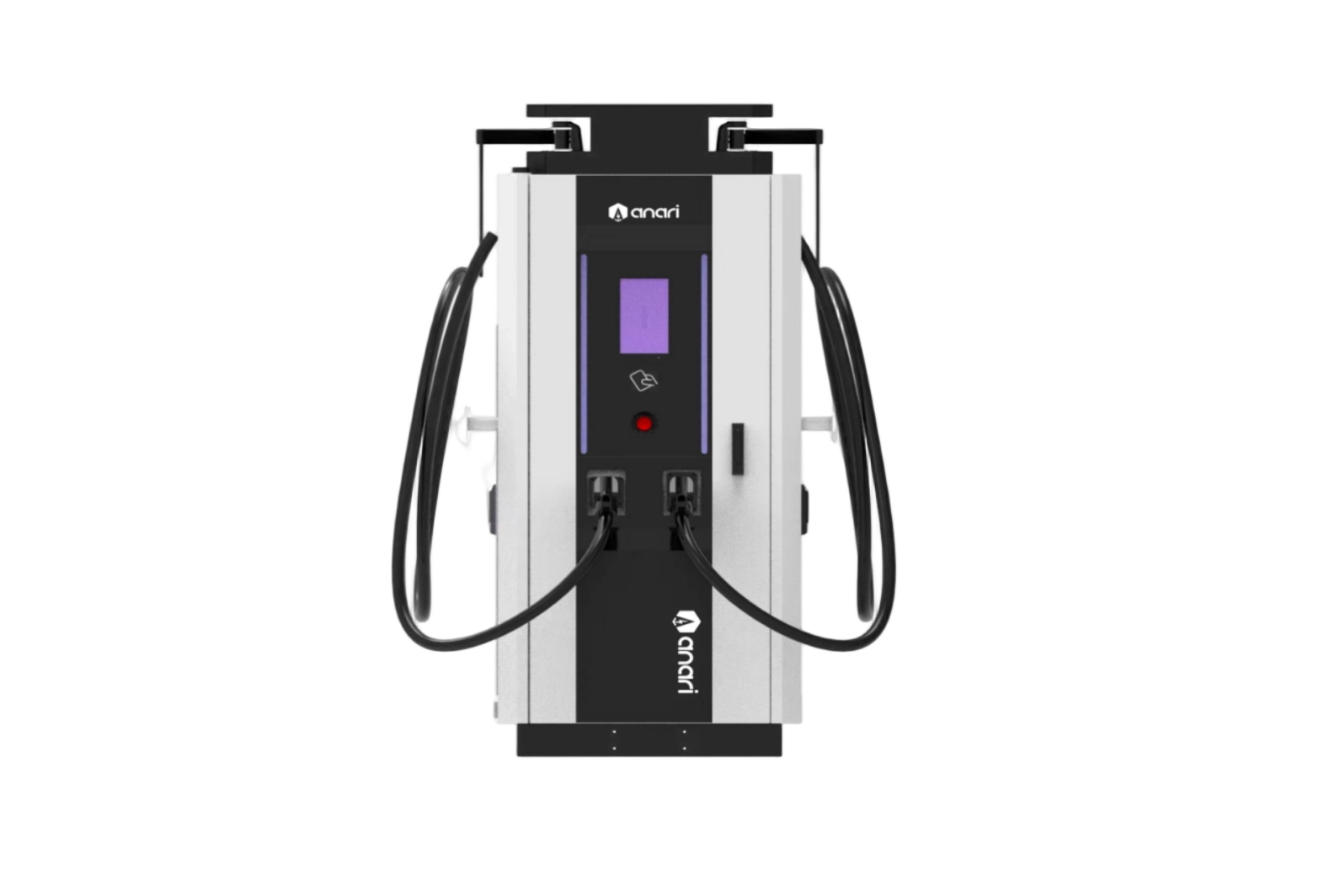
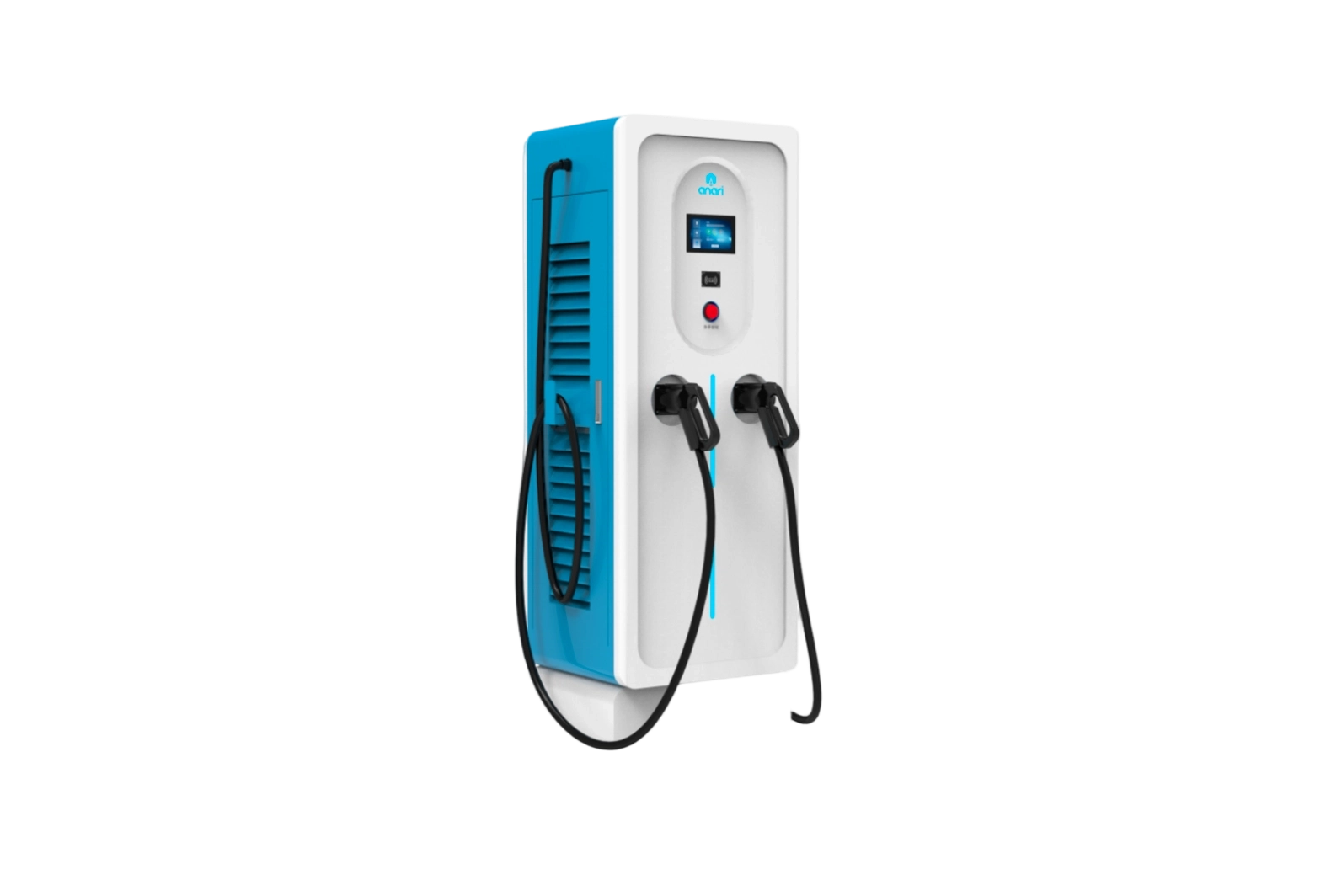
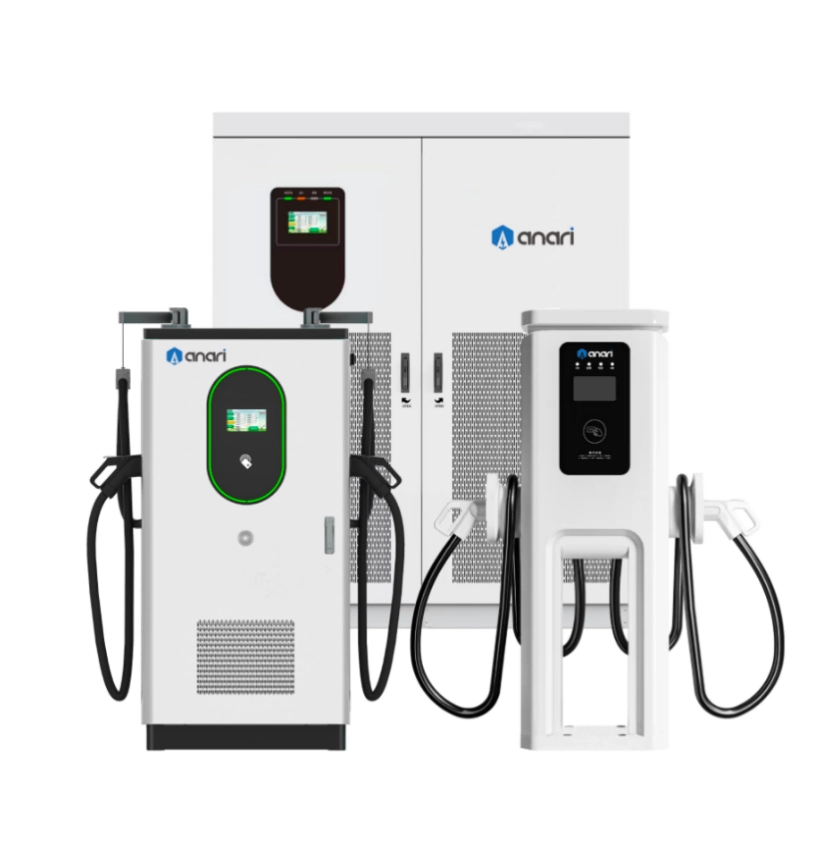
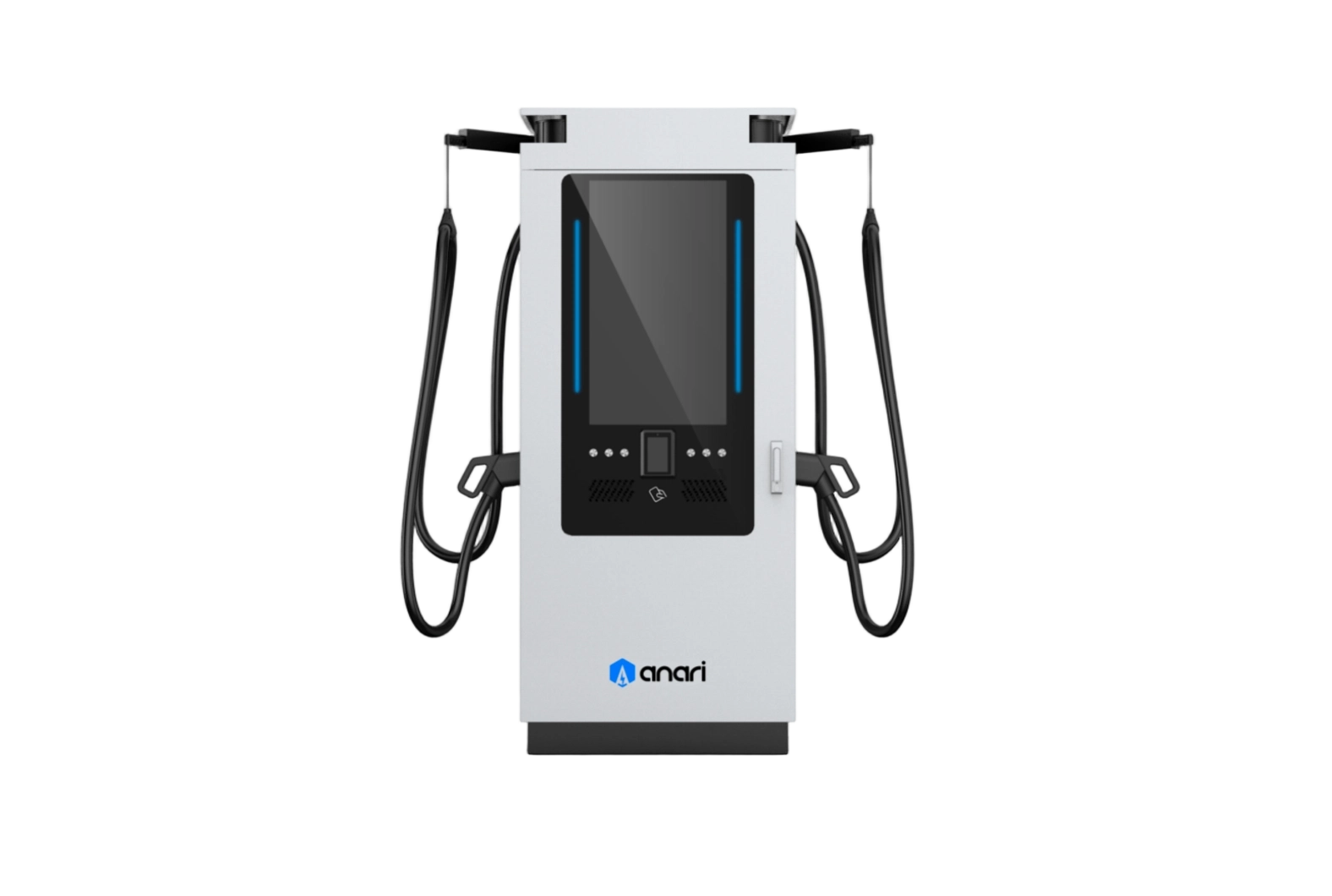
To maximize space and minimize the risk of vehicle collisions with charging equipment, consider decentralized architectures. In this setup, the heavy power conversion cabinets are placed away from the parking area, while smaller, slimline dispensers (or overhead cable reels) are installed directly at the parking stalls. This protects the most expensive components of the charging infrastructure from accidental damage.
| Hardware Type | Power Output Range | Capital Cost | Infrastructure Complexity | Best Use Case |
| AC Level 2 | 7 kW – 19 kW | Low | Low to Moderate | Overnight charging, light-duty fleets. |
| DC Wallbox / Mobile | 20 kW – 50 kW | Moderate | Moderate | Medium-duty, extended dwell times. |
| DC Fast Charger (Standalone) | 50 kW – 180 kW | High | High | Heavy-duty, short turnaround times. |
| Split-System DC (Cabinet + Dispenser) | 150 kW – 350+ kW | Very High | Very High | Large scale depots, varied vehicle types. |
Table 2: Hardware Architecture Comparison
4. The Brain of the Depot: Intelligent Energy Management
Hardware delivers the power, but software dictates how and when it flows. Unmanaged charging—where every vehicle plugs in and immediately draws maximum power—will result in massive utility demand charges and quickly overwhelm a facility’s electrical limits. Implementing smart charging software is arguably the most crucial step in designing a reliable and economically viable depot.
Dynamic Load Management (DLM)
DLM software dynamically distributes available power across all plugged-in vehicles based on predefined rules. If the depot has a maximum capacity of 500 kW, but 10 vehicles requiring 100 kW each are plugged in, the software will throttle the charging rate to ensure the facility limit is never breached.
Integration with Telematics
Advanced energy management systems integrate directly with your fleet dispatch and telematics software. By knowing the vehicle’s current State of Charge (SoC), its scheduled departure time, and the energy required for its next specific route, the software can prioritize charging. A truck scheduled to leave at 4:00 AM will be prioritized over a van that isn’t needed until 9:00 AM, ensuring operational readiness without triggering costly peak demand spikes.
5. Prioritizing Uptime and Redundancy
In the commercial transport sector, a dead battery means lost revenue. Reliability must be engineered into the depot from day one.
Fault Tolerance and Modularity
Avoid single points of failure. If a large centralized power cabinet fails, it could take down multiple charging dispensers simultaneously. Opt for modular power systems where power modules can fail independently without taking the entire station offline.
Service Level Agreements (SLAs)
Hardware will inevitably require maintenance. When purchasing equipment, negotiate stringent SLAs with the manufacturer or maintenance provider. Look for guarantees of 97% or higher uptime, 24/7 remote monitoring and troubleshooting, and guaranteed on-site response times (e.g., within 4 to 12 hours) for critical hardware failures.
6. Civil Engineering and Site Layout
The physical layout of the charging depot significantly impacts operational efficiency. Navigating large commercial vehicles through tight spaces with heavy charging cables is a logistical challenge that requires careful planning.
- Cable Management: Cables left on the ground are tripping hazards and are easily crushed by heavy trucks. Utilize automated cable retractors or overhead pantograph systems to keep cables safely out of the way when not in use.
- Traffic Flow: Design the depot with a one-way traffic flow to minimize reversing, which is a major cause of depot accidents. Ensure turning radii are calculated based on the largest vehicle in your fleet.
- Bollards and Protection: Install heavy-duty steel bollards around all electrical equipment. The cost of a damaged DC fast charger far exceeds the cost of proper physical barrier protection.
7. Future-Proofing for Scale
The electric vehicles you operate today represent only the beginning of your transition. Designing a depot exclusively for your immediate needs is a costly mistake. The civil engineering and electrical trenching phases are the most disruptive and expensive parts of depot construction.
“Make-Ready” Infrastructure
When excavating for your initial batch of chargers, lay oversized conduits and pour additional concrete pads for future expansion. Pulling new wires through an existing, empty conduit in three years is exponentially cheaper than ripping up the asphalt a second time.
Evaluating the Total Cost of Ownership
When designing your system, look beyond the initial capital expenditure. A comprehensive total cost of ownership analysis must include energy costs, software licensing, ongoing maintenance, and the operational savings derived from reduced fuel and maintenance of the EVs themselves. Often, investing in more expensive, higher-efficiency hardware and sophisticated load management software yields a significantly better long-term Return on Investment (ROI) by keeping daily energy tariffs low.
Conclusion
Designing a reliable commercial EV depot is a complex, multi-disciplinary engineering challenge. It requires a deep understanding of your fleet’s unique operational rhythms, a proactive approach to grid capacity, and the intelligent application of hardware and software. By prioritizing scalable infrastructure, implementing dynamic load management, and engineering for maximum fault tolerance, fleet operators can build a charging ecosystem that not only supports their current transition to electric mobility but sustains their growth well into the zero-emission future.
Anari Turnkey EV Fleet Charging Station Solution

Turnkey EV Charging Station Solution is a service system that covers the entire lifecycle of charging station construction. Specifically, it includes AI site selection assessment, AI charging station deployment plan design, Intelligent equipment selection, Target market compliance support, ANARI OS operation platform, AI technical support, and AI customer acquisition tools. CPOs only need to provide the site and funds, and Anari is responsible for completing all work from pre-assessment to continuous operation, ultimately delivering to the customer a charging station that can “plug in and operate”. The value anchor of Anari’s Turnkey EV Charging Station Solution: It is not just about selling equipment, but empowering customers to become successful CPOs.
FAQs
How long does it take to design and build a commercial charging depot from start to finish?
The timeline can vary dramatically based on scale and location, but a typical commercial depot takes between 9 to 18 months to complete. The longest lead times are usually associated with securing utility grid upgrades, obtaining municipal permits, and procuring high-power electrical switchgear. It is highly recommended to engage utility providers on day one of your planning process.
Can I install depot chargers without paying for massive utility grid upgrades?
Yes, through a combination of smart load management and supplemental hardware. By utilizing intelligent charging software to stagger charging times during off-peak hours, you can stay within your existing facility’s power limits. Additionally, installing a Battery Energy Storage System (BESS) allows you to draw low amounts of power continuously, store it, and discharge it rapidly to vehicles without triggering grid capacity limits.
What happens to my fleet operations if there is a local power grid outage?
If you rely purely on the grid, a power outage will halt charging. To mitigate this risk, mission-critical fleets should design microgrids incorporating renewable energy generation (like solar) and substantial on-site battery storage. Furthermore, many modern commercial EVs are being equipped with Vehicle-to-Grid (V2G) capabilities, potentially allowing fully charged vehicles to provide emergency backup power to the depot facility or other essential infrastructure during an outage.