




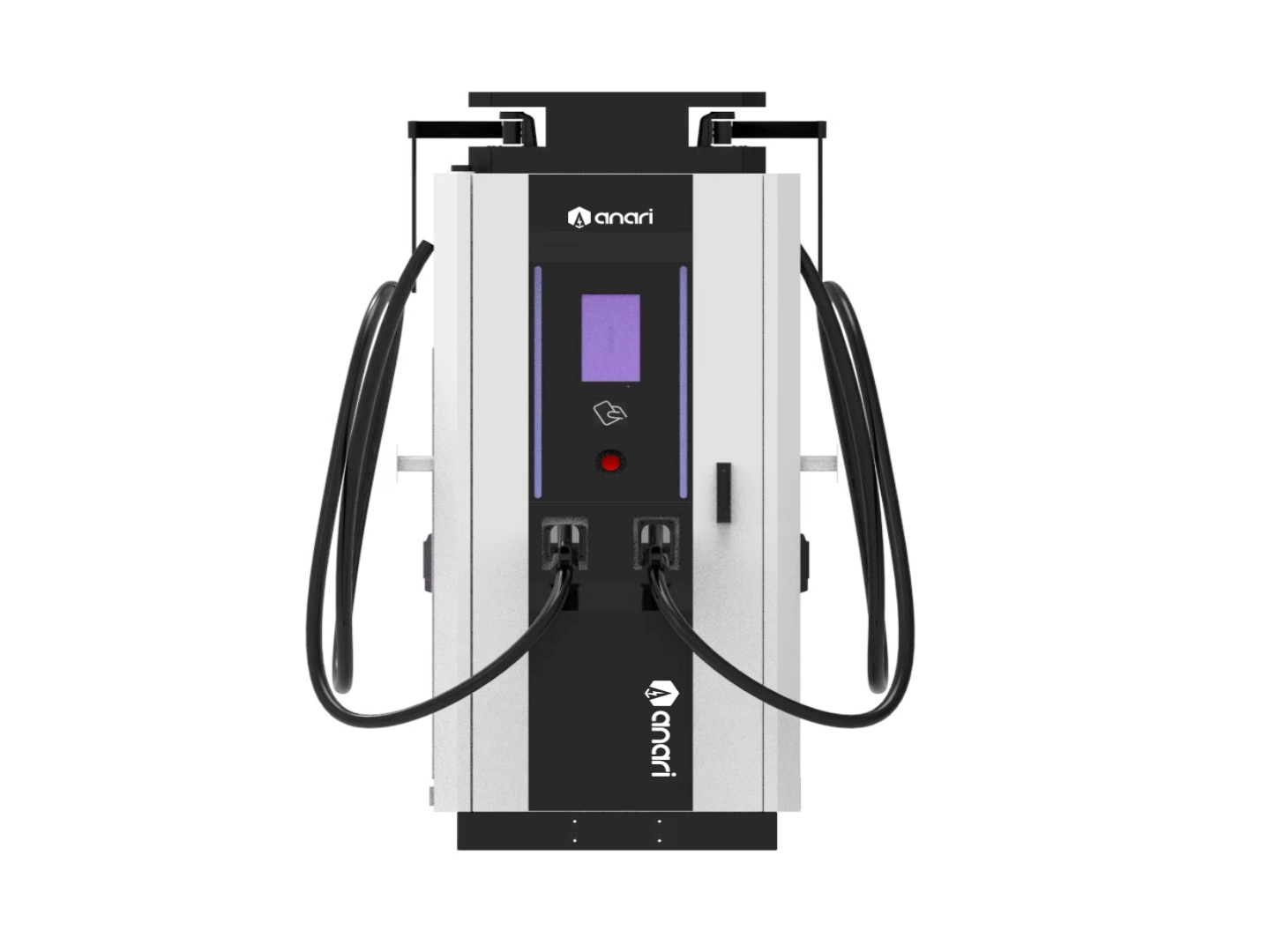


60-480kW Integrated Floor-Mounted DC EV Charging Station Dual / Three Guns For Commercial Use
- DC:200~1000VDC
- AC: 230VAC (7KW)
- 400VAC (22KW)
Product Features
-
AC & DC Integration
Combines AC & DC with three outputs for simultaneous charging. Two DC connectors (CCS1/CCS2, CHAdeMO, up to 480kW) and one AC Type 2 connector (7/22kW). -
Intelligent Control
Supports Ethernet/4G/Wi-Fi and OCPP protocol with CMS. Features App-based operation and cashless payment for seamless control. -
Flexible Options
Offers App operation, RFID authentication, or plug-and-play. IP54 protection and optional POS terminal for contactless credit card payments. -
Advanced Safety
Includes overvoltage/overload protection, intuitive interface, and seamless energy management system integration for reliability.
Technological Innovation Safeguards your Investments
-

Semi-Potting Process
Key components are independently protected, resistant to dust and moisture intrusion
Effectively blocks dust and moisture, significantly reduces power module failure rates, and operates more stably in harsh environments.
-

Reserved Heater Interface
Ready-to-use in extremely cold conditions, with faster startup and higher energy efficiency
Supports the installation of a heating module, which can quickly increase output power at low temperatures to meet the application requirements of overseas high-cold regions.
-

Salt Spray Protection Level 48H
Basic anti-corrosion, upgradable for extreme working conditions
Passed the 48-hour salt spray test, it can calmly handle moderately humid and salt spray environments; the enclosure material can be upgraded as needed to adapt to harsher scenarios.
Product Description
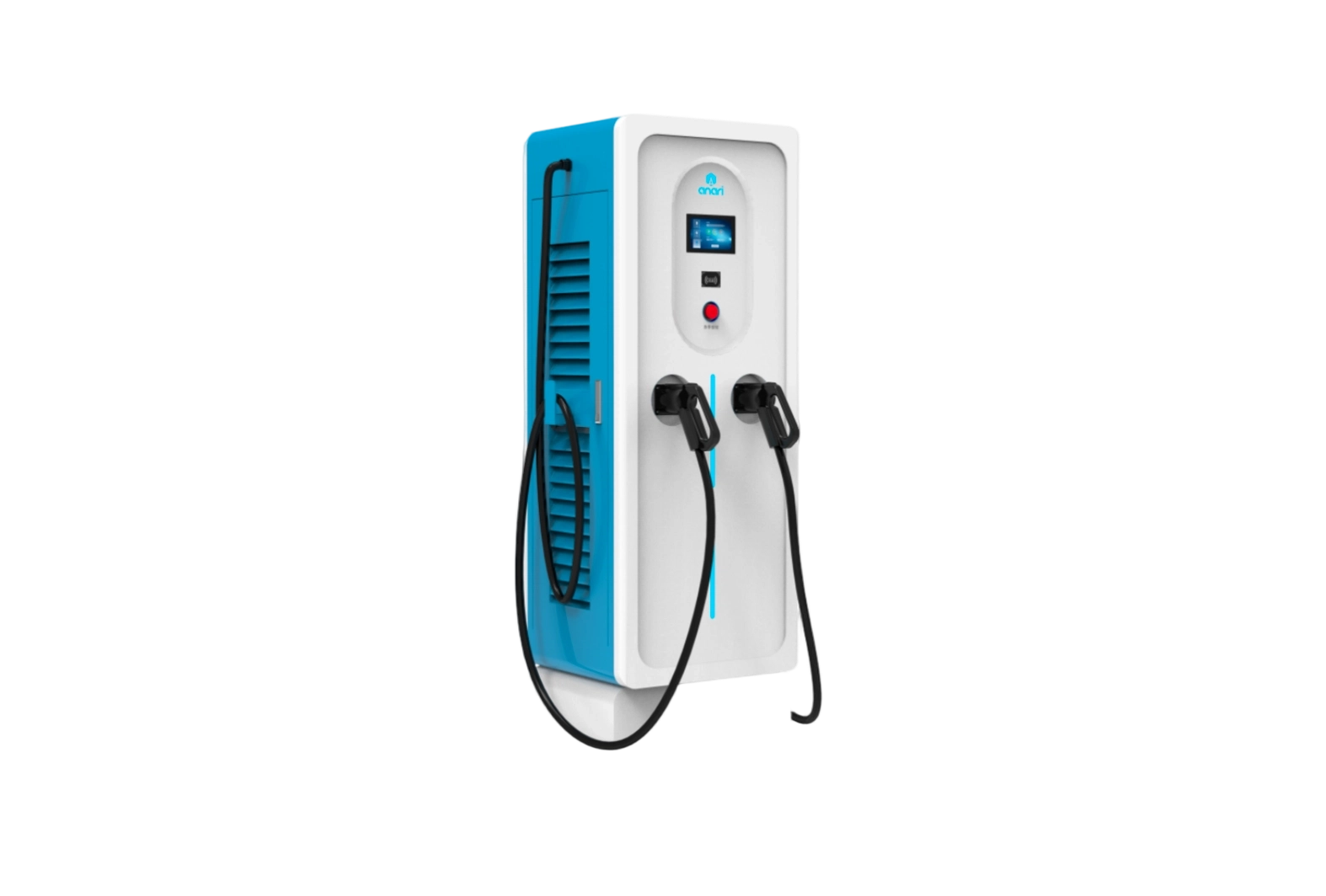
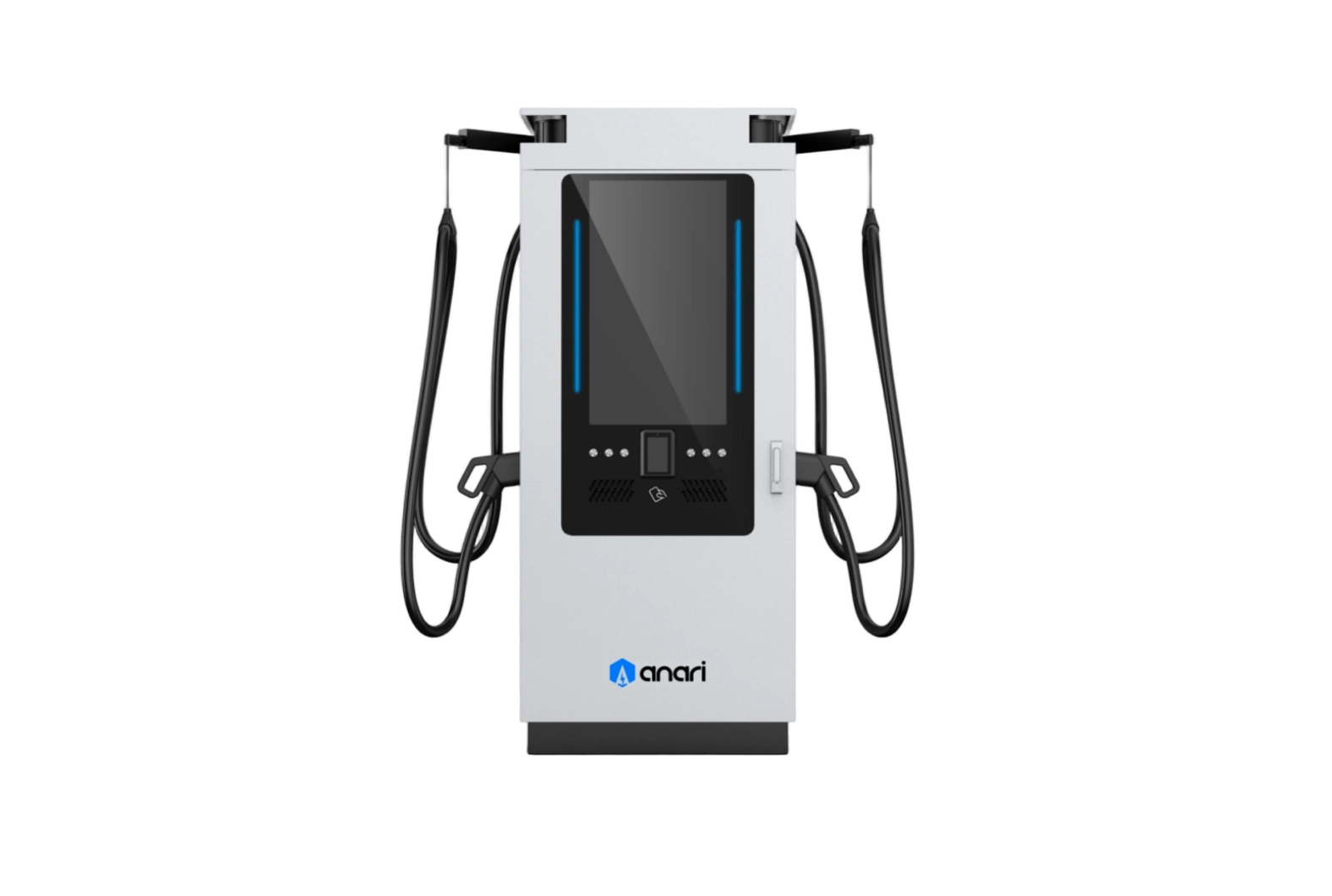
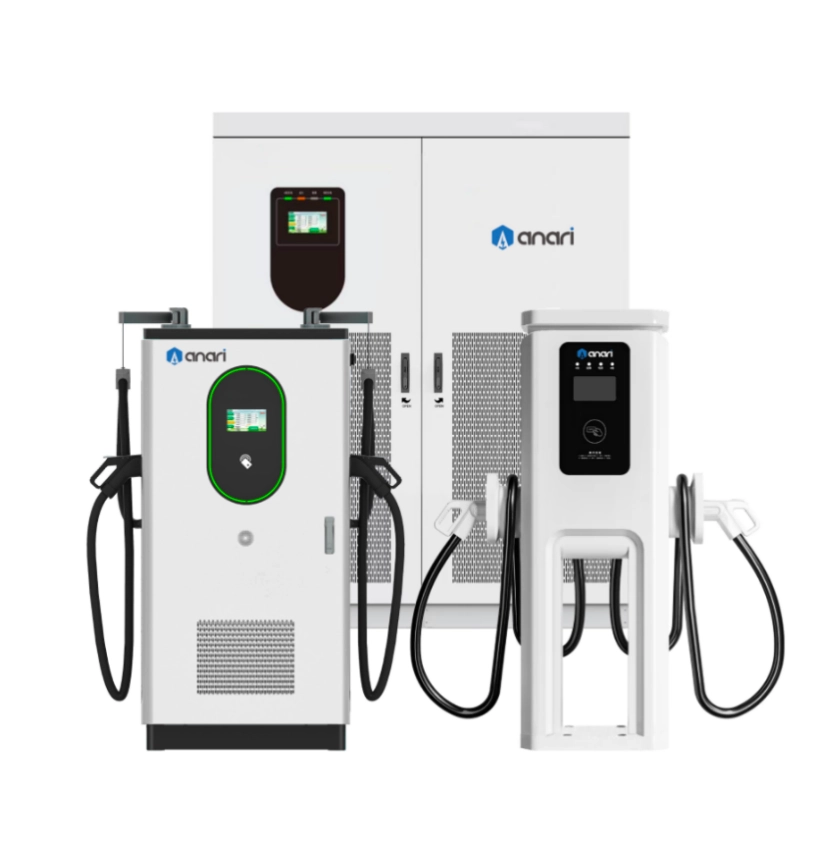
The “60-480kW Integrated Floor-Mounted DC EV Charging Station” is specifically designed for CPOs in areas with high vehicle density and strong energy replenishment demand. This charging station can meet different monetization charging scenarios, with its Charging Mode covering CCS1, CCS2, GB/T, and CHAdeMO, the world’s mainstream charging modes, and is equipped with a “gun cable management system” to facilitate vehicle owners’ charging. In terms of internal structure design, the key components of this charging station adopt a semi-potting process, which effectively blocks dust and moisture and significantly reduces the failure rate of modules. Meanwhile, a heater interface is reserved, and it has passed the 48-hour salt spray test, enabling it to quickly increase output power in low-temperature, medium-humidity, and salt spray environments to meet the charging needs of harsh environments such as alpine regions.

Specifications
| DC Output | Charging Mode | CCS2 & GB/T |
| Output Power | 60kW~480kW + AC 7kW / 22kW | |
| Output Voltage | DC: 200~1000VDC AC: 230VAC (7kW) / 400VAC (22kW) |
|
| Output Current | CCS2: 200A, GB/T: 250A | |
| Cable Length | 5m (8m and 10m optional) | |
| Number of Connectors | 2 Connectors (CCS2, GB/T) + 3rd additional AC Type 2 (optional) | |
| Peak Efficiency | ≥96% at normal output power | |
| AC Input | Earthing System | 3P+N+PE |
| Input Voltage | AC380V±20% | |
| Input Frequency | 45~65Hz | |
| Power Factor | ≥0.99 | |
| THDi | ≤5% | |
| Stable Voltage Accuracy | ≤±0.5% | |
| Stable Current Accuracy | ≤±1% | |
| General Characteristics | IP and IK Rating | IP54, Ik08 |
| Operating Altitude | ≤2000m | |
| Operating Temperature Range | -30℃~+70℃ (Power output reduces when temperature exceeds 50℃) | |
| Operating Humidity Range | 5%~95% | |
| Storage Temperature Range | -40℃~+70℃ | |
| Mounting | Floor Standing | |
| Cooling Type | Forced air cooling | |
| Dimensions (H * W * D) | 750mm * 700mm * 1800mm & 900mm * 750mm * 1800mm (Length * Width * Height) | |
| User Interface | Status Indication | LED/LCD/APP |
| Screen Type | 10-inch HD Touch Screen | |
| Connectivity | 4G, Ethernet | |
| User Authentication | APP, RFID (ISO/IEC 14443 A/B, ISO/IEC 15693, Mifare1 RFID), Credit Card (optional) | |
| Communication Protocol | OCPP1.6J | |
| Firmware Upgrade | Firmware Upgrade Way | OTA |
| Certification and Standards | Safety and Compliance | CE/ IEC61851, IEC 62196, ISO 15118-3, DIN70121, DIN70122, CHAdeMO 1.2, GBT20234, GB/T18487, GB/T27930, NBT33008, NBT33002 |
| Certification | CE | |
| Protection | Safety Design | Over Voltage Protection, Under Voltage Protection, Overload Protection, Short Circuit Protection, Leakage Protection, Grounding Protection, Over Temperature Protection, Low Temperature Protection, Lightning Protection |
| Warranty | 2 Years |
Product Video
Application Scenarios


Multi-Standard 120kW DC & 22kW AC Charging at Cambodia Parking
160kW DC Fast Charging at Jordan Highway for CPO Partnership


180kW DC Fast Charging at Romania Highway Service Area
120kW DC Charging for Hot Climate in Israel – Largest Local Partner
FAQ
-

Q: What certifications has this charging station obtained?What certifications has this charging station obtained?
A: This charging station has obtained CE and TÜV certifications, and is compatible with over 98% of electric vehicles on the market.
-
Q: What payment methods does this charging station support?
A: This charging station supports 3 payment methods:
1. RFID payment: RFID cards of charging station operators settle and pay based on the actual charging electricity; RFID cards with end-user stored value settle and pay based on the actual charging electricity.
2. OCPP Platform Payment: Pay through the OCPP platform that integrates multiple payment methods
3. POS Payment: Pay with a credit card based on the actual amount of electricity charged. -
Q: Can this charging station operate in regions with extremely cold, high-temperature, and high-humidity conditions?
A: The rigorous industrial design inside this charging station, such as the "Reserved Heater Interface", supports the installation of a heating module, which can quickly increase output power at low temperatures to meet the application requirements of overseas high-cold regions; another example is the "Salt Spray Level 48H", which enhances the corrosion resistance against the atmosphere and salt spray in moderately humid environments, meeting extremely harsh application environments.
-
Q: Is this charging station compatible with mainstream operation management platforms?
A: This charger is compatible with the OCPP 1.6J platform and can implement all functions under this protocol.
-
Q: Does this charging station support customization?
A: Yes, logo, color, gun cable management system, three-gun or two-gun configuration, and POS payment method can be customized.
-
Q: What Is the Difference Between a DC Charger and a DC-DC Charger? Are they the same thing?
A: In the EV charging industry, the "DC charger" and "DC-DC charger" typically refer to the same product—a as the direct current fast charger for electric vehicles.
Technical note: Some manufacturers distinguish between:
- DC charger: Standalone unit for EVs
- DC-DC converter: Component that converts AC to DC inside the charger
For purchasing purposes, they are the same category. -
Q: What's the difference between industrial AC and DC chargers?
A: - AC chargers (Level 1/2): Use the vehicle's onboard charger; slower but cheaper; suitable for workplaces, hotels
- DC chargers: Bypass onboard charger; much faster; suitable for commercial fleets, highway corridors
Industrial use cases:
- Logistics depots: DC fast chargers (150-360kW)
- Mining/construction: Ruggedized DC chargers with IP65+ rating
- Fleet yards: Multi-port DC chargers with load management -
Q: What is Dynamic Power Sharing in Multi-Port DC Chargers?
A: Dynamic power sharing automatically allocates available power among connected vehicles based on their charging needs.
How it works:
- 3 vehicles connect to a 300kW charger
- Vehicle A needs 100kW, Vehicle B needs 80kW, Vehicle C needs 60kW
- System allocates: 100kW + 80kW + 60kW = 240kW (within limit)
- If Vehicle A finishes, its power is redistributed to B and C
Benefits:
- Maximizes charger utilization
- Reduces wait times
- Optimizes electrical capacity usage -
Q: Can One DC Charger Support Multiple Connector Standards?
A: Yes, many modern chargers support multiple standards.
Common configurations:
- CCS2 + CHAdeMO (European market)
- CCS1 + CCS2 (export models)
- CCS + GB/T (China export)
- Quad-standard (CCS1/CCS2/CHAdeMO/GB/T)
Benefits of multi-standard chargers:
- Future-proof your investment
- Serve diverse vehicle fleets
- Simplify maintenance (one unit vs multiple)
Trade-offs:
- Higher upfront cost (10-20%)
- More complex software
- May require region-specific certification -
Q: Multi-Standard Charging Stations for International Markets
A: Why multi-standard matters:
- Different regions use different connectors (CCS1 vs CCS2 vs GB/T vs CHAdeMO)
- Exporting chargers requires region-specific certification
- Multi-standard units serve diverse customer bases
Configuration options:
1. Fixed multi-standard: One unit with CCS1+CCS2+GB/T sockets
2. Configurable: Swap connector modules per market
3. Modular: Add standard modules as market demands grow
Cost impact: Multi-standard adds 15-25% to base unit cost but eliminates need for multiple SKUs. -
Q: Grid Connection Requirements for DC Fast Chargers
A: Utility interconnection process:
1. Application: Submit interconnection request to utility
2. Study: Utility performs impact study (may take 2-6 months)
3. Upgrade: Arrange any required grid upgrades
4. Permission: Obtain permission to operate (PTO)
5. Metering: Install revenue-grade meter if required
Timeline and cost:
- Simple connection: 2-4 months, $$5,000-$$15,000
- Complex upgrade: 6-12 months, $$20,000-$$100,000+
Pro tip: Engage utility early; Some offer EV charging incentive programs.