


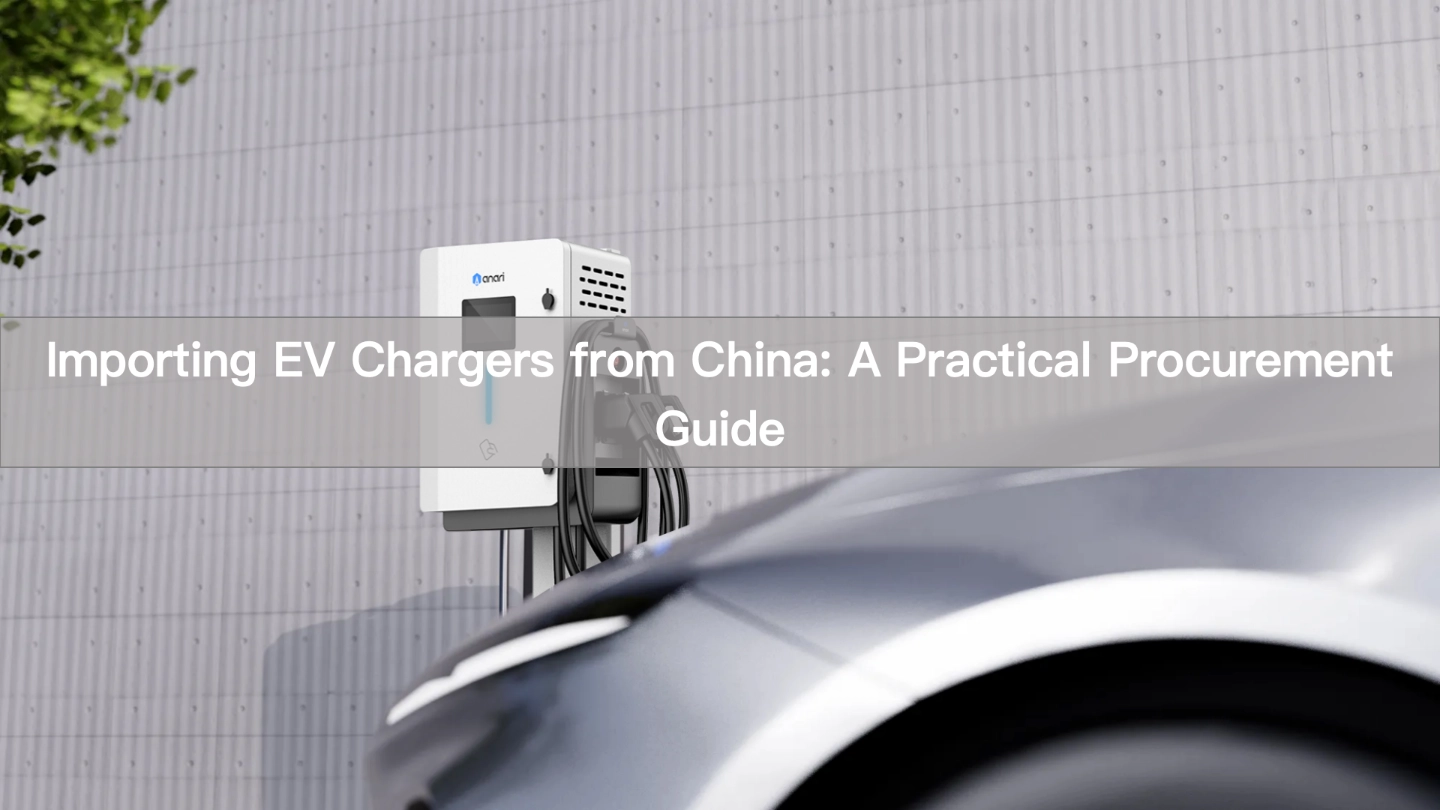
China manufactures over 70% of the world’s EV charging hardware. For distributors, CPOs, and installers outside China, importing directly from a Chinese manufacturer can cut procurement costs by 20-40% compared to buying from regional resellers.
It can also go wrong in specific, predictable ways. This guide covers what to watch for.
1. Why Import Directly
The economics are straightforward. A 120kW DC fast charger that costs $20,000 from a regional distributor might cost $14,000-16,000 FOB from a Chinese manufacturer. On a deployment of 20 units, that difference pays for the shipping, duties, and installation.
But the bigger advantage is control. When you buy from a distributor, someone else decided which manufacturer, which spec, and which firmware version you get. Importing directly means you choose.
2. What to Check Before Ordering
Certification compatibility. A charger with CE certification for the European market is not automatically legal everywhere. Confirm:
• The certification body is accredited (TÜV, DEKRA, SGS, Intertek — not an unknown lab).
• The certificate covers your exact model and production batch.
• Additional local requirements (energy efficiency labels, grid connection standards, accessibility regulations).
Connector standards. Different markets use different physical connectors. Confirm the charger supports the standard your vehicles use:
Europe: CCS2
North America: CCS1
Japan: CHAdeMO
China: GB/T
Southeast Asia : CCS2 (growing), CHAdeMO (legacy)
Multi-standard chargers that support CCS1, CCS2, GB/T, and CHAdeMO from a single unit give you flexibility if your market’s vehicle mix is still evolving.
Voltage and grid compatibility. Chinese domestic chargers run on 380V three-phase. Export markets may require 400V (Europe), 480V (North America), or other configurations. Confirm the charger’s input voltage range matches your local grid. Most export-grade chargers from reputable manufacturers handle 380-480V ±10%.
Language and UI localization. The charger’s screen, user manual, and maintenance interface must be in the local language. Check that the CSMS platform supports your language as well. Anari Energy provides full UI, manual, and packaging localization as standard.
3. Shipping and Logistics
Incoterms. Know what you are paying for:
• FOB (Free On Board): Manufacturer delivers to port. You handle shipping, insurance, and import. Cheapest per-unit, most work for you.
• CIF (Cost, Insurance, Freight): Manufacturer handles shipping and insurance to your destination port. You handle customs clearance and inland transport.
• DAP (Delivered at Place): Manufacturer handles everything up to your specified location. Highest cost, least hassle.
For first-time importers, CIF provides a manageable balance. You pay a premium over FOB but avoid managing international freight.
Sea freight packaging. EV chargers are heavy (200-500kg for DC units) and contain sensitive electronics. Verify:
• Wooden crate packaging with internal bracing.
• Moisture barrier (desiccant packs, vapor-proof wrapping).
• Salt spray certification (48-hour minimum for sea freight).
• Tilt and shock indicators on the crate exterior to detect mishandling.
Customs clearance. Prepare:
• Commercial invoice and packing list.
• Bill of lading.
• Certificate of origin (Form E for ASEAN, Form A for EU GSP, or standard COO).
• CE/UL certificates.
• HS code: 8504.40 (static converters, including EV chargers) in most jurisdictions. Confirm with your customs broker.
Duties vary significantly by country. The EU applies 0% on EV charger imports under certain classifications. The US applies Section 301 tariffs that can add 25%. Check current rates before calculating landed cost.
4. After Delivery: What Makes It Work
A container arriving at your warehouse is not the finish line. Three things matter next:
Commissioning support. Does the manufacturer provide remote or on-site commissioning? A charger that is not configured correctly for the local grid will trip breakers or underperform. Get this commitment in the purchase agreement.
Local service capability. If a unit fails, you do not want to ship 400kg back to China. Verify:
• Remote diagnostics: Can the manufacturer log in and see what’s wrong?
• Spare parts: Are they in your region or shipped from China?
• Replacement policy: How fast does a replacement module ship?
Firmware support. OCPP standards evolve. Grid codes change. Your chargers need firmware updates. Confirm the update mechanism (OTA preferred), frequency, and whether updates are included or billed separately.