



For Charge Point Operators (CPOs), the transition from OCPP 1.6 to OCPP 2.0.1 is no longer just a technical preference; it is a strategic imperative. As the Electric Vehicle (EV) infrastructure market matures, the limitations of legacy protocols are becoming bottlenecks for scalability, security, and operational efficiency.
While OCPP 1.6 has served as the backbone of the early EV charging era, the industry is rapidly shifting toward the dependable capabilities of OCPP 2.0.1. This article explores the critical differences between these two standards and provides a clear technical upgrade path for CPOs looking to future-proof their fleets.
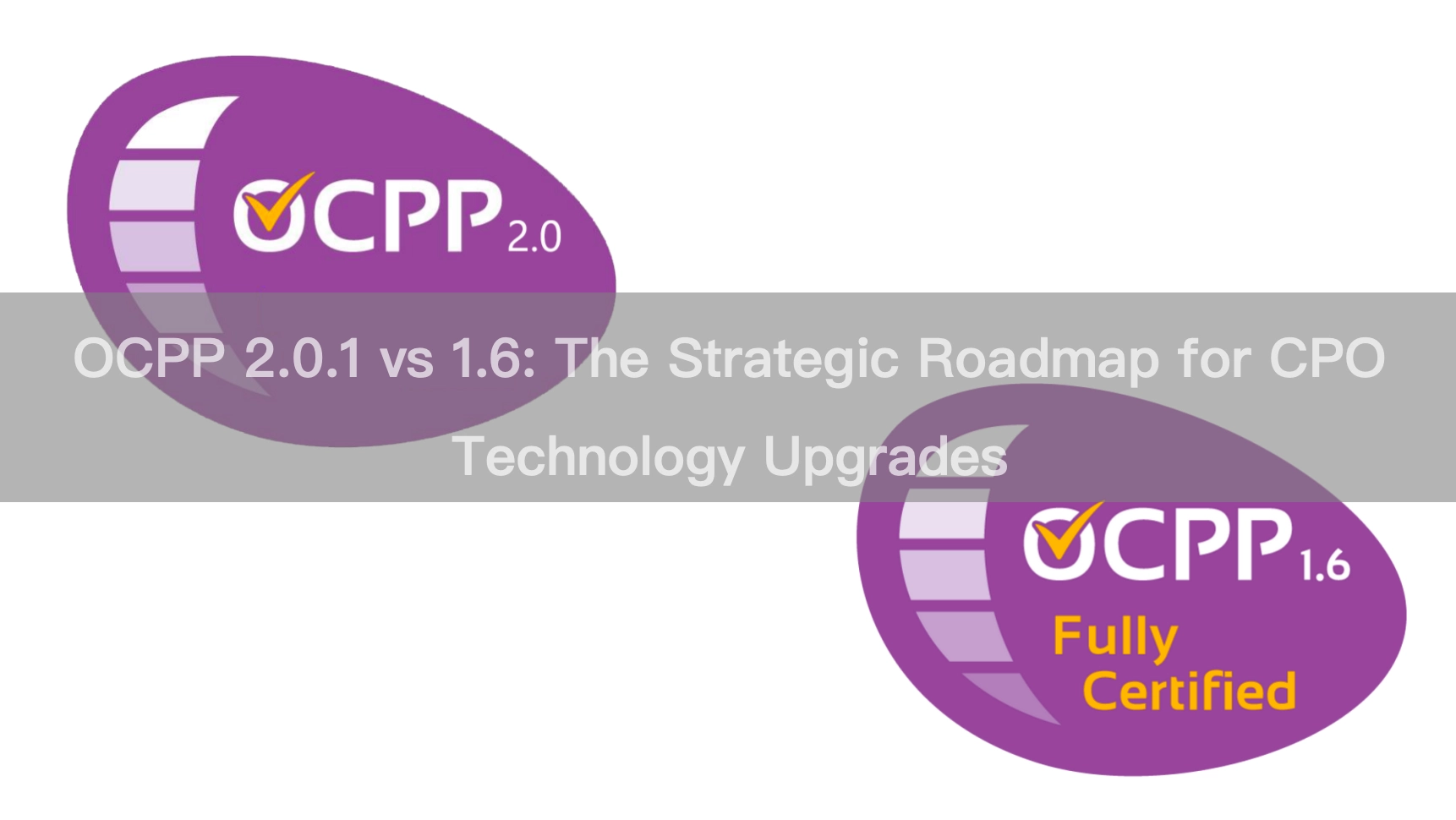
1. The Limitations of OCPP 1.6: A Legacy Built on Basics
OCPP 1.6, released in 2011, revolutionized the industry by providing a standardized communication protocol between Charge Point Management Systems (CPMS) and Charge Points (CPs). For over a decade, it enabled interoperability between hardware manufacturers and software platforms. The flip side:, as EV charging has evolved from simple “plug-and-charge” to complex energy management and grid integration, 1.6’s architecture shows its age.
Key Limitations:
- Security Vulnerabilities: OCPP 1.6 primarily relies on basic authentication methods. It lacks native support for modern security protocols like TLS 1.2/1.3 and mutual authentication, leaving networks vulnerable to cyber threats.
- Limited Data Granularity: The protocol sends data in large, periodic batches. This makes real-time monitoring difficult and results in a high latency for critical events, such as session interruptions or error states.
- Poor Interoperability: While it standardized communication, 1.6 often required significant custom development to handle specific vendor features, leading to “walled gardens” where mixing hardware from different vendors was complex.
- No Smart Charging: The protocol lacks native support for advanced load balancing and dynamic pricing strategies required for modern grid integration.
1.2 The OCPP 2.0.1 Advantage: Security, Smart Charging, and Interoperability
OCPP 2.0.1, part of the OCPP 2.0 family, is built on JSON and WebSocket technologies, offering a fundamentally different approach to communication. It is not merely an update; it is a re-architecture designed for the smart grid era.
1.3 Enhanced Security and Identity Management
Security is the cornerstone of OCPP 2.0.1. It mandates the use of TLS 1.2 or higher for all communications and supports mutual authentication using X.509 certificates.
This ensures that only authorized charge points can connect to the backend, and vice versa. Also,, it introduces dependable identity management, allowing for easy integration with ISO 15118 “Plug and Charge” standards, which is becoming a regulatory requirement in many European markets and a growing expectation in North America.
1.4 Real-Time Data and Smart Charging
Unlike 1.6’s batch reporting, OCPP 2.0.1 supports real-time status reporting and event-based notifications. This allows CPOs to react instantly to faults, driver issues, or grid signals.
More importantly, it introduces native Smart Charging Profiles. CPOs can now define complex charging schedules based on time-of-use rates, renewable energy availability, or grid load constraints directly within the protocol, optimizing energy costs and reducing peak demand charges.
1.5 Improved Interoperability and Flexibility
OCPP 2.0.1 is designed to be vendor-agnostic. It supports a wider range of message types and allows for more flexible data structures. This reduces the need for custom integrations and makes it easier to onboard new hardware vendors or switch CMS providers without a complete infrastructure overhaul.
2. The Upgrade Path: Strategic Considerations for CPOs
Transitioning to OCPP 2.0.1 is a significant undertaking. It requires careful planning to ensure business continuity, data integrity, and minimal downtime. Here is a recommended roadmap for CPOs.
2.1 Phase 1: Audit and Assessment
Before investing in new hardware, conduct a comprehensive audit of your existing fleet.
- Hardware Compatibility: Determine which of your current charge points are 2.0.1-ready or upgradable via firmware. Many modern chargers have 2.0.1-capable hardware but are running 1.6 firmware.
- CMS Readiness: Verify that your current CPMS supports OCPP 2.0.1. If not, evaluate CMS providers who offer native 2.0.1 support. Look for platforms that offer hybrid capabilities, allowing simultaneous management of both 1.6 and 2.0.1 stations during the transition period.
2.2 Phase 2: Pilot Program
Never roll out a major protocol change across an entire network simultaneously.
- Select a Pilot Group: Choose a diverse subset of charge points (different vendors, locations, and usage patterns).
- Test Key Features: Focus on validating security certificates, smart charging profiles, and real-time data accuracy.
- Measure ROI: Track metrics such as reduced downtime, improved energy efficiency, and customer satisfaction. Use this data to justify the broader rollout.
2.3 Phase 3: Phased Rollout and Training
- Staged Deployment: Roll out the upgrade in waves, starting with high-visibility urban locations before moving to residential or remote sites.
- Team Training: Ensure your operations and engineering teams are trained on the new dashboard features, troubleshooting tools, and security protocols specific to OCPP 2.0.1.
- Driver Experience: Communicate any changes to end-users, particularly regarding authentication methods if you are implementing ISO 15118 Plug and Charge.
2.4 Phase 4: Optimization and Future-Proofing
Once the transition is complete, apply the advanced features of OCPP 2.0.1.
- Implement Dynamic Pricing: Use real-time data to adjust pricing based on grid demand.
- Integrate with VPPs: Connect your fleet to Virtual Power Plant (VPP) aggregators to monetize vehicle-to-grid (V2G) capabilities.
- Continuous Monitoring: Use the enhanced analytics provided by 2.0.1 to predict maintenance needs and optimize charger utilization.
3. Conclusion: Investing in the Future of Charging Infrastructure
The shift from OCPP 1.6 to OCPP 2.0.1 is a critical milestone for any CPO aiming to remain competitive in the evolving EV landscape. While the upgrade requires investment and strategic planning, the benefits—enhanced security, smarter energy management, and easy interoperability—far outweigh the costs.
CPOs who delay this transition risk falling behind in operational efficiency, security compliance, and customer satisfaction. By following a structured upgrade path, CPOs can ensure a smooth transition, maximize the value of their charging assets, and position themselves as leaders in the smart energy ecosystem.
The future of EV charging is smart, secure, and connected. OCPP 2.0.1 is the foundation of that future.
Have you faced this challenge? I’d love to hear your perspective.