


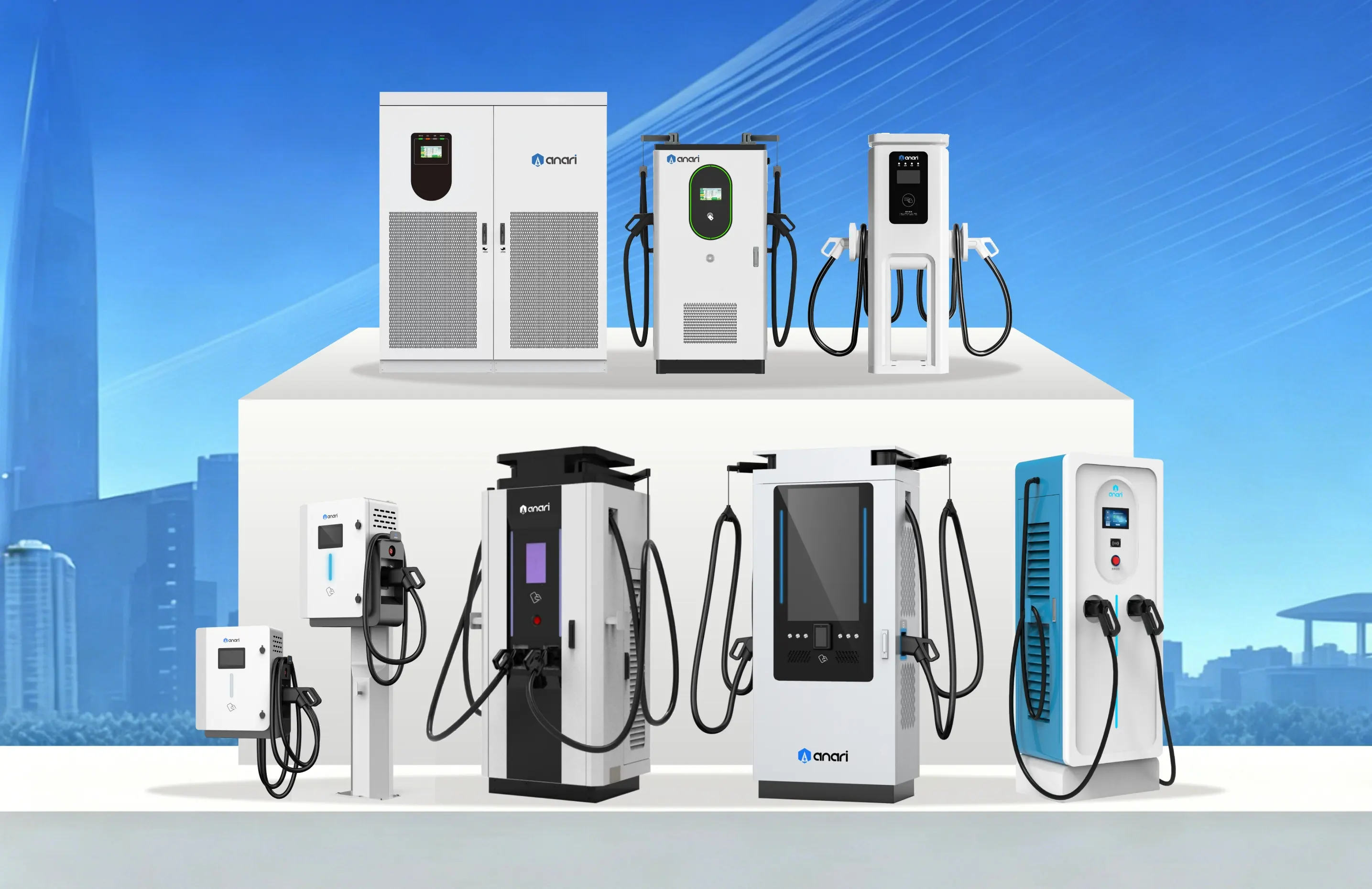
For networks of 10 to 200 sites: DC fast-charging hardware for operators who own the asset, run the site, and collect the fee.
You don’t Sell Electricity, You Sell Uptime
An independent network’s P&L carries four line items that never appear on any invoice: sessions that didn’t happen, capacity that sits idle, energy bought in the wrong price window, and drivers who stop coming back. Each compounds quietly, month by month, and none of them registers as a cost until the revenue stops.
This page treats each as a leak you can quantify and close. Every capability below ships in hardware today. No roadmap items. No pilot features. No promises.
Downtime is a Cost Line on Your P&L
The problem
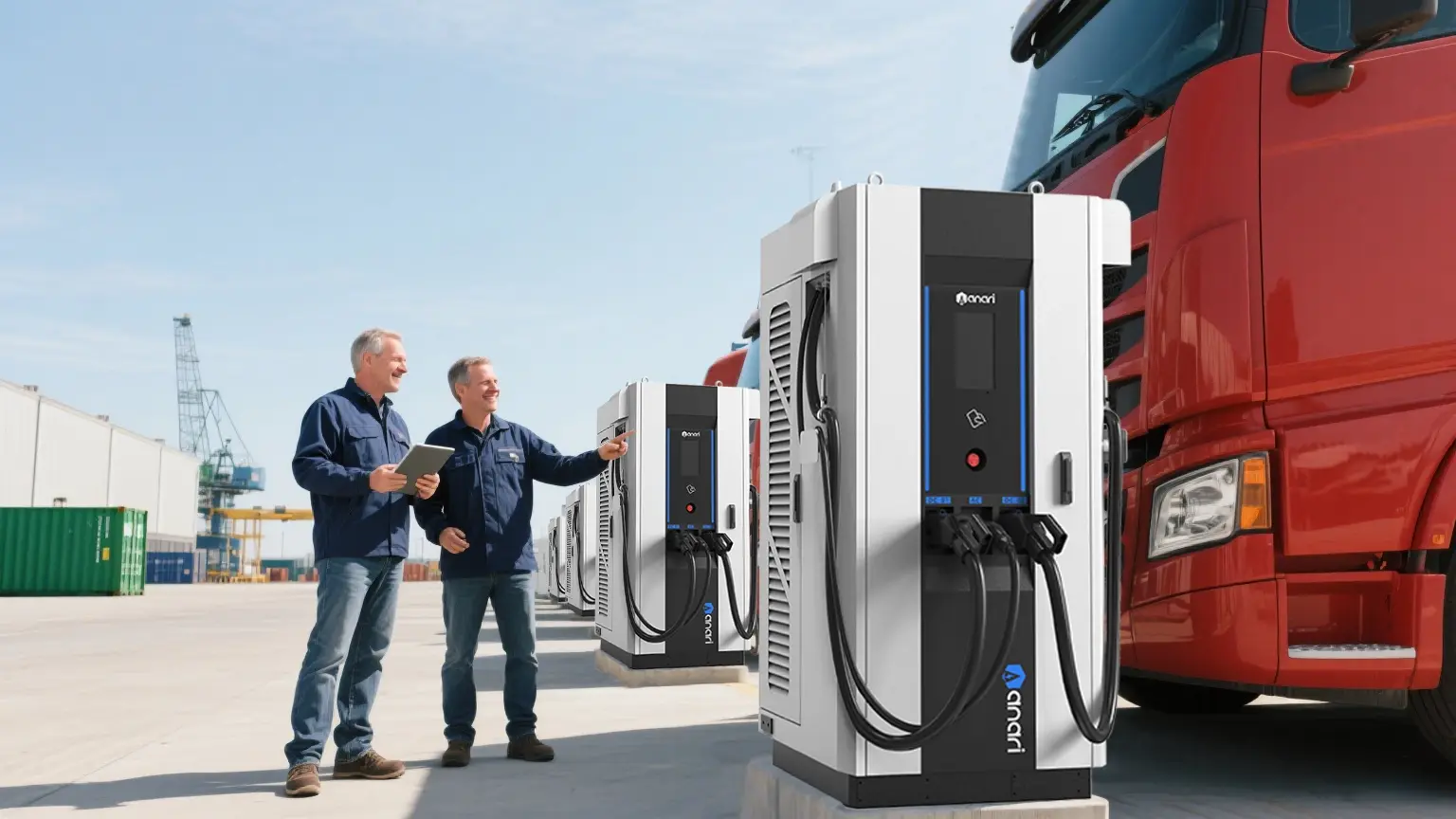
When a DC fast charger goes offline, your operation loses three things at once: the session it should have sold, the service fee attached to it, and the driver whose next visit now goes to a working station. None of these losses appear on any of your invoices. They show up only as the gap between planned utilization and measured utilization. In a network of 10–200 sites, one unreliable site quietly erodes the reputation of every other site you operate.
The number behind the decision
Run it on your own fleet. All three inputs are already in your monitoring system:
| Input | Symbol |
|---|---|
| DC fast chargers in your network | N |
| Average downtime hours per charger per month | D |
| Average revenue per available hour (energy margin + service fee) | R |
| Lost revenue per month | N × D × R |
Most operators know downtime “costs something.” Nobody has put a monthly figure next to it. Do that, and it stops being an operational nuisance. It becomes a budget line you can act on.
The fix — in the hardware, out of the box
- OCPP 1.6J, native. Core, Smart Charging, Firmware Update, and Local Auth List profiles ship in the hardware. Your CSMS talks to the chargers directly; no proprietary middleware, no lock-in.
- Remote monitoring is standard, not an add-on. Every unit reports availability, fault state, and energy data over OCPP. A downed charger surfaces in your operations dashboard in real time, not after a driver complaint.
- Firmware updates without a visit. The OCPP Firmware Update profile applies fixes remotely, which matters if you do not run a local engineering team.
- ≥96% peak efficiency at normal output. Every hour a charger is up, the power it delivers is power you can bill.
- Capacity you can buy later. Power stacks scale in modular increments. You add output without re-deploying the site.
Idle Capital is the Cost Hidden in the Spec Sheet
The problem
You sized each site to the demand you projected. In the worst case, you over-projected: more kW installed than the queue can draw. Every kilowatt that never charges has cost you money twice. Once at purchase, and again monthly, as fixed operating expense on dead capacity.
What the idle kW is actually costing you
Two inputs, both sitting in your system today:
| Input | Symbol |
|---|---|
| Installed but idle capacity | I (kW) |
| Fully loaded annual cost per kW (capitalized + OPEX) | C |
| Annual sunk cost on idle capacity | I × C |
The arithmetic is one line; the figure is not. An operator carrying idle capacity is paying interest on a loan nobody extended.
The fix
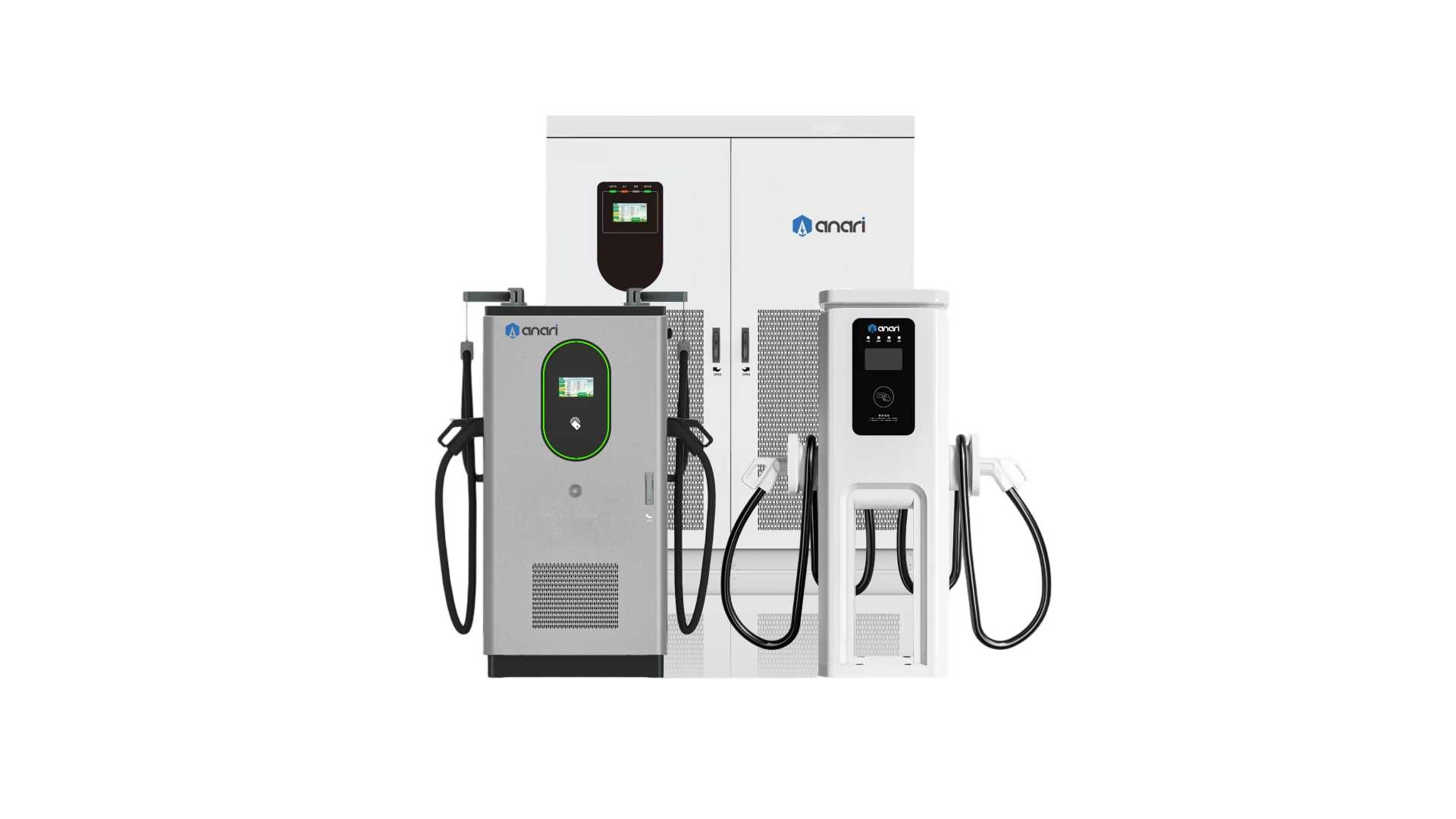
- Shared cabinet, incremental terminals. In the split architecture, one power cabinet feeds multiple satellite terminals. You buy the cabinet to real demand, and add a terminal only when utilization justifies it.
- Output scales in defined steps. Power cabinets ship from 360 kW to 960 kW. You start at the step your site actually needs.
- Balance what is running. The Smart Charging profile lets your CSMS share power across the terminals in use, so a busy stall never throttles a queue that is already forming.
→ Fora Split System
Energy is the One Cost Your can Actually Compress

The problem
Rent and electricity are the two lines you cannot negotiate away. What you can negotiate is how much of the power you spend: how much dies in conversion, and how much is bought in the wrong price window.
The recoverable slice of your energy line
Three inputs, all from your meter and tariff sheet:
| Input | Symbol |
|---|---|
| Monthly energy you sell | S (kWh) |
| Your off-peak tariff delta | Δt ($/kWh) |
| Share of chargeable hours inside off-peak | s |
| Energy savings available per month | S × Δt × s |
Where your market prices power in windows, part of your energy line is already recoverable. The stalls you have do not change; the purchase window does.
The fix
- Efficiency you can budget against. ≥96% peak efficiency at normal output: every kWh you sell is a kWh that did not have to be lost in conversion.
- Charge inside the cheap window. The OCPP 1.6J Smart Charging profile lets your CSMS push load-control strategies to the hardware: sessions run in the tariff’s cheapest window, not the demand’s peak.
- Optional: make part of the energy you sell. On-site solar and storage reduce the share of energy you buy at the meter. Anari supplies the storage and the charger as one system, sized to the site.
→ Vulco DC Series
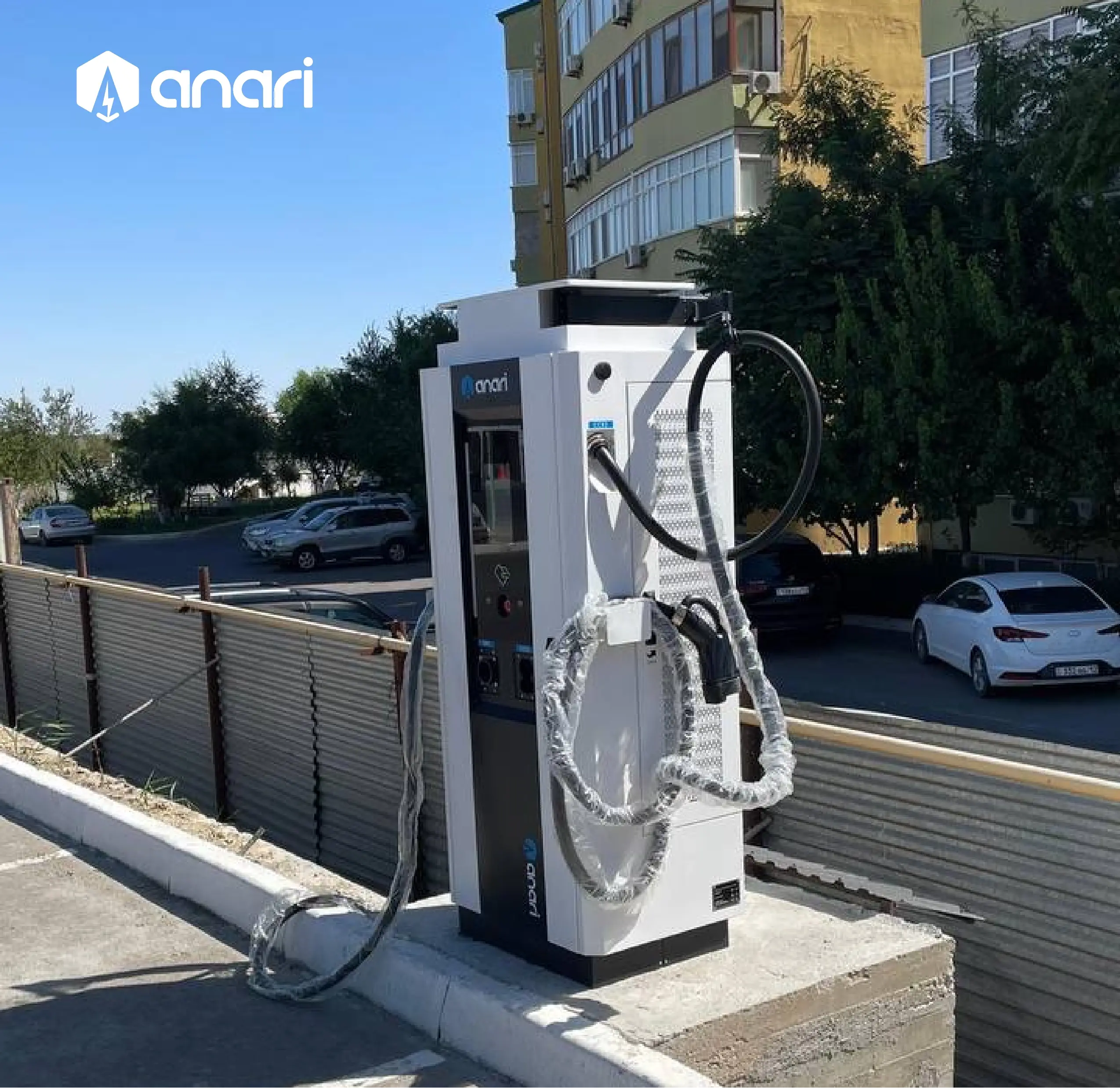
Retention is the Only Growth the Large Networks can’t Buy

The problem
The large networks have hundreds of sites and a national advertising budget. You have forty sites and a local reputation. A driver decides on one number: will it work next time. You cannot outspend them. You can out-operate them.
Where the next visit goes
Four inputs, each one a number you already track:
| Input | Symbol |
|---|---|
| Monthly transacting drivers | D |
| Average revenue per driver per month | R |
| Monthly share who stop coming back | X |
| Monthly revenue at risk | D × R × X |
One lost driver is not one lost session. It is a habit that now belongs to a working competitor, for as long as that competitor’s availability holds.
The fix
- Availability is the retention asset. The reason a driver returns is that the stall worked last time and works this time. Reliability compounds; a single failure costs a habit, not a session.
- No app walls. OCPP 1.6J with Local Auth List: any network card or app that speaks the protocol can charge your stalls. Your queue is not held hostage by one brand’s ecosystem.
- Turn the wait into a revenue line. The Aquila advertising station charges at 60–240 kW and monetizes the queue: a stall that sells while it charges.
- Position where demand already queues. Fleet depots, corridors, retail destinations: site to the demand, and let the demand do the marketing.
→ Aquila Series
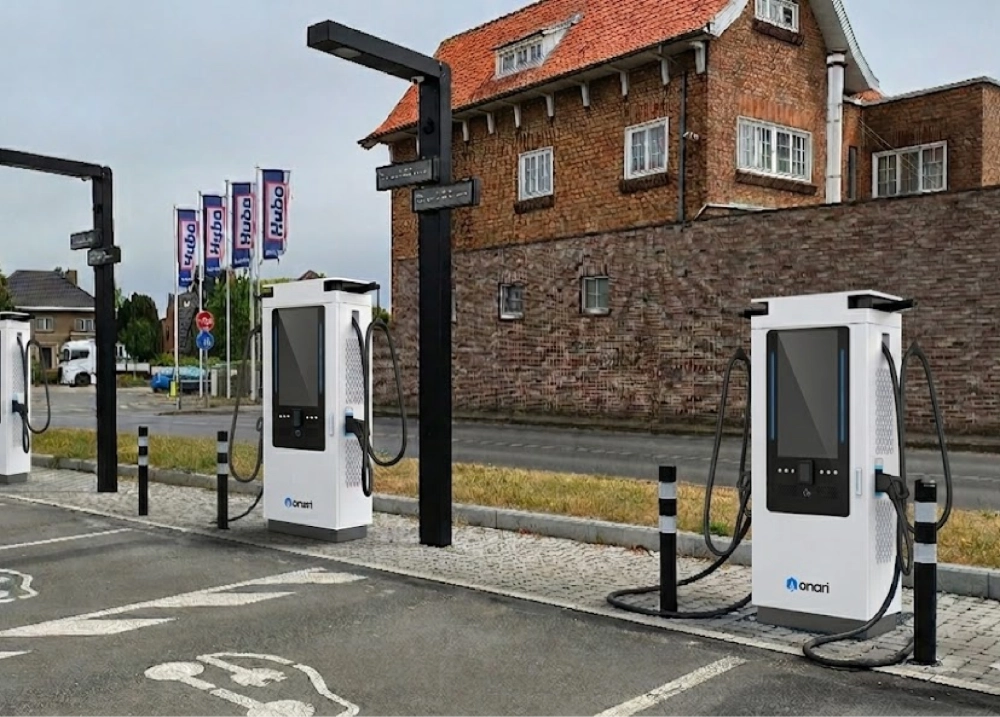
Product Fit by Stage

| Stage of your network | Typical footprint | Architecture |
|---|---|---|
| Entry — 10–30 sites, urban & retail | 60–240kW per connector | Pales DC Series |
| Growth — hubs & corridors | 60–480kW | Vulco DC Series |
| Scale — high-density & highway | 480–1200kW, shared | Fora Split System |
| Ad-revenue sites | 60–240kW with display | Aquila Series |
OCPP 1.6J native 丨 ≥96% peak efficiency at normal output 丨 ≈45-day standard delivery
Why Operators Choose Anari Energy – The Operational Facts
- Manufacturer pricing, no distribution layer.
- Open by design. OCPP 1.6J with Core, Smart Charging, Firmware Update, and Local Auth List. Your CSMS stays yours; The protocol is not proprietary. Read the open-architecture note
- Certified. CE / TÜV / SGS and OCPP 1.6J conformance; certification scope per model, see the specification sheet.
- Delivered. ≈30-day standard lead time.
- Deployed. 2,800+ units. 30+ countries. 100+ customers.
- Supported. Remote diagnostics and firmware updates over OCPP, with regional service partners across the EU, Middle East, Central Asia, Southeast Asia, Africa, and Latin America.
- No roadmap is sold here. Every capability on this page ships in the hardware today.