


Anari Energy | June 16, 2026
Executive Summary
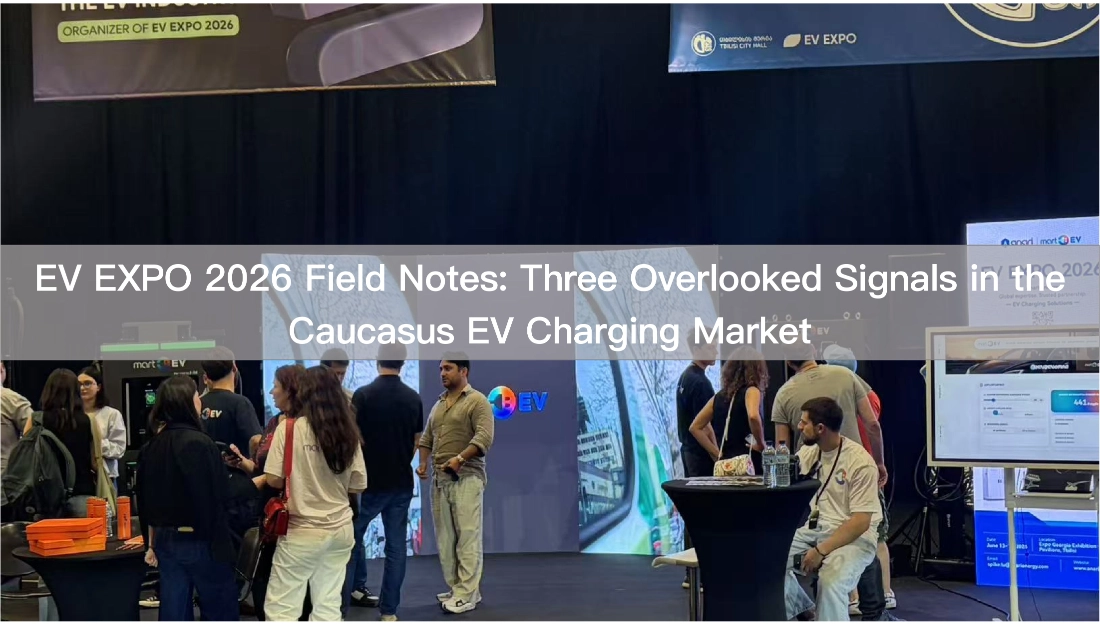
Three days at the expo. Hundreds of conversations. One thing became unmistakably clear: what’s happening in the Caucasus EV charging market has very little to do with what European market analysis reports are saying.
Three signals kept surfacing across our booth conversations:
- Reliability>Power: The Caucasus doesn’t need 400 kW ultra-fast chargers over the next 3 years. It needs 60–120 kW units that run for 3 years without major failures — and when something does break, someone responds within a day.
- Small Market = Ultimate Stress Test: Scarce subsidies, thin electricity margins, low per-charger utilization, and zero customer patience. If your charging business model works here, it’ll work anywhere — and crush it in larger markets.
- Your Local Partner Is the Product: Customers aren’t buying a charger. They’re buying a promise that “someone has this covered.” MartEV isn’t Anari’s distribution channel — it’s the product itself.
If you’re a CPO or operator: this report tells you which traps have already been stepped on, and why the priority list you hear at European trade shows doesn’t apply here.
If you’re building or investing in charging infrastructure: this report gives you a map grounded in expo-floor reality — not a desk-research market model.
Why This Report
The major European charging market reports are well-researched and well-narrated. You can read about the power race, operator consolidation, and MCS timelines in Roland Berger, BloombergNEF, and AFIR progress trackers.
But the Caucasus doesn’t appear on their radar. The combined market size of Georgia, Armenia, and Azerbaijan is too small to register in most consulting firms’ models.
Yet the conversations at EV EXPO 2026 revealed a different reality — one that has nothing to do with those reports. Operators, fleet managers, energy companies, and government representatives gave us feedback that pointed to an entirely different set of priorities.
This is not an Anari product brochure. We’ve distilled the signals that emerged repeatedly and were cross-validated across conversations at our booth. It’s written for operators who are already in the trenches and for newcomers who need a more honest map than the standard European narrative provides.
1. Signal 1: “Doesn’t Break” Comes Before “Charges Fast”
1.1 What We Heard at the Expo
Operator A (local charging station operator in Georgia, managing 10+ sites):
Purchased 10 DC chargers from a supplier. Everything ran fine for the first two years. In year three, problems started piling up — power module failures, SECC control board errors. Two units are now completely offline. Three more are running at reduced power. The supplier’s after-sales response? “We’ll ship the parts.” From China. 10–14 days.
Operator B (energy manager at a hotel group):
Another brand’s screen-equipped chargers had no dust filters. Within a year of operation, dust ingress caused module overheating and shutdown. Local environmental conditions are far dustier than European cities — the supplier’s design never accounted for this.
1.2 What This Means
The dominant European narrative is a “power race” — 150 kW to 350 kW to megawatt-class, an arms race of specs. But in the Caucasus market, the actual pain points operators face don’t overlap with this narrative at all. Here’s why:
First, the grid won’t deliver the power you’re spec’d for.
The distribution grid in the Caucasus — especially along highways outside cities — wasn’t designed for 400 kW DC fast charging. Many sites have actual available capacity in the 50–100 kW range. A 60–80 kW DC charger that delivers stable output is more meaningful than a 240 kW unit that can only run at 80 kW because the grid can’t feed it. Chasing high-power specs means paying more for capacity you can’t use.
Second, the after-sales window in a small market is brutally narrow.
In Germany, a faulty charger gets an OEM engineer on-site tomorrow. In Georgia, a remote supplier might take a week or more. This means reliability isn’t a nice-to-have — it’s the survival line. A 2% failure rate that’s acceptable in Western Europe translates to losing not just 2% of revenue in a small market, but potentially 10% of customer trust — because the operator community is small and word travels fast.
| Dimension | Western Europe | Caucasus Market |
| Fault response time | 24–48 hours | 3–14 days (for offshore suppliers) |
| True cost of failure rate | Revenue loss | Revenue loss + irreversible customer churn |
| Speed of reputation spread | Dispersed, trade media | Tight-knit community, WhatsApp groups |
| Local spare parts inventory | Supplier has local warehouse | Almost none |
Third, tourism-driven charging patterns don’t need ultra-fast.
Overnight hotel charging (8–12 hour stays), scenic-area parking (3–4 hour stops), and destination charging at guesthouses — the larger these use cases are as a proportion of total charging, the lower the marginal value of 120 kW+ DC chargers. A mix of 7 kW AC units and 60–120 kW DC units matches actual demand far better than chasing peak power.
1.3 Counter-Consensus Take
The core demand in the Caucasus over the next 3 years isn’t “higher power.” It’s “higher reliability + localized after-sales response.”
A supplier that can deliver on this dimension — regardless of what the power spec sheet says — will be more competitive than one offering 400 kW ultra-fast charging.
One notable dynamic from the expo floor: a Chinese brand (let’s call it “Brand A”) was repeatedly mentioned by operators in the same breath: “the most expensive of the three suppliers, but also the most stable.” One of Brand A’s chargers has run for 3 years, handled CHAdeMO — the trickiest protocol for compatibility — without issues, logging only a single error. This kind of reputation travels through operator circles faster than any spec sheet handed out at a trade show.
2. Signal 2: A Small Market Is the Best Stress Test for a Charging Business Model
2.1 What We Saw at the Expo
Based on expo conversations, the breakdown of charging infrastructure investors looked roughly like this:
| Investor Type | Share (Est.) | Core Motivation |
| Hotels / Resorts / Commercial property | ~40% | Increase property value, attract EV-driving tourists |
| Gas station conversions | ~30% | Turn diesel islands into charging islands, leverage existing locations |
| Pure-play CPOs | Small share | A handful of major operators already hold ~70% market share locally; barriers to entry are high for newcomers |
| Real estate developers | ~30% | Charging facilities as standard in new construction |
2.2 What This Means
In large markets (Germany, France, the UK), you can play the “land grab” game — secure prime locations first, operate at a loss for five years, and trust that scale and electricity price spreads will eventually make the math work.
The Caucasus doesn’t afford you that luxury. Market size dictates:
• You can’t “land grab” your way to density — there simply aren’t enough EVs to fill those grabbed locations
• Electricity price spreads aren’t as wide as in Europe — you can’t subsidize operating losses through retail/wholesale arbitrage
• Per-charger utilization is naturally lower than in dense population centers — and it’s highly seasonal (tourism peak vs. off-season)
This means any charging station model that can turn a profit in the Caucasus will only make more money in a larger market.
2.3 The Stress Test Comparison
| Variable | Western Europe | Caucasus Market | What the Stress Test Reveals |
| Market size | Large, forgiving | Small, near-zero margin for site selection error | Your site selection logic must be precise — trial-and-error is too expensive |
| Electricity price spread | Significant | Limited | You must make money from utilization itself, not from arbitrage |
| Daily per-charger throughput | Relatively predictable | Highly volatile (seasonal + tourism-driven) | You need dynamic pricing and load-balancing capability |
| Maintenance cost | OEM local team | Reliant on importer / remote support | Hardware must be low-failure + modular for replacement |
| Customer patience | High | Extremely low (one bad experience spreads instantly) | Reliability is the #1 priority |
| Capital subsidies | Mature programs across countries | Limited / early stage | Unit economics must stand on their own — can’t depend on subsidies |
2.4 A Real Story from the Expo Floor
A Georgian operator shared his site selection lesson with us: he picked a location on the outskirts of Tbilisi, originally forecasting 8 charging sessions per day. In the first three months of operation, weekday averages were 2–3 sessions. Weekends, boosted by tourist traffic, reached 5–6. The problem wasn’t a bad location — it was that local EV adoption grew slower than projected. But he’d already sunk the cost of the transformer and civil works. That’s what zero margin for error looks like in a small market.
2.5 Counter-Consensus Take
If you want to know whether your charging station business model actually works, six months in the Caucasus will expose more than three years in Germany.
This market’s harsh conditions automatically filter out unsustainable models that survive on subsidized burn rates. What survives here will be more resilient anywhere.
This cuts both ways for manufacturers too: if your hardware can survive the Caucasus — summer dust, winter cold, unstable grids, and remote maintenance — taking it to Western Europe is playing on easy mode.
3. Signal 3: Your Local Partner Isn’t a Channel — It’s the Product
3.1 What We Felt at the Expo
Direct feedback from a local Georgian operator:
We work with three charger suppliers — Brand A (the most expensive, but the most stable), Brand B (the middle tier), and Brand C. When we quote potential customers, we send all three quotes and let them choose across the high/mid/low spectrum.
Brand A’s chargers are indeed pricey, but even with CHAdeMO — the hardest protocol for compatibility — they’ve run for 3 years with only one error. Brand B delivers reliable mid-range performance. Brand C offers the lowest price point, performance reaching roughly 90% of Brand A’s, and the best after-sales service.
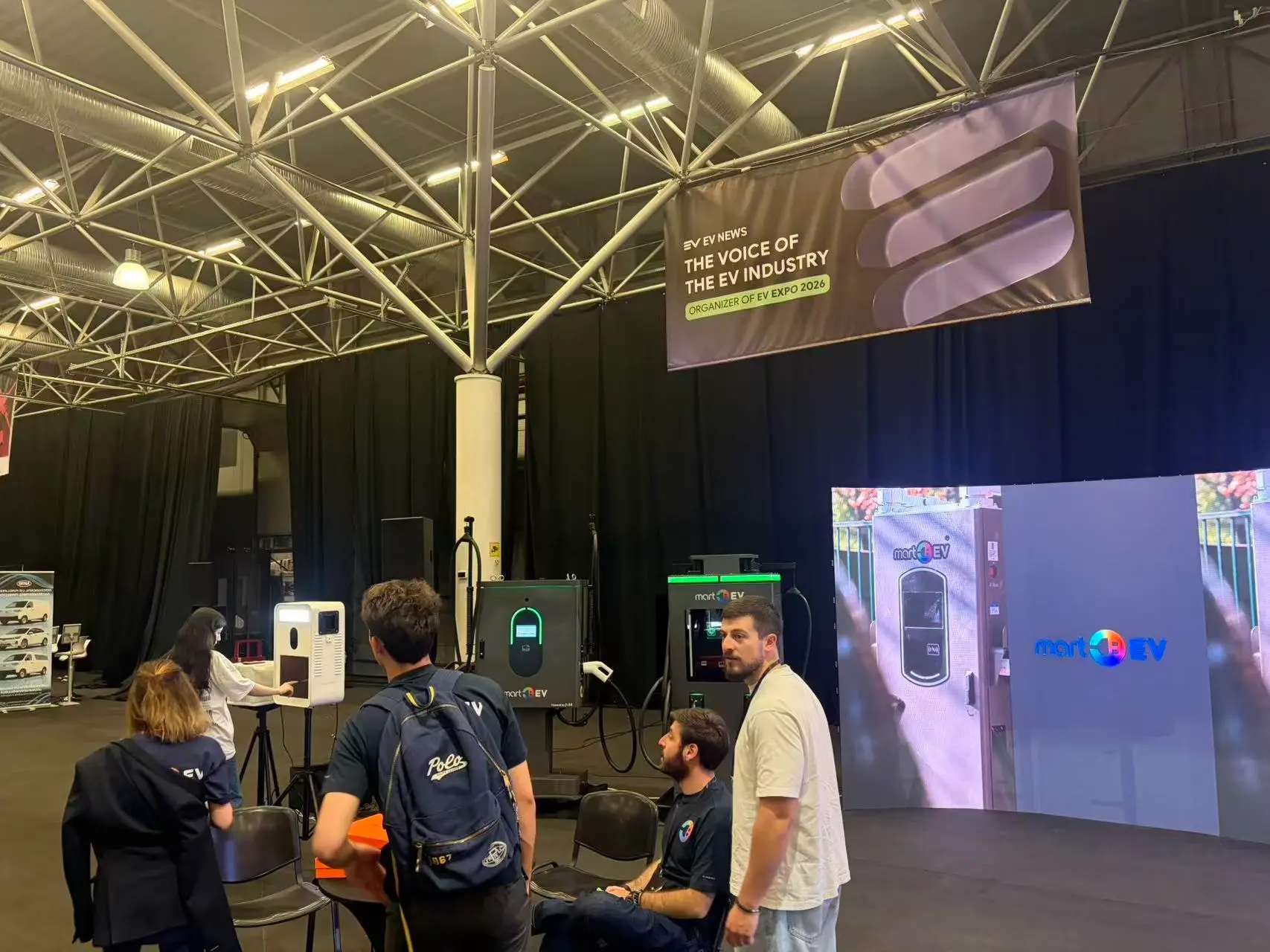
One more thing customers mentioned: having a warehouse or spare parts inventory in a neighboring country or locally is a major plus. This is the dimension we most easily overlook: Engineer-Friendly. And this is exactly the strategic priority Anari Energy is currently negotiating with its Caucasus partners to establish.
The operator’s maintenance team deals with these chargers every day. If modules are easy to remove, fault codes are clear, replacement parts don’t require shipping from China, and tech support communicates in a way they understand — they’ll advocate for your brand when reporting to management.
Flip it around: a charger that’s technically brilliant on paper but takes the maintenance team 3 days to diagnose every time something goes wrong — that charger’s reputation will collapse inside the operator community faster than anything.
3.2 What This Means
The default posture for Chinese charger manufacturers going overseas is: “I have a great product. You help me sell it.” The local partner is positioned as a channel, a distributor, an agent — a pipe to push hardware to the end user.
In a small market like the Caucasus, this logic runs in reverse.
Customers aren’t buying a charger. They’re buying a promise that “someone is responsible.”
The factory in Shenzhen can’t answer these calls. Our Caucasus’ partner can.
3.3 Counter-Consensus Take
When entering a small market overseas, choosing a local partner isn’t about “who can help me sell.” It’s about “who will become the product with me.”
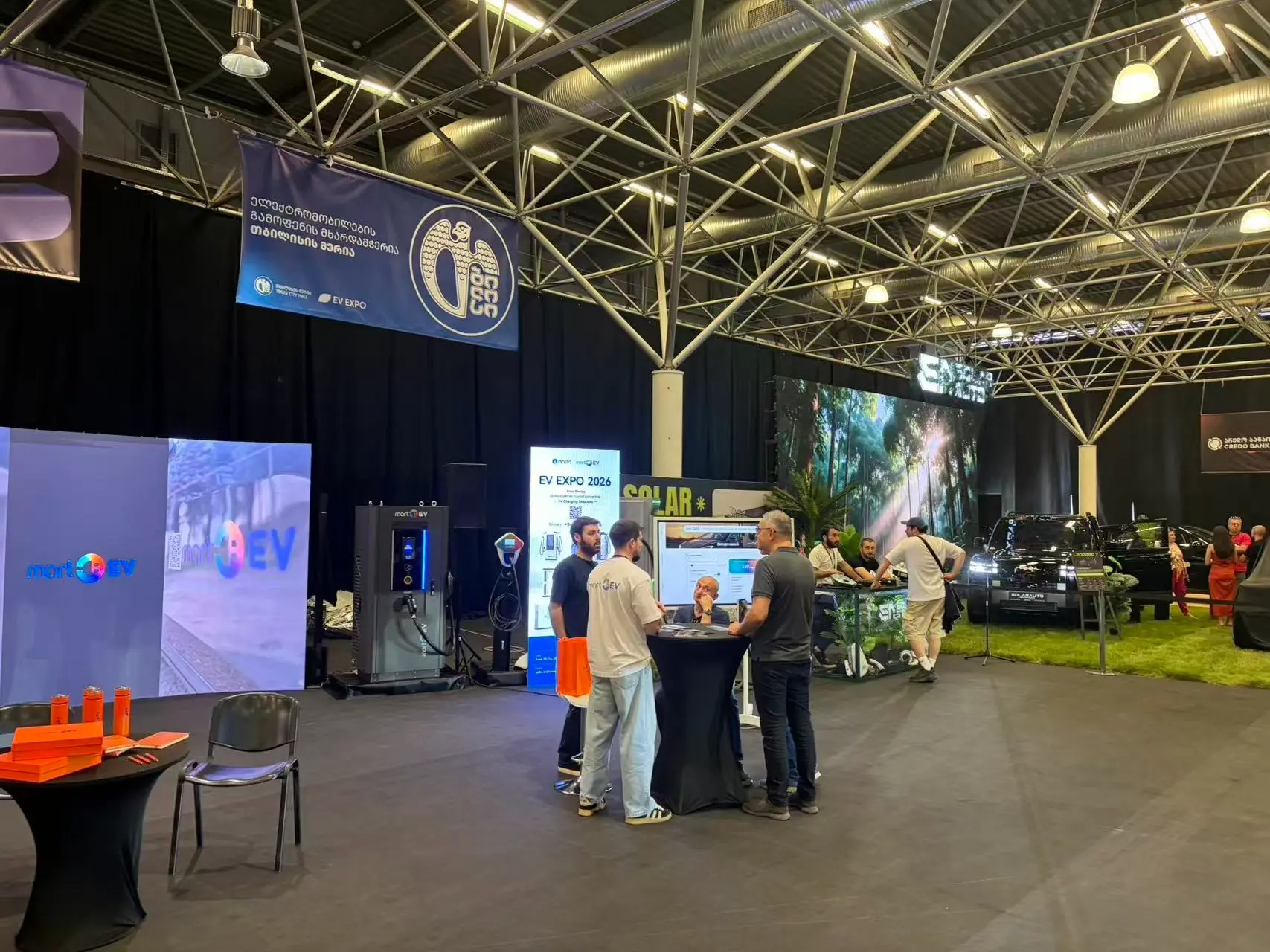
Customers aren’t judging Anari’s technical specs. They’re judging whether MartEV’s people can solve their problem in a single phone call.
This also explains why the “high/mid/low” three-quote strategy works on the expo floor: different customers have different budget constraints and risk appetites. But whichever tier they pick, they’re not choosing a power rating — they’re choosing who they trust.
4. Three Predictions from the Expo Floor
4.1 The Caucasus Charger Market Will See Its First Wave of Consolidation Before 2027
Multiple Chinese manufacturers were already engaging the Caucasus market at the expo. As more operators accumulate real-world usage experience, an informal ranking of “whose chargers don’t break” is already forming. Offshore suppliers with poor reliability records will be eliminated by word-of-mouth — and once this process starts, it will move faster than anyone expects, because the market is too small for bad news to hide.
Brand A’s 3-year reputation for stable operation at the expo is a signal: reliable brands are already compounding trust. This window is closing for late entrants — because trust in operator circles takes time to build, and the first wave of proven brands is already harvesting it.
4.2 “Charger + Solar + Storage” Microgrids Will Land First in Tourism Hospitality
Hotels and resorts have rooftops, open space, steady overnight charging demand, and electricity price volatility that directly incentivizes storage investment. This doesn’t depend on government subsidies — it’s purely economics-driven.
Georgia’s summer tourism peak electricity price fluctuations + daytime hotel solar surplus + nighttime EV charging demand = a naturally suited scenario for solar-storage-charging microgrids. No need to wait for grid upgrades — the loop can be closed at the site level.
4.3 OCPP 2.0.1 Won’t Be a Selling Point — But It Will Be a Filter
No operator will choose your charger because it supports OCPP 2.0.1. But when they discover a brand’s chargers can’t connect to their CMS platform, can’t be diagnosed remotely, and require on-site visits for firmware updates — OCPP compatibility is invisible until it’s not, and when it’s not, it’s fatal.
Operators in this small market have already learned this the hard way: buying chargers with no OCPP support or incomplete OCPP implementation means every unit needs individual configuration, centralized management is impossible, and fault alerts arrive late. These experiences spread through operator circles just as fast as “whose chargers are reliable.”