



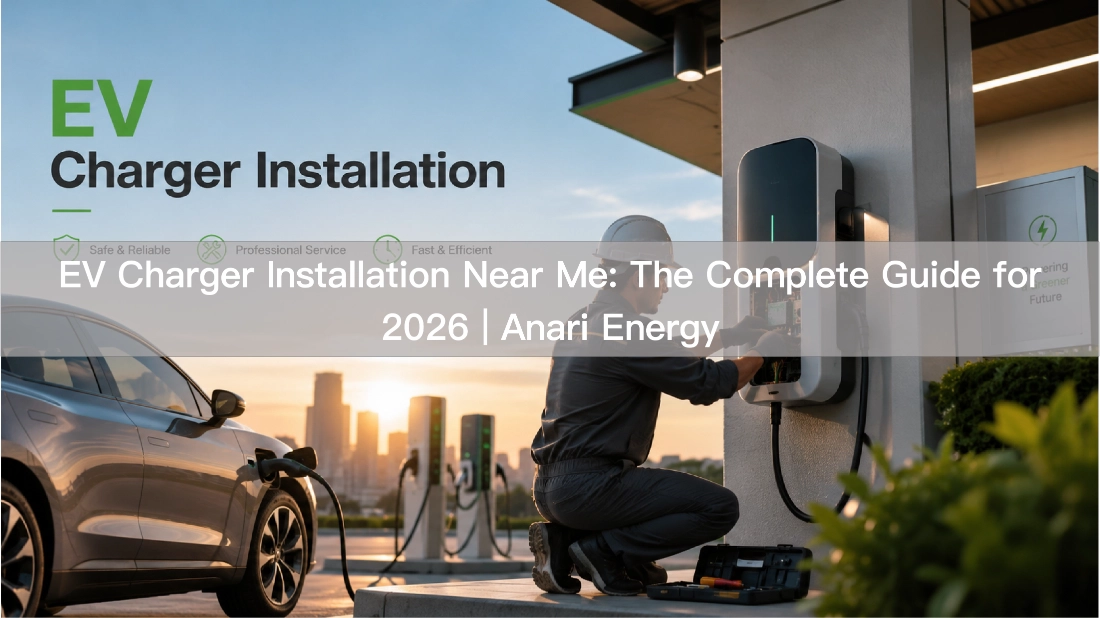
The phrase “EV charger installation near me” has evolved from a consumer search query into a critical strategic keyword for B2B stakeholders. By 2026, the electric vehicle (EV) landscape is no longer defined by mere availability but by reliability, interoperability, and strategic density. For industry professionals—network operators, fleet managers, and commercial property developers—the challenge is no longer just finding space for a charger; it is about executing a flawless installation strategy that maximizes uptime and revenue.
This complete guide navigates the complexities of modern EV infrastructure deployment, offering actionable insights for professionals looking to stay ahead in the competitive 2026 market.
1. The Shift from Reactive to Proactive Deployment
In previous years, the focus was largely on reactive expansion—placing chargers where demand naturally occurred. In 2026, the paradigm has shifted.
Data from the International Energy Agency (IEA) indicates that global EV sales have surpassed 45 million units annually, creating a saturated but fragmented demand pattern. The “near me” mentality now applies to businesses seeking proximity to high-traffic corridors, urban centers, and logistical hubs.
For professionals, this means site selection is data-driven. Utilizing heat mapping software and telematics data from existing fleets allows operators to predict congestion points before they form.
The goal is not just proximity, but predictive proximity—installing infrastructure where future traffic patterns suggest growth, rather than where current traffic exists. This proactive approach reduces the risk of stranded assets and ensures higher utilization rates, which are critical for ROI in the current economic climate.
2. Technical Standards and Grid Integration Challenges
As we move deeper into 2026, the technical specifications of an installation have become significantly more complex. The era of simple plug-and-play AC chargers is giving way to smart DC fast-charging networks that require sophisticated grid management.
2.1 Smart Grid Readiness
Modern installations must integrate with Utility Demand Response (DR) systems. According to recent industry reports, over 60% of new commercial installations in major metropolitan areas now include bidirectional charging capabilities or V2G (Vehicle-to-Grid) readiness. This requires advanced hardware that can communicate with the grid in real-time, balancing load during peak hours to avoid expensive demand charges.
2.2 Power Infrastructure Upgrades
One of the most common bottlenecks in the “installation near me” process is electrical capacity. Many older commercial sites lack the transformer capacity required for high-power DC fast chargers (150kW+).
Professionals must conduct thorough electrical audits early in the planning phase. Retrofitting these sites often involves upgrading switchgear, installing energy storage systems (ESS) to buffer peak loads, and implementing power management software to distribute energy dynamically among multiple ports.
Ignoring these technical prerequisites leads to project delays and budget overruns.
3. The Critical Role of Local Partnerships and Compliance
While technology drives efficiency, local partnerships drive execution. The phrase “near me” implies a reliance on localized expertise. In 2026, successful network operators are moving away from centralized, one-size-fits-all deployment models in favor of regionalized strategies.
3.1 Navigating Local Regulations
Municipal codes regarding zoning, parking regulations, and environmental impact assessments vary wildly by region. A streamlined installation process requires deep knowledge of local permitting processes.
Professionals who partner with local electrical contractors and civil engineers can reduce permitting times by up to 40%. These local partners also provide invaluable insights into community sentiment, which can influence the success of a new charging hub
.
3.2 Maintenance and Uptime
Installation is just the beginning. In 2026, uptime is the primary metric for customer satisfaction.
A “near me” location is useless if the chargers are frequently offline. Industry standards now dictate that network operators maintain a 98% uptime SLA (Service Level Agreement).
This requires a dependable local maintenance ecosystem. Establishing relationships with local repair technicians ensures rapid response times, minimizing downtime and preserving brand reputation.
4. Future-Proofing Your Investment
The EV technology stack evolves rapidly. What is top-tier today may be obsolete in five years. To address this, forward-thinking professionals are adopting modular design principles in their charger deployments.
4.1 Scalability
Modular chargers allow for incremental upgrades. Instead of replacing an entire unit when new protocols emerge, operators can swap out specific modules.
This approach significantly lowers the total cost of ownership (TCO) and reduces electronic waste. And here’s why:, integrating open APIs (Application Programming Interfaces) allows for without friction integration with third-party payment systems, navigation apps, and fleet management software, ensuring that the infrastructure remains versatile and adaptable to changing market needs.
4.2 Sustainability Metrics
Finally, sustainability is no longer optional. Corporate clients and government contracts increasingly require detailed reporting on the carbon footprint of charging operations.
Installations must include monitoring tools that track renewable energy usage and carbon savings. By providing transparent data on green energy consumption, operators can differentiate themselves in a crowded market and appeal to eco-conscious B2B clients.
Conclusion
The “EV charger installation near me” query in 2026 represents a call to action for industry professionals to think strategically, technically, and locally. It is not merely about placing hardware on a pad; it is about integrating complex power systems, navigating regulatory landscapes, and building sustainable business models.
Success in this field requires a whole-picture approach: leveraging data for site selection, investing in smart grid-ready hardware, partnering with local experts for without friction compliance, and designing for future scalability. By mastering these elements, professionals can transform the challenge of installation into a competitive advantage, driving the next wave of electrification forward.
For those ready to lead, the time to plan is now. The road to 2030 is being paved today, one strategic installation at a time.
Which of these points resonates most with your market?