



You’ve got ten parking spots at a supermarket and a decision to make. All AC chargers, slow and cheap? Or mix in a couple of DC fast chargers and spend more upfront?
1. The all-AC route
Ten 22kW chargers. Low equipment cost. Low install cost. Probably no transformer upgrade. If you’re new to running chargers and don’t want surprises, this is the comfortable choice.
Maintenance is easy. Not much inside an AC unit to break. No specialized technicians to keep on call.
The downside shows up in the parking lot, not the spreadsheet. Four hours to fill a battery. Works for the weekly shopper who parks for two hours and leaves with 50% more range than they arrived with. Doesn’t work for the driver who needs 100 kilometers of range and wants to be gone in twenty minutes. That driver drives past. Might not come back.
Revenue per spot per day is capped. Each bay turns over maybe twice. AC chargers are cheap to buy and slow to earn.
Good way to learn the business. Bad way to make much money from it.
2. Mix in fast charging
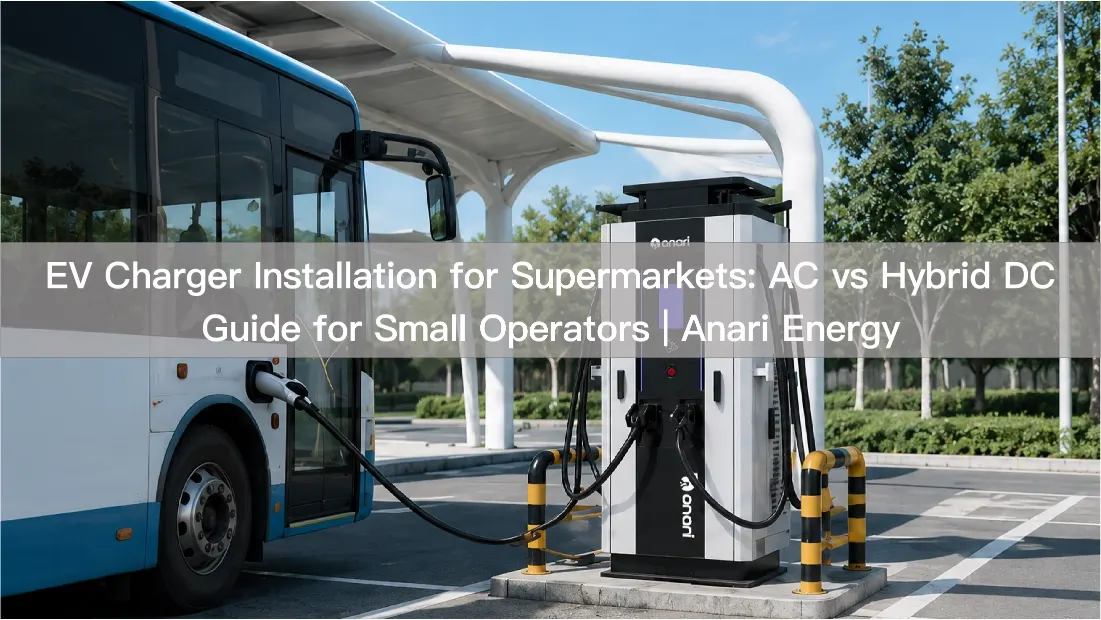
Same ten spots. Eight are 22kW AC. Two are 120kW DC.
The upfront number stings more. DC hardware costs real money. You might need electrical work — transformer upgrade, new feeder, possibly an engineering study. This is the line item that makes operators hesitate.
Then the math switches sides.
DC sessions run 15 to 30 minutes. A fast charger cycles through more vehicles per day — ride-hail drivers between trips, travelers topping up, locals who treat it like a gas station visit. Per-session revenue is higher. Higher turnover, higher price. Two DC spots can out-earn several AC spots combined.
The AC chargers still handle the shoppers. The DC chargers catch everyone else. You’re covering two customer types instead of ignoring one.
3. Why this matters more than it looks
If your market doesn’t have much DC fast charging yet, being first in a supermarket lot counts. People remember which location has the fast charger. They route there. That habit builds, and the AC-only site across town stops being a competitor.
Batteries are getting bigger. Charging speeds are going up. A site with only AC looks less useful every year. A site with DC in the ground doesn’t.
4. How to make the upfront cost manageable
Can’t write the check for ten chargers at once? Start with six AC and two DC. Run them for a year. Track which bays people actually use. Then decide what to put in the last two spots. The usage data will tell you more than any plan.
And split the electrical upgrade cost if you can. Some landlords will contribute in exchange for a share of revenue. Some equipment suppliers will structure payments to match your ramp-up. The upfront number doesn’t have to sit entirely on you.
5. Which way to go
All-AC is fine if the goal is to start small, risk almost nothing, and prove the concept. But if you’re building something that grows — and you can find the budget or a partner to split it — mixing in DC fast charging turns a parking lot from a place with plugs into a place people drive to on purpose.
We build both sides of this equation. 60-480kW Integrated Floor-Mounted DC EV Charging Station for the fast side. 7-22kW Type 2 Public Charging Stations for the steady side. Both spec’d for operators running a handful of sites, not a hundred.