



Fleet operators don’t need another guide that starts with “electrification is no longer a distant future.” They know. The trucks are on order. Somebody is already measuring parking spaces with a tape measure. The question isn’t whether to go electric. It’s which charger won’t cause problems for the next five years.
Here’s what goes wrong when you pick the wrong one.
1. The Stuff That Actually Hurts
You outgrow your chargers before you finish installing them. Fleets expand in bursts. New contract, new route, acquisition. The 60kW unit that covered twelve vans this quarter doesn’t cover twenty next quarter. And bolting another unit next to it isn’t always an option.
A slow charger is a parked vehicle. Every hour a delivery van sits on a Level 2 charger is an hour it isn’t moving. DC fast charging isn’t a perk for fleets. It’s the difference between running one shift and running two.
Demand charges eat your lunch. Plug in ten vehicles at the same time and the utility hits you with a peak demand charge that can double the monthly bill. Without load management, the cheaper fuel math evaporates.
The depot doesn’t grow. Parking lot lines don’t move. If a charger eats two spaces for itself, you lose capacity somewhere else. Footprint matters from day one — not year three when you’re trying to squeeze in four more.
The real bill shows up in year two. Hardware is maybe half the cost. Installation. Grid upgrades if the transformer can’t handle the load. Maintenance visits when something trips. Software subscriptions that renew quietly. Cheap hardware with expensive software is still an expensive charger.
Dispatch and charging don’t talk to each other. Charging data in one screen, route planning in another, and someone in operations manually connecting the dots. That breaks at scale.
2. What’s Out There
Tesla makes fast chargers. Good ones. But the ecosystem is closed, and mixed fleets need open standards. Depot pricing reflects the badge.
ABB builds equipment that lasts. Their DC units handle load management well. You pay for that engineering, and installation complexity can surprise you if the site isn’t ready.
Siemens covers everything — AC, DC, energy management. Broadest portfolio in the market. Lead times can stretch, and smaller depots may find it’s built for bigger projects than theirs.
ChargePoint wins on software. Ubiquitous hardware, mature network services. The subscription costs add up quietly. Watch them.
3. What to Actually Look For
Forget spec sheets for a minute. Here’s what operators who’ve done this already will tell you:
Power that grows with you. The charger needs headroom. If the power path is maxed out on install day, you’re buying a replacement in two years, not upgrading what you have.
Energy management that earns its keep. The charger has to talk to your building, your solar, your battery. And it has to not spike your demand charge at 6am when everyone plugs in at once.
Fits where you need it, not where it wants to go. Modular units. Compact footprint. If the charger is the reason you need to restripe the lot, the math stops working.
You know the five-year number. Not the list price. The full number: hardware, site prep, grid connection, maintenance, software. If a vendor can’t give you a TCO number that covers five years, something is being hidden.
Plays nice with what you already run. Open protocols. Works with your telematics. Works with your fleet management platform. No custom integration project required.
4. 60-480kW DC EV Charging Station — Why We Built It
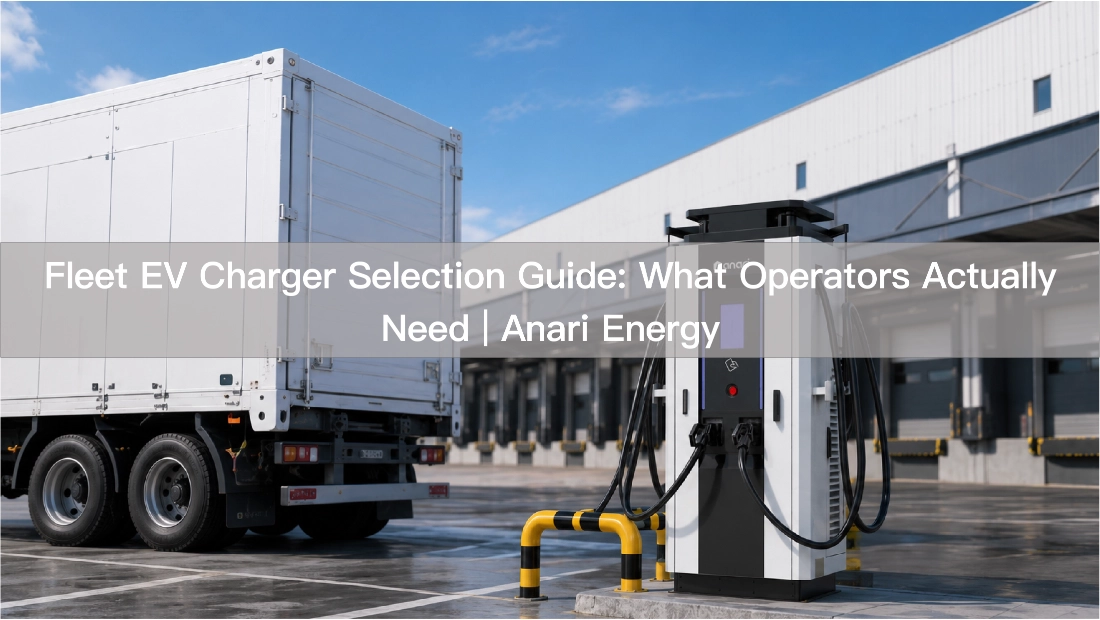
We talked to fleet operators before designing the Aquila DC Series. What kept coming up: make it fast, make it changeable, don’t lock us in, and don’t make us rebuild the depot around it.
So: DC fast charging that cuts turnaround between shifts. Modular power — add capacity when you add vehicles, not when you scrap the whole unit. Load management that coordinates with on-site solar and battery. A footprint that fits existing depots. And open protocols so your dispatch system sees everything natively.
For fleets measuring success in vehicle hours rather than charger specs, the 60-480kW DC EV Charging Station is built around that math.
5. The Short Answer
Don’t pick based on kilowatts. Pick based on whether the system still works three years from now when your fleet is twice its current size.
Tesla, ABB, Siemens, ChargePoint — they all make decent hardware. The real question is which one matches your depot, your vehicles, and your growth plan. If you’re running a fleet and need something built for operations, not for a spec comparison table, the Aquila DC Series is where we’d start the conversation.