



1. What minus 30 Celsius does to a charger
Most charger specifications are written for a climate that most operators do not have. A unit rated to plus 50 degrees tells you nothing about January in Astana, and a datasheet that lists an operating range without stating where output starts to fall is a marketing document, not an engineering one.
Kazakhstan is where that distinction stops being academic. Northern and central regions hold minus 30 degrees for weeks. Enclosures face wind-driven snow, connector latches stiffen, cable jackets lose flexibility, and the electronics inside a 120kW cabinet have to dissipate heat into air that is already at the bottom of their design range.
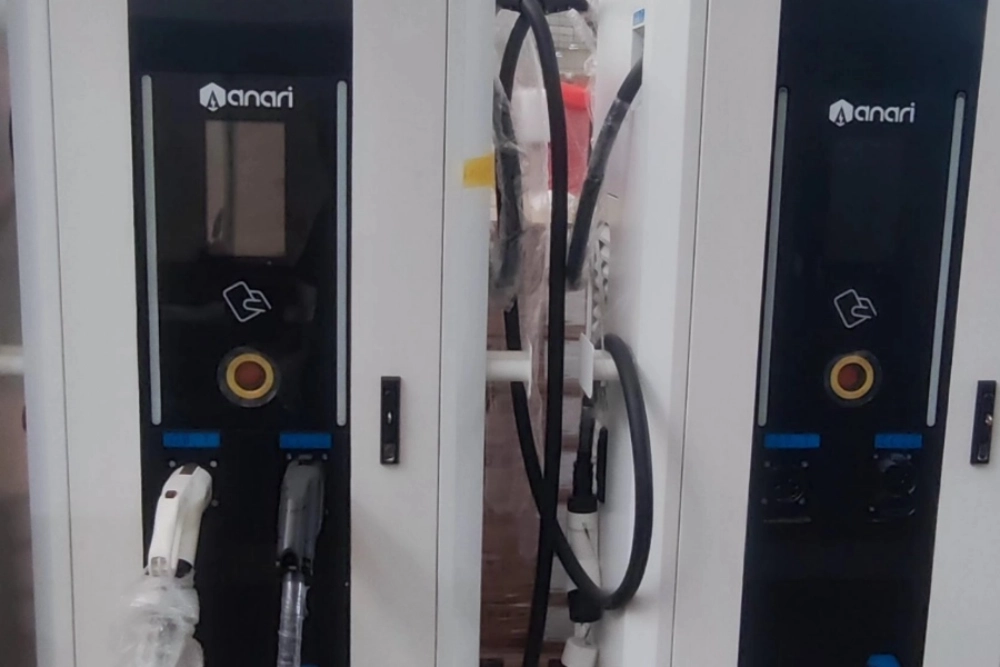
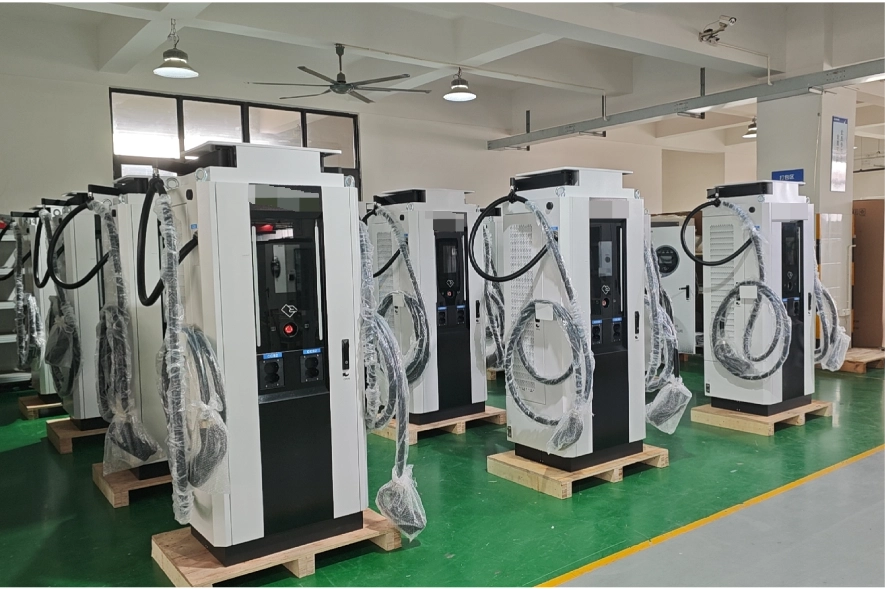
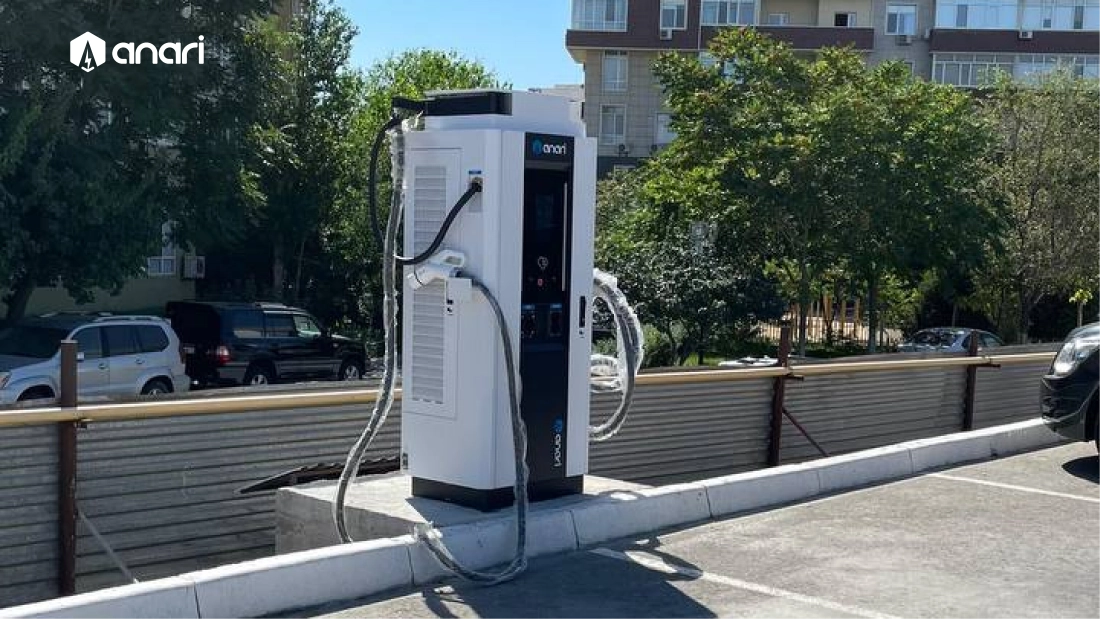
Six Vulco 120kW dual-gun chargers went into service at a commercial parking site in Kazakhstan in August 2026, ordered in July. Twelve DC connectors, one month from purchase order to energisation. This is what that site had to survive, and what it has to earn.
2. Why the cabinet decides winter uptime, not the cable
Operators tend to specify the vehicle side first: connector type, cable length, gun count. In a cold market that is the wrong order. The failure modes that matter happen inside the cabinet, and they are thermal and electrical rather than mechanical.
Derating threshold. The Vulco platform is rated from minus 30 to plus 70 degrees Celsius, with output reducing above 50. A charger that starts at minus 30 and holds rated output through the cold end is the requirement. A charger that holds output to 50 degrees at the top end is the bonus that pays off in July.
Cooling architecture. Forced air, with sealed electronics. A liquid loop is a better answer to sustained high ambient heat, but in a freezing climate it introduces a maintenance item that a parking operator does not want: fluid, pumps, and seals that have to be checked by someone with the right training. For a 120kW parking application in Kazakhstan, air is the lower-risk design.
Ingress and impact. IP54 with an IK08 rating. Parking structures are tight, and vehicle contact is a normal event rather than an exception.
Voltage tolerance. Kazakh distribution networks were dimensioned for buildings, not for 120kW loads appearing at unpredictable times. A charger that trips on a voltage dip creates a service ticket, and a service ticket in a parking business is pure cost with no revenue offset. Input tolerance and remote restart through the management platform matter more here than a fractionally higher peak output.
3. Six cabinets, twelve bays, one existing supply
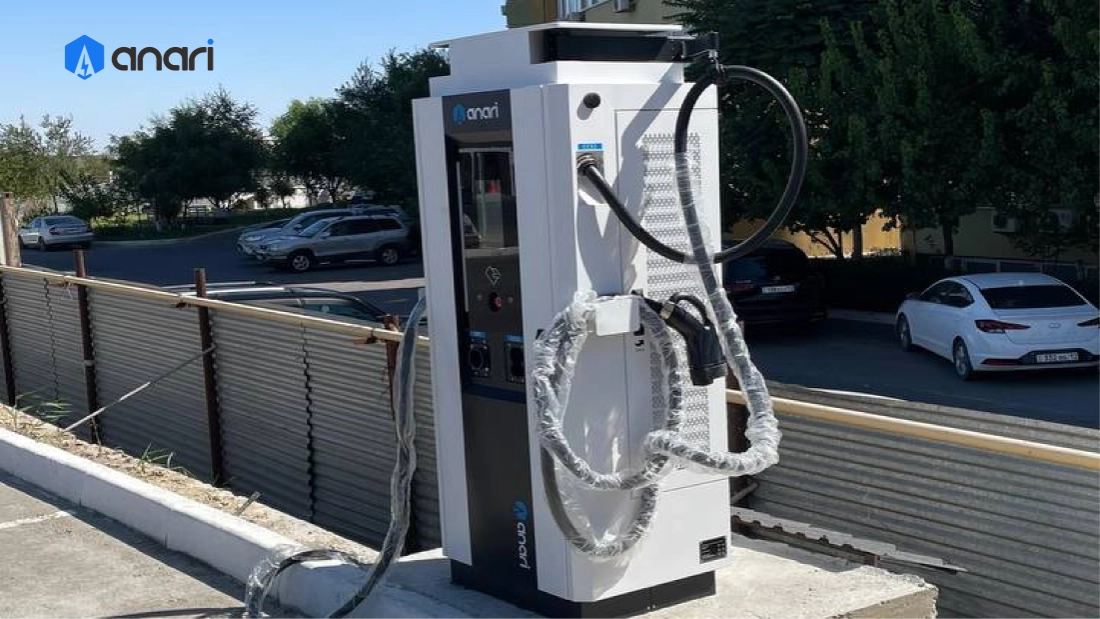
The site is a commercial parking facility with public access, run by a parking operator. The operator’s decision was not which charger to buy, it was how much charging capacity could be added without a utility upgrade. That question has one answer in most Kazakh commercial locations, and it is not a large number.
Twelve connectors from six cabinets is the configuration that answers it. Each dual-gun unit serves two bays with output allocated between them, so the site gets twelve service points from six supplies instead of twelve. Where two vehicles charge at once, the cabinet splits output; where one needs the full rate, it takes all 120kW. The allocation follows arrival rather than a fixed cable assignment, which suits a parking site where there is no schedule.
Connector configuration is GB/T dual-gun, specified by the operator to match its vehicle mix. Kazakhstan’s EV fleet is heavily weighted towards Chinese platforms, which makes that the pragmatic choice rather than a compromise.
4. The month between order and energisation
July to August 2026. One month for six units is fast, and it is fast for one reason: the site already had the power. No connection upgrade, no utility application in the critical path.
The sequence that made it work:
- Configuration locked before order. Connector type, gun allocation and back-end protocol fixed against the operator’s vehicle mix. In a market where the fleet mixes Chinese and European platforms, this is not a detail to settle later.
- Civil works in parallel with shipping. Foundations, cable routes and protection installed while cabinets were in transit, scheduled around peak parking hours so the lot kept earning.
- Block energisation. Cabinets energised in groups, each verified end to end before the next block was connected. Insulation and earthing, rated output at load, meter accuracy, OCPP 1.6J connectivity, connector lock, emergency stop.
- Cold-start verification at handover. Where a site commissions in autumn, the handover checklist should include a low-temperature start test. The first real test arrives in December whether or not anyone planned for it, and it is better to find a problem in October.
5. Parking economics with a seasonal denominator
A parking operator’s charging investment is a yield improvement on an asset already owned, which changes which numbers matter. The mistake most models make is using annual average utilisation. In Kazakhstan, charging demand is seasonal, and the January case is roughly half the July case.
| Cost layer | What belongs in it | Note for a Kazakh parking site |
|---|---|---|
| Hardware | 6 cabinets, 12 connectors | Anari quotation |
| Grid and make-ready | Connection works, distribution, protection, cabling | Decisive; a re-rating can exceed hardware cost |
| Installation | Labour, testing, handover | Local contractor |
| Energy | kWh at the site’s commercial tariff, in tenge, plus any capacity charge | Capacity charges matter at 120kW |
| Network and software | OCPP back-end, payment, connectivity | Can often connect to existing parking billing |
| Maintenance | Preventive service, spares, warranty beyond year 2 | Cold-climate service intervals should be explicit |
| Converted bays | Parking revenue given up by bays turned into charging bays | Frequently omitted, always real |
That last line is the one most parking models forget. Converting four bays from hourly parking to charging removes a known revenue stream and replaces it with a variable one. The model should show the net.
Four things move the answer:
- Winter utilisation. Model January, not the annual average. If payback only clears on summer traffic, the site is a seasonal business wearing an annual spreadsheet.
- Revenue per bay per day, not per session. Cold packs accept less energy per session and take longer to accept it. Counting sessions flatters a cold-climate site.
- Peak demand charges. Depot-style charging concentrates load. Where the tariff includes a capacity component, the peak the site presents is a recurring cost, and load sharing inside each cabinet lowers it.
- Downtime. A charger that fails in a parking structure generates a complaint and no revenue. A model assuming 100 percent availability is optimistic by a few percent at least.
Payback (months) = Total CAPEX / (Charging gross margin + Retained parking revenue − OPEX − Lost parking revenue)
Run it twice: once on the site’s actual seasonal profile, once with availability reduced by five percentage points. If the second run does not clear, the site’s risk sits in grid behaviour, not in traffic, and the design should invest in input tolerance and remote restart before it invests in more power.
6. A reference for the Central Asian corridor
Kazakhstan has the ingredients that precede a charging build-out: territory crossed by transit corridors, a quota scheme that had moved more than 13,000 electric vehicles into the country by late September 2025, representing about 87 percent of the quota, and a vehicle mix tilted towards Chinese platforms. Earlier reporting put the national fleet above 11,000 units by September 2024. What the country does not yet have is a fast-charging base proportional to that fleet.
For a parking operator, that gap is an advantage rather than a risk. The locations that matter, city-centre lots, retail parking, hotel parking, are already owned and already connected. Twelve DC connectors on an existing supply captures charging demand without acquiring land or negotiating a new connection, and it does so in a market where fleet growth is being pulled by policy rather than pushed by marketing.
Three things this site demonstrates to the next Kazakh operator:
- Cold-climate suitability is checkable. A platform rated to minus 30 with documented derating above 50 is a specification a fleet manager can verify, and a reference site is where they verify it. No amount of brochure copy substitutes for a cabinet that started in February.
- Density without grid works is possible. Twelve connectors from six cabinets on an existing connection is the configuration that makes a parking site viable without a utility upgrade. The constraint that stops most projects is electrical, and it has a design answer.
- Delivery speed depends on the electrical survey, not the supplier. One month was achievable because power was already in place. Operators planning several sites should sequence electrical survey first, order second, and never the reverse.
For Anari, Kazakhstan is a reference on the transit routes between China and Europe, in conditions that match Uzbekistan, Kyrgyzstan and much of the Caucasus. A working installation there turns the temperature specification from a datasheet claim into an operating record, which is the only form of evidence that matters to a fleet engineer in a cold market.
Sources
- Times of Central Asia, reporting on Kazakhstan’s EV import quota scheme, October 2025 (more than 13,000 EVs imported, approximately 87 percent of quota).
- Metrology infrastructure analysis of Kazakhstan’s EV and charging market, 2025 (national EV fleet above 11,000 as of September 2024).
- Anari Energy product specification, Vulco DC series.
- Deployment record: Anari Energy, project data verified Q4 2026.
Related reading: