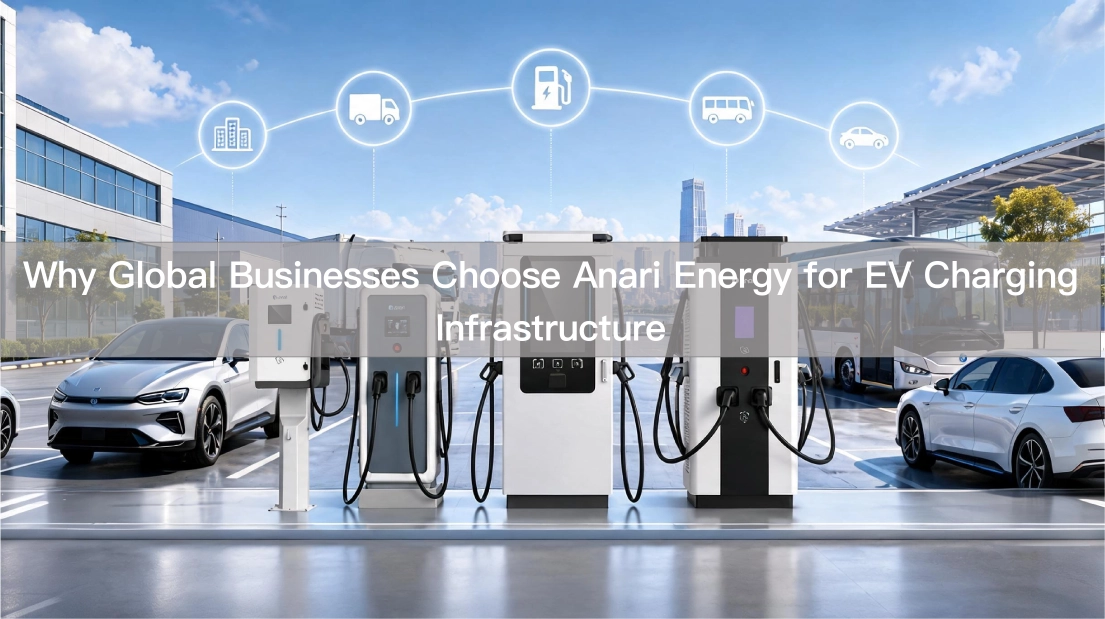




Anari Energy | June 13–14, 2026 | Expo Georgia Exhibition Center, Tbilisi
Most EV charger booths at industry exhibitions are interchangeable. Walk through any hall and you’ll see the same scene repeated a dozen times: a DC fast charger on one side, an AC unit on the other, a spec sheet plastered on the back wall, and a salesperson whose product knowledge ends at the brochure.
We think the industry deserves better. So at EV EXPO 2026, we’re doing something different.
1. The Problem with “Come See Our Charger”
Trade shows are expensive. Booth space, logistics, shipping a 300-kg charger across borders, staffing — it adds up fast. And for what? Most visitors leave with a bag full of identical brochures and no clear memory of which charger belonged to which company.
The core problem isn’t the format. It’s what most exhibitors choose to put inside it.
When you lead with hardware specs — 360kW peak power, OCPP 1.6J compliance, IP65 rating — you’re competing on a checklist. And checklists are what procurement departments use to shortlist five vendors who all look the same. You don’t win on a checklist. You survive it.
We’re not interested in surviving the checklist. We’re interested in having conversations that matter.
2. What’s Actually on Our Booth
2.1 A charger that’s already working in Georgia
Not a demo unit. Not a prototype. A charger of the same model currently operating on Georgian streets, deployed and maintained by our local partner in Tbilisi.
We’ll have the real operating data on screen: uptime, charging sessions, energy delivered. Not because the numbers are extraordinary — because they’re real. Anyone can print impressive specs. Far fewer can show you a charger that’s been running for months, in local grid conditions, with local weather, serving local drivers.
If you’re a CPO evaluating hardware for deployment in the Caucasus region, “it works in a lab in Shenzhen” and “it works on a street in Tbilisi” are two completely different levels of proof.
2.2 A question you can argue with us about
On the booth, you won’t find a product slogan. You’ll find a question. A different one each day. Something that challenges an assumption the industry has stopped questioning.
We’re not here to tell you what to think. We’re here to have the kind of debate that doesn’t fit into a spec sheet. If you leave the booth disagreeing with us but thinking harder about your charging infrastructure decisions, we’ve done our job.
2.3 The people who actually do the work
The people standing in our booth aren’t just sales representatives. They’re the engineers who commission chargers on site, who troubleshoot OCPP integration issues, who know what happens when a Georgian winter hits a charging station.
Our partner’s local team will be there — the same people who answer the phone when a station operator calls with a problem. If you want to know what it’s really like to operate EV chargers in Georgia, ask them. They’ve been doing it.
3. Why This Matters for Operators
The EV charging market is entering a phase where the difference between suppliers isn’t about who can build the highest-spec charger. It’s about who can make a charger work — and keep working — in real conditions.
Three things determine whether a charging station makes money:
Reliability: A charger that’s down for a week waiting for a replacement part from overseas isn’t a charger — it’s a liability. Local maintenance capability isn’t a nice-to-have. It’s the difference between 95% uptime and 75% uptime, and that 20% gap is your margin.
Local knowledge: Grid capacity varies by street. Electricity pricing structures differ by region. The permitting process in Tbilisi is not the same as in Berlin or Dubai. A supplier who ships you a charger and wishes you luck is outsourcing the hardest part of deployment to you. We don’t think that’s acceptable.
Real cost of ownership: The purchase price of a DC charger is only the beginning. Installation, commissioning, software integration, ongoing maintenance, and eventual upgrades add up over a 5-10 year lifecycle. The cheapest charger on the tender often becomes the most expensive one to operate.
4. Who Should Stop By
If you’re a charge point operator evaluating hardware for deployment in Georgia or the wider Caucasus region, come talk to us. We’ll show you what’s working, what’s been challenging, and what we’ve learned from deploying chargers in this market.
If you’re a fleet manager transitioning to electric, come ask us the questions your vehicle supplier probably can’t answer about charging infrastructure.
If you’re a fuel station owner considering adding EV charging to your forecourt, come have the conversation. The economics are different from diesel — but the business fundamentals don’t change.
And if you’re just curious about where the EV charging industry is actually headed — not the press-release version, but the on-the-ground reality — stop by anyway. We’ll have good coffee and better arguments.
Find Us
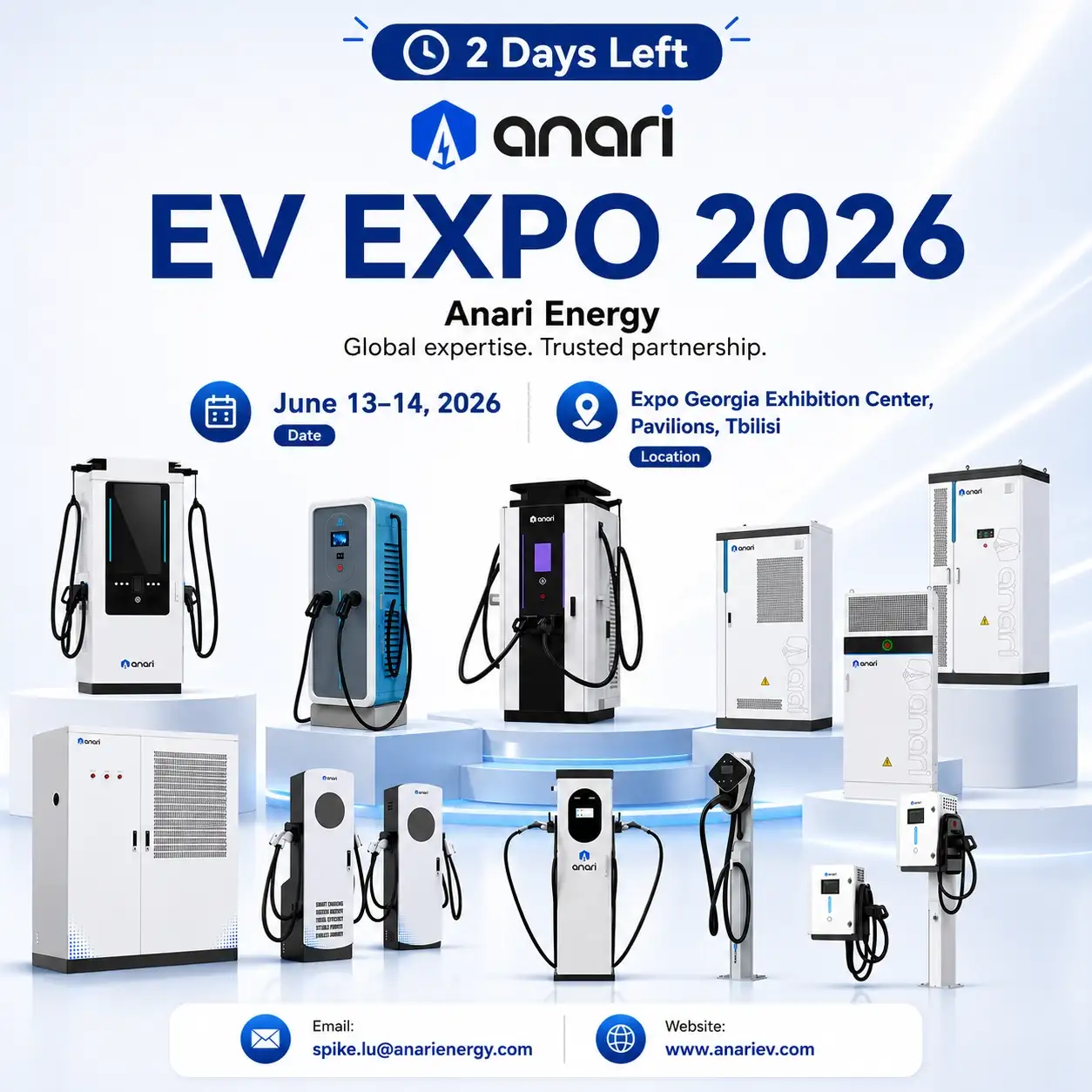
EV EXPO 2026 丨June 13–14, 2026丨Expo Georgia Exhibition Center, Tbilisi
Can’t make it to Tbilisi? We’re publishing our key observations from the show in a short report. Follow us on LinkedIn(Shenzhen Anari Energy Co., Ltd.) or reach out directly to receive it after the event.
———
Anari Energy is an EV charging hardware manufacturer headquartered in Shenzhen, delivering DC and AC charging solutions from 7kW to 360kW. Our chargers are deployed across multiple international markets, supported by local partners who provide installation, maintenance, and technical support on the ground. We believe the best charger is the one that makes money for its operator — and we build accordingly.(https://www.anariev.com)