



Case: Charging station project in Cambodia
Product: 180-240kW Commercial Fast DC EV Charging Station
Address: Cambodia
1. Executive Summary
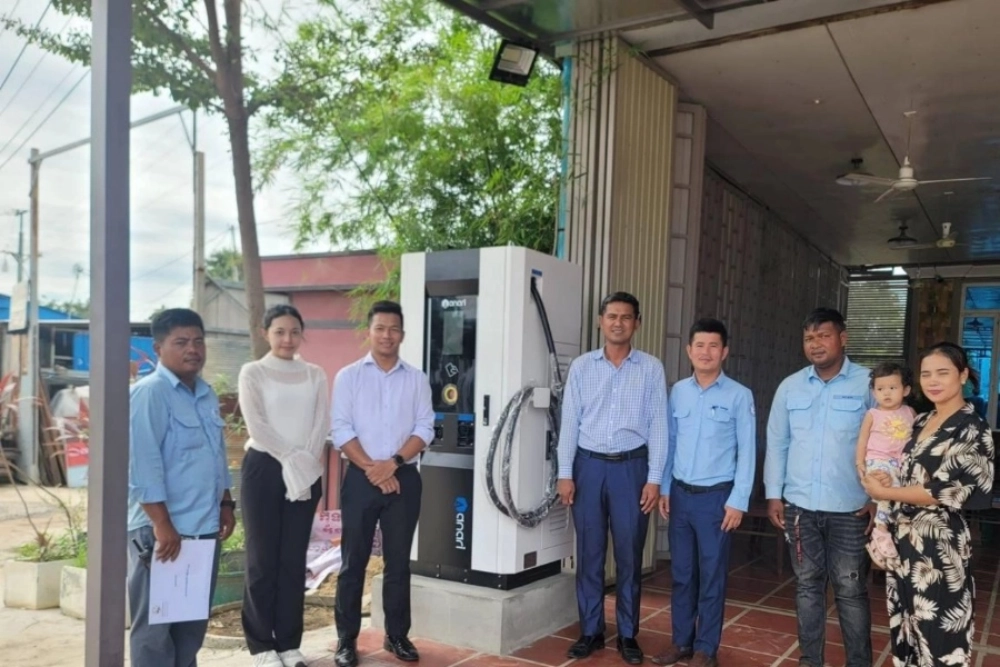
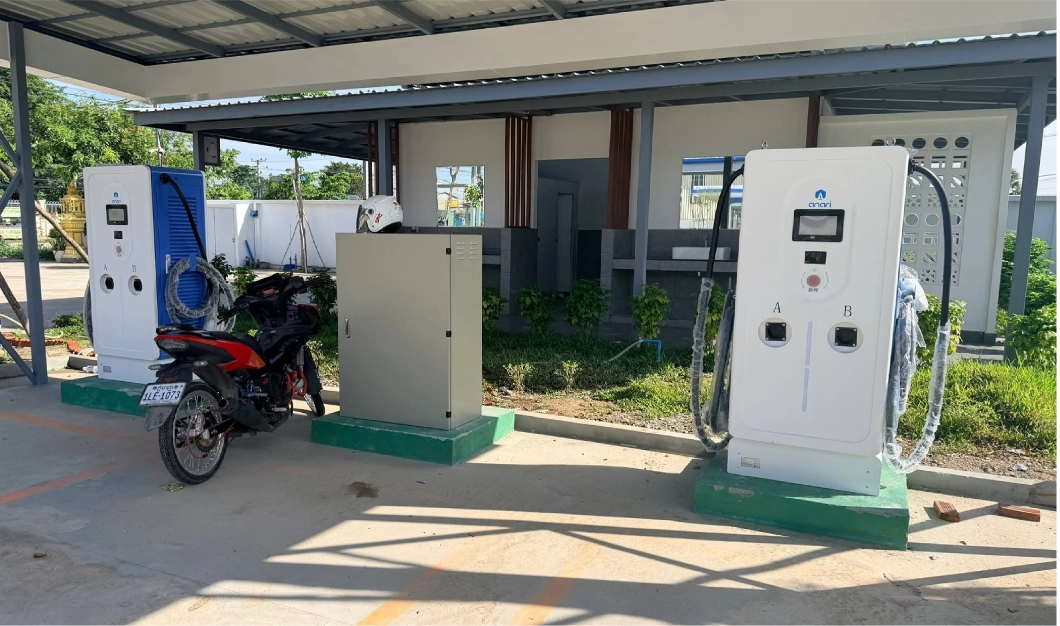
A returning B2B customer in Cambodia selected Anari Energy’s 60-240kW Commercial Fast DC EV Charging Station(Pales DC Series) to deploy fast-charging services along the national highway in Phnom Penh. The deployment — 2 units of 180kW dual-gun and 1 unit of 240kW dual-gun chargers — addresses Southeast Asia’s punishing tropical climate while meeting tight budget constraints. The customer’s repeat purchase, following a successful 60-480kW Integrated Floor-Mounted DC EV Charging Station Dual / Three Guns For Commercial Use(Vulco DC Series) deployment, signals confidence in Anari’s hardware reliability and service quality.
2. The Background
Cambodia’s EV adoption is accelerating. As more electric vehicles enter the capital’s roads, the need for reliable, publicly accessible fast-charging infrastructure along Phnom Penh’s national highway became urgent. A local charging operator — already running Anari Vulco DC chargers from a prior deployment — needed to expand capacity. This time, the brief was different: a tighter budget, but zero tolerance for downtime in a mission-critical public charging location.
The operator turned to the supplier they already trusted.
3. The Challenge: Southeast Asia’s Climate vs. Charging Hardware
Deploying DC fast chargers in Southeast Asia is not the same as deploying them in temperate Europe or air-conditioned underground parking in Shenzhen. Three specific environmental stressors define the operating context:
3.1 Relentless Heat and Humidity
Phnom Penh sees average daytime temperatures above 33°C year-round, with humidity rarely dropping below 70%. Charging at 180-240kW generates significant internal heat — when ambient air is already saturated, passive cooling margins shrink to zero.
3.2 Monsoon-Grade Rainfall
Annual rainfall exceeds 1,400mm, concentrated in intense bursts during the May-October monsoon. Outdoor charging stations face direct water exposure — not occasional splashes, but sustained tropical downpours.
3.3 Grid Instability
Voltage fluctuation and intermittent supply interruptions are common in Cambodia’s grid. A charger that shuts down on every brownout is a charger that earns zero revenue.
These three factors combine into one non-negotiable requirement: the hardware must deliver rated power continuously, in any weather, without derating or tripping off. For an operator with a limited budget, this created a genuine dilemma — premium liquid-cooled charging systems from European manufacturers were priced beyond reach, but no-name hardware carried an invisible cost in downtime and maintenance.
4. The Solution: Pales DC Series — Built for the Economics of Real-World Charging
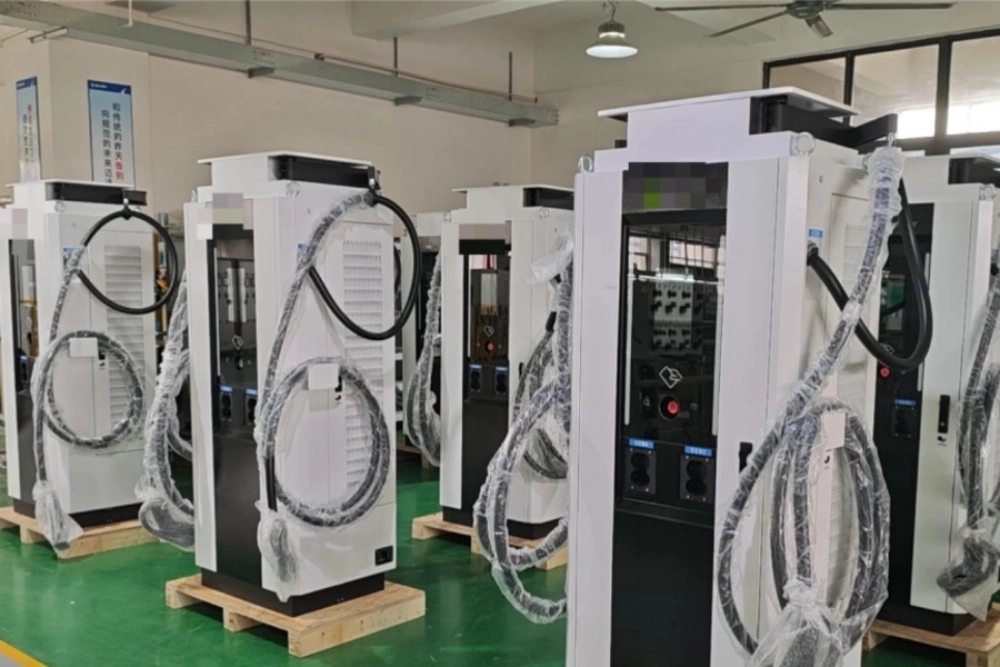
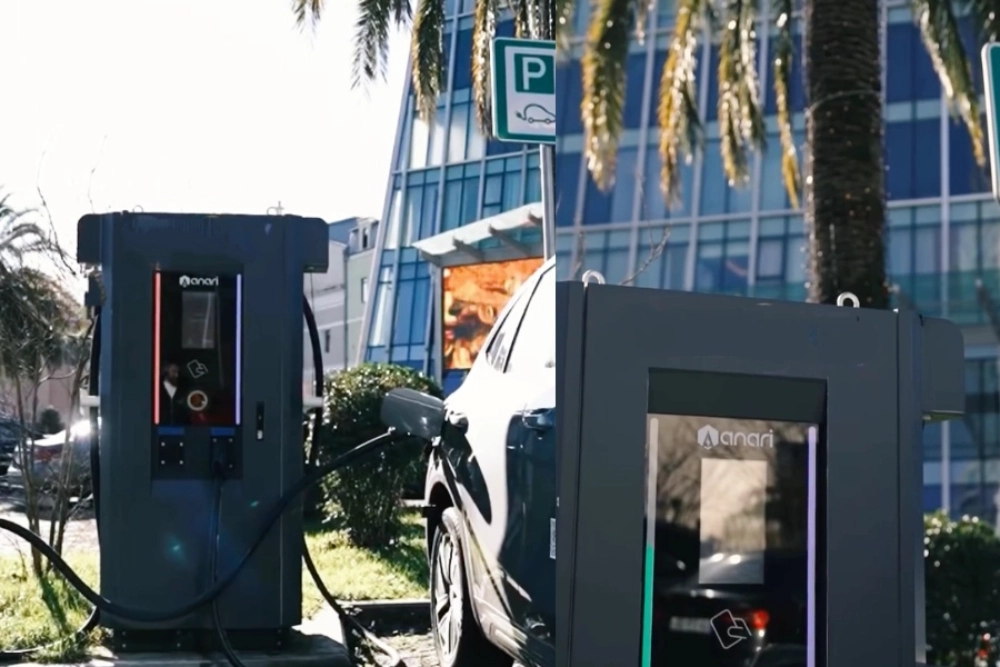
The customer deployed three Anari Pales DC Series chargers:
| Unit | Configuration | Location |
| 2 × Pales 180kW | GB/T dual-gun | National highway service stops |
| 1 × Pales 240kW | GB/T dual-gun | High-traffic central node |
Why 60-240kW Commercial Fast DC EV Charging Station(Pales DC Series)?
The product is Anari’s cost-economy fast-charging line — designed specifically for B2B operators who need commercial-grade reliability without the premium price tag. Three design decisions made it the right fit for Cambodia: IP55-rated enclosure with active dehumidification.
The sealed chassis design handles direct rainfall and sustained humidity. Internal moisture management prevents condensation on power electronics — the silent killer of charging hardware in tropical environments. No additional shelter structure is required. Wide-voltage input tolerance.
Pales chargers accept input voltage fluctuations that would trip most competing units. In a grid environment where ±15% variation is routine, this isn’t a feature — it’s the difference between operating and being offline half the day. Proven thermal architecture.
While Pales uses forced-air cooling (not liquid), the airflow path and heatsink design were validated across Anari’s higher-end Vulco line. The same thermal simulation models, the same derating curves, the same failure-mode testing — applied to an economical platform.
“The customer didn’t buy a cheaper charger. They bought a Vulco-class thermal design in a cost-optimized package.”
5. The Results
5.1 Operational
– All three units commissioned on schedule
– Zero weather-related downtime in the first operational quarter
– Full 180kW / 240kW rated output maintained at 35°C+ ambient temperatures
5.2 Commercial: Repeat purchase validates trust.
The customer transitioned from Vulco (premium) to Pales (economy) — a decision they would not make with an unproven supplier. You test a vendor on one product line. You expand with them only when the first deployment earns it.
5.3 Lower total cost of ownership.
With Pales’ price point and the operator’s existing familiarity with Anari’s service workflow, the per-charger operational cost came in significantly below the market average for 180kW+ installations in Southeast Asia.
5.4 Relationship
The customer specifically cited service quality from the prior Vulco deployment as a key factor in selecting Anari again — hardware specs get you into the comparison, but post-sale support keeps you in the fleet.
6. Why This Matters for B2B Charging Operators
This deployment demonstrates a pattern we see across emerging EV markets:
6.1 Climate ≠ Premium.
The “tropical = liquid cooling = expensive” equation is false. Properly engineered air-cooled systems with IP55+ enclosures and intelligent thermal management can handle Southeast Asia’s conditions at a fraction of the cost.
6.2 Voltage tolerance is the hidden spec.
In markets with fragile grids, a charger’s input voltage range matters more than its peak efficiency number. Pales’ wide-voltage input means fewer interruptions — and interruptions are the silent margin-killer in public charging.
6.3 Repeat buyers are the only honest review.
When a customer who already operates your hardware chooses to expand with your cost-economy line, that’s a harder test than any certification. Certifications prove compliance. Repeat purchases prove experience.
Interested in deploying cost-economy DC fast charging in challenging environments?