



A CPO team we worked with put eight chargers into a shopping mall in Tashkent last year. Three months in, utilization sat below 12 percent. The chargers worked. The site did not. Shoppers parked for forty-five minutes, plugged in, and left with barely a charge. Meanwhile, the mall landlord collected a rent share on hardware that was idle most of the day.
The same team looked at a forecourt site and hit a different wall. The oil station had traffic, land, and a brand. What it did not have was a transformer that could carry a megawatt of fast charging without an upgrade the utility quoted at eighteen months.
Two sites. Two failures. One root cause: a mall and a gas station are not the same physics, and a charging brand that treats them as one loses money in both.
1. Two Kinds of Physics
A shopping mall is a destination. People arrive to stay for one to three hours. That dwell time sets the ceiling on how fast a charger can be. A 22 to 60 kW unit fits a forty-five minute stay. A 150 kW unit at a mall is money spent on power nobody uses.
A gas station is a forecourt. Cars cycle through in five to fifteen minutes. The driver wants enough charge to keep going, not a full top-up. That turnover demands 120 kW and up. The dwell time decides the power class. The power class decides the grid pressure.
The operator who understands this picks hardware to match the physics. The operator who does not buys the wrong charger for the wrong site and blames the equipment.
Between the two sits a third kind of site that confuses operators most: the travel plaza. A service station on a highway corridor often pairs a convenience store with a forecourt. The person buying coffee stays ten minutes. The family on a road trip stays forty. One site, two dwell patterns, two power needs in the same place. Treating it as pure forecourt or pure destination is the fastest way to seize it wrong.
2. The Economics Diverge
Mall charging and gas station EV charging do not share a business model.
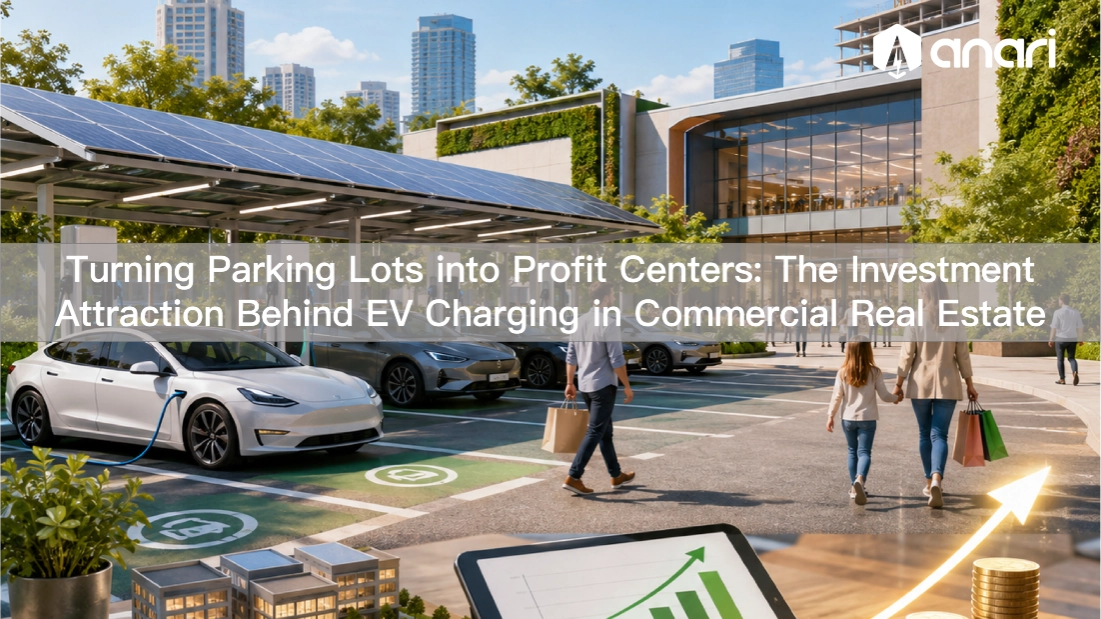
A mall site earns on slow, steady throughput. The constraint is not the charger. It is the rent split and whether charging pulls foot traffic into the property. A mall owner does not care about your kilowatt-hours. They care whether chargers make the mall a reason to visit. If the chargers sit empty, the rent share eats the margin and the site becomes a display, not a business.
Run the numbers on a mall site and the utilization rate is the whole story. Below 15 percent, most destination builds do not clear their rent and service costs. Above 25 percent, the site starts to compound, because the same parked cars spend more, and the foot traffic the chargers draw has its own value to the landlord. The gap between those two numbers is where a mall site is won or lost.
A forecourt site earns on turnover. The constraint is grid capacity and transformer sizing. An oil station was engineered to pump fuel, not to carry megawatt-class electrical load. Adding fast charging usually means a service upgrade, a larger transformer, and a wait measured in months. The charger is the cheap part. Electrical work is a project.
The tariff structure cuts the other way. A forecourt that buys power on a peak and off-peak schedule can push its margin by timing when it throttles fast charging during expensive hours. A destination site with a fixed commercial rate has no such lever and has to win on dwell instead.
Put simply: at a mall you are renting attention. At a gas station you buy power. Get the two confused and the numbers never close.
A worked example makes the difference concrete. Take two chargers that each deliver 200 kilowatt-hours a day. On a mall site that power spreads across forty short sessions, most of them barely topping up a battery. On a forecourt site the same energy lands in eight fast sessions, each one a full leg of a journey. Same kilowatt-hours, same hardware cost, completely different value to the driver and to the site. The mall earns on volume of visits. The forecourt earns on the size of each session. A charging brand that prices and specs the two the same way leaves money on the table in both.
3. The Technical Depth Most Site Plans Skip
Commercial EV charging at either location runs into three things the brochure does not mention.
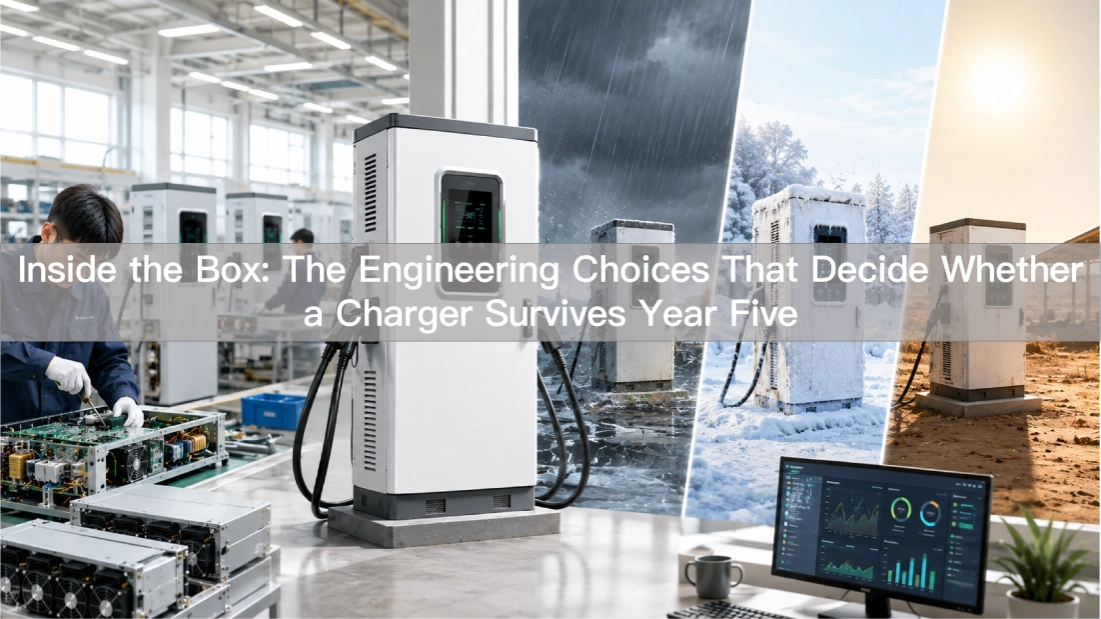
First, power tier and thermal derating. A 120 kW charger in a 50 degree summer will not deliver 120 kW for long. Modules derate as junction temperature climbs. A liquid-cooled design holds output longer than an air-cooled one. The operator buying on nameplate power and nothing else discovers the real number on a hot afternoon. In public charging networks across hot markets, this single detail is the difference between a charger that meets its promise and one that quietly underdelivers every afternoon.
Second, the electrical service. Fast charging is a load the grid did not plan for. A 360 kW forecourt needs a transformer upgrade, new switchgear, and often a new service agreement with the utility. The lead time on that work, not the charger delivery, sets the project timeline. A team that orders hardware first and files for grid capacity second sits on delivered chargers for a year while the paperwork clears.
Third, safety and code. A gas station has fuel on site. Charging equipment near pumps must meet fire code and clearance requirements. This is a compliance question before it is an engineering one, and it varies by country. A site that clears the electrical inspection in one market can fail the fuel-safety review in another.
There is also the operational layer. Idle detection, remote management, and tariff-aware throttling determine whether a site stays profitable after opening day. A charger that reports its own status over OCPP lets an operator see a dead unit in minutes instead of discovering it on a weekly drive-by. A platform that throttles fast charging during peak tariff hours protects the forecourt margin without turning drivers away. None of this shows up in a spec sheet. All of it shows up in the site that works versus the site that does not.
4. What a Real Deployment Looks Like
In Uzbekistan, we delivered a small destination build for a local operator: four 40 kW DC units and six AC points. This is mall-tier physics in practice. Lower power, longer dwell, a site sized to the time people actually spend. No megawatt service, no eighteen month grid wait, no idle hardware waiting for a driver who was never going to stay.
Across the Middle East, the pattern reverses. Oil companies transitioning into charging are running 60 to 240 kW units on forecourt sites where turnover, not dwell, is the point. The hardware is heavier, the grid work is the real cost, and the site lives or dies on electrical capacity.
The lesson is not that one site is better. It is that each site has a correct power class, and the winning brand matches hardware to physics instead of forcing one product line onto every location.
5. Hard Parts
None of this is easy. Mall landlords negotiate rent splits that can kill the margin before the first car plugs in. Forecourt projects stall on grid approvals that run twelve to eighteen months. And on the vehicle side, some markets still have more chargers promised than cars on the road. Regulation adds another clock: in Europe, AFIR drives a build-out deadline that forces operators to move before the economics are fully proven, and the same pressure is building elsewhere.
An honest charging brand says these things out loud. The one that pretends a charger solves everything is the one whose sites underperform a year later.
6. How We Approach Site Selection
We do not start with a product. We started with two questions about the site. How long do people stay? And what does the electrical service allow?
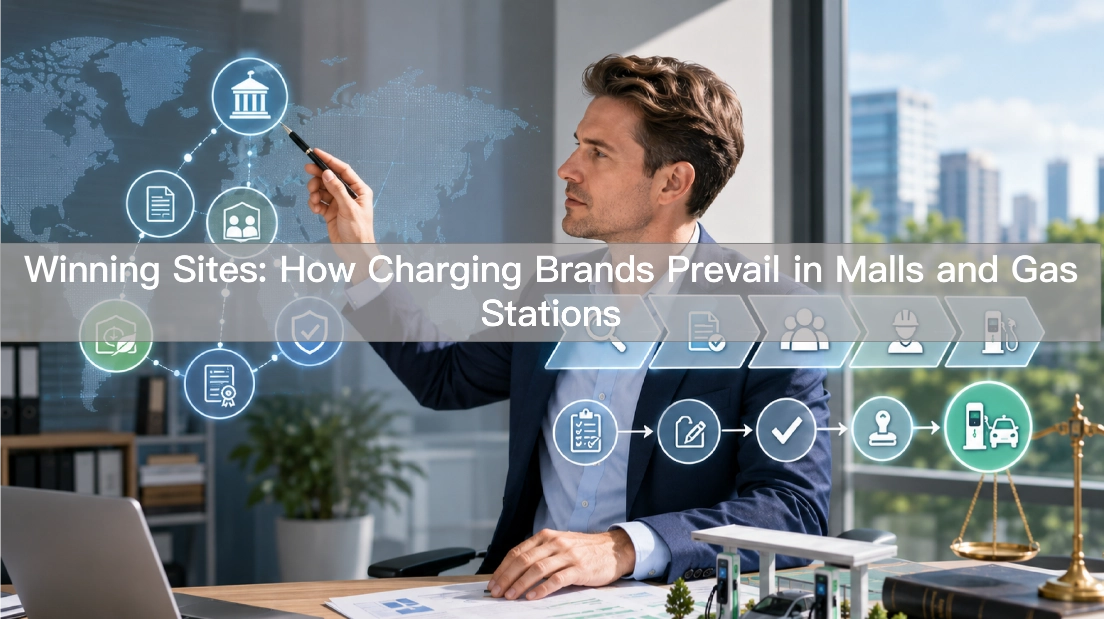
Short dwell, high turnover points to forecourt fast charging. Long dwell points to destination power. The decision tree runs on those two inputs before a single charger is specified.
For the short-dwell site, the bottleneck is the grid, so the plan leads with the transformer and the utility timeline. For the long-dwell site, the bottleneck is the rent split and the foot traffic math, so the plan leads with the economics, not the kilowatts.
A concrete fork: an operator with a mall anchor asks what the dwell really is, and finds most shoppers stay under an hour. The answer is a 40 to 60 kW tier, not a 150 kW build, and the savings on electrical service fund the rent. The same operator at a highway forecourt asks the same question and lands at 120 kW and up, with the transformer application filed before the hardware order. Same framework, opposite answers, because the physics differed.
That is the whole method. Site physics first, hardware second.